

The robotic systems They are playing an increasingly important role in armies around the world. USA has been testing them, but China takes the most advanced path and could even use them in a hypothetical conflict with Taiwan. At least, that follows from the training exercise that the People’s Liberation Army (EPL) carried out last month. According to China Central Television (CCTV), the PLA Eastern Theater Command 72nd Army Group simulated an attack on Taiwan with an amphibious landing in which used four-legged ‘wolf robots’ working alongside drones in coordinated attacks.
This exercise is first public display of autonomous ground robots performing cutting-edge assault rolesa position traditionally occupied by soldiers and which poses an extreme risk during beach landings.
The new systems are part of the PLA’s effort to replace human troops in especially dangerous frontline operations using unmanned systems powered by artificial intelligence. CCTV images showed the so-called ‘mechanical wolves’, developed by the South China Industries Corporation (CSGC), advancing at full speed along a beachhead ahead of the human troops.
The robots, 70 kilograms and capable of transporting up to 20 kilos of supplies, were seen breaking obstacles and making way for the forces that arrived behind, according to The Sun.
Some units were configured for stroke while others were intended for transportation of ammunition and first aid kitsin addition to providing reconnaissance and fire support. The exercise also included FPV suicide drone swarms who launched precision strikes against simulated enemy fortifications.
Less than 10 seconds from detection to destruction
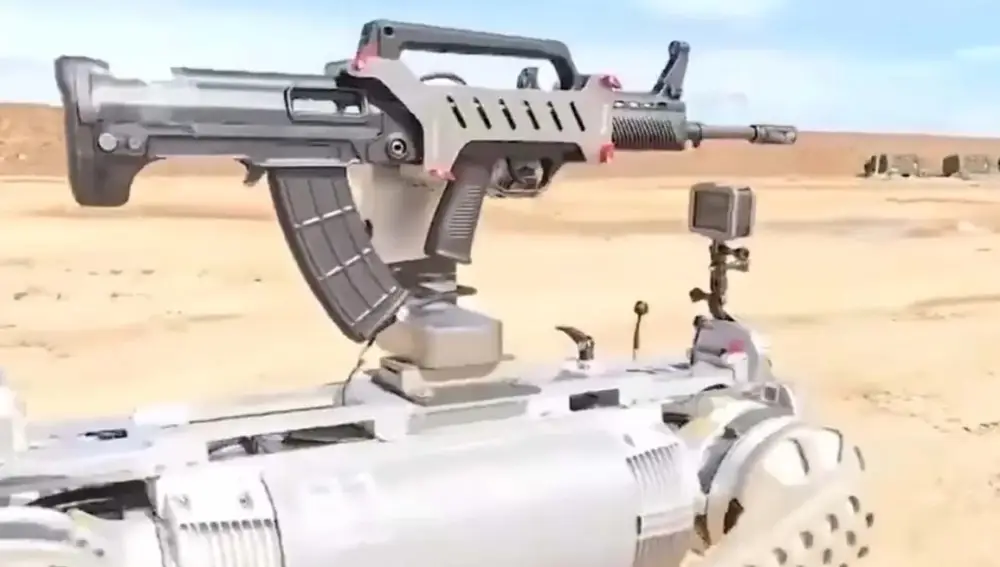
The exercise demonstrated a extremely fast attack cyclereducing the target’s ‘detection to destruction’ time less than 10 seconds. Wolf robots attack They cleared trenches in between three and five minuteswhile the transport variants advanced immediately behind. In one sequence, it was shown a single soldier simultaneously controlling nine wolf robots and six drones using a real-time 3D battlefield interface.
Furthermore, the integration of manned and unmanned elements would expanded the combat radius up to four times compared to a standard infantry squad.
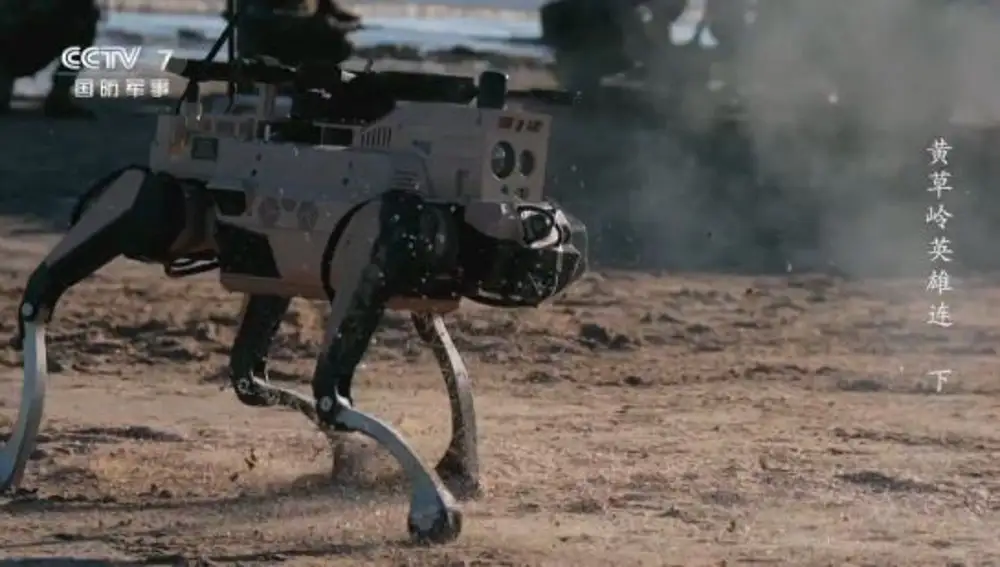
AI-powered ‘wolves’
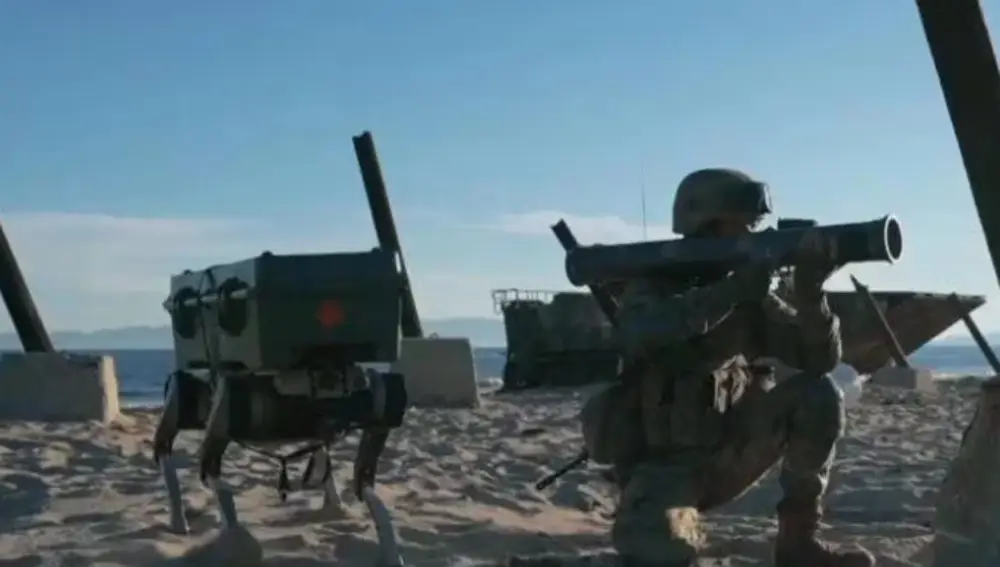
This quadruped platform is equipped with five cameras for 360-degree situational awareness and had already been shown at the military parade of the Victory Day in September along with drones and unmanned helicopters.
Its use demonstrates how the PLA is changing its tactics, moving from employing large numbers of soldiers – the so-called ‘human wave tactics’– to the use of advanced technology or ‘smart maritime tactics’. This new approach emphasizes automation and teamwork between machines, prioritizing precision rather than troop numbers.
Weaknesses of ‘wolf robots’
The exercise demonstrates that China plans to deploy AI-powered robots on a large scale for complex tasks such as amphibious assaults, reconnaissance and logistics. However, the demonstration also revealed some weaknesses.
The images showed several wolf robots having difficulties hiding in open areas. They lacked armor and seemed vulnerable to light weapons. One of the robots was destroyed by light fire during exercise. Chinese commentators acknowledged these deficiencies, noting that the test revealed that robots did not perform well in defensive situations.
Although robots show potential for logistical and reconnaissance roles, their combat effectiveness remains limited by factors such as autonomy, shielding and communications security.