
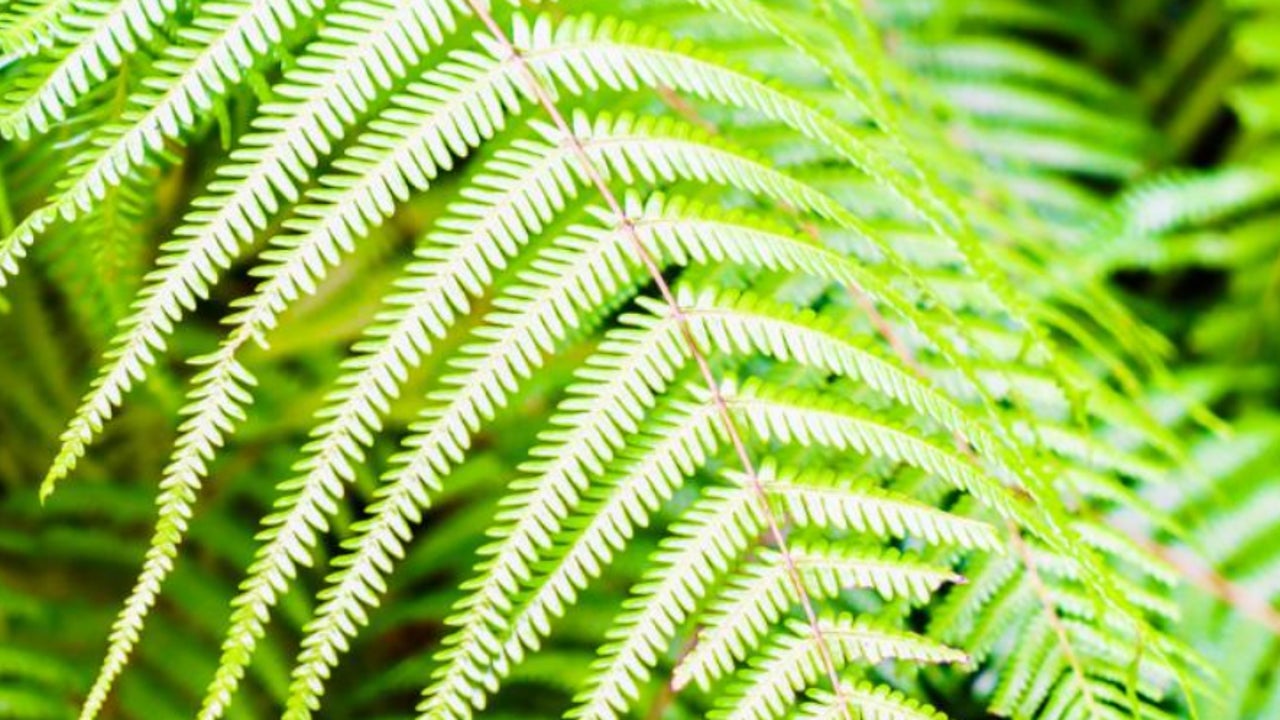
A team of Chinese and American scientists claims to have found a mineral with rare earth elements formed naturally in a fernan unprecedented discovery worldwide.
Rare minerals are crucial to modern technology, as they are essential in the manufacture of electronic products (cell phones, computers), renewable energy (wind turbines, electric cars) and advanced medical equipment (MRIs, surgical lasers). Their growing demand and limited geographic concentration make them a strategic resource and a focus of geopolitical interest.
The authors of the study, published in Environmental Science & Technology, noted that the discovery of nanoscale monazite in a living plant “opens new possibilities for the direct recovery of functional materials with rare earth elements. To our knowledge, this is the first documented case of rare earth elements crystallizing into a mineral phase within a hyperaccumulator plant. “This work demonstrates the viability of phytomining and introduces an innovative, plant-based approach to the sustainable development of rare earth element resources,” the study notes.
The Phytomining is a sustainable method that uses hyperaccumulator plants to extract metals from the soil. This strategy, still underexplored, offers potential for a sustainable supply of rare earths, according to the team.
The scientists, from the Guangzhou Institute of Geochemistry and the department of geosciences at Virginia Tech, in the United States, described the hyperaccumulators such as those capable of concentrating heavy metals or metalloids in their tissues at levels hundreds or thousands of times higher than those of the surrounding soil.
“Taking advantage of this remarkable capacity, phytomining consists of growing these plants in metal-rich soils and recovering the target metals from the harvested biomass – adds the study -. strategy reduces dependence on conventional mining and, at the same time, mitigates the associated environmental and geopolitical risks.”
Monazite is a phosphatic mineral rich in rare earth elements such as cerium, lanthanum and neodymium. Yes ok Monazite typically forms under high pressure and temperatures of hundreds of degrees Celsiusplants represent an alternative for mineralization under environmental conditions on the Earth’s surface.
The mineral has a high melting point, excellent optical emissivity, and exceptional resistance to molten glass corrosion and radiation damage. According to the authors, Its exceptional mechanical, physical and thermal properties make it ideal for applications such as coatings and diffusion barriers.luminophores, lasers and light emitters, ionic conductors and matrices for the management of radioactive waste.
In the study, researchers collected plant samples from a known rare earth hyperaccumulator, a perennial fern called Blechnum orientaleand the surrounding soil. The samples were collected and transported from rare earth deposits in the southern Chinese city of Guangzhou.
The analysis showed that rare earth elements were concentrated in the pinna (a part of the leaf), followed by the root system and petiole. According to the study, minerals crystallize within extracellular tissues under environmental conditions so that plants prevent the entry of non-nutritive elements into cells and to detoxify themselves.
The formation of monazite occurred through a chemical garden-like process, featuring plant-like structures that form when a metal salt seed is introduced into an aqueous solution containing anions, such as silicate or phosphate. Also serves as an example in chemistry of a self-organized non-equilibrium process that creates complex structures.
“This phenomenon is the recently recognized emergence of a chemical garden in a plant, driven by the high local concentration of metal salts (rare earth elements and phosphate) in an aqueous medium,” the study confirms.
In a statement issued by the Guangzhou Institute of Geochemistry, the authors conclude that the study offers “a new avenue for the sustainable use of rare earth resources. By cultivating hyperaccumulator plants, high-value rare earths can be recovered from plants, while contaminated soil is remedied and the ecology of rare earth waste is restored, thus achieving a green circular model of simultaneous remediation and recycling.”