
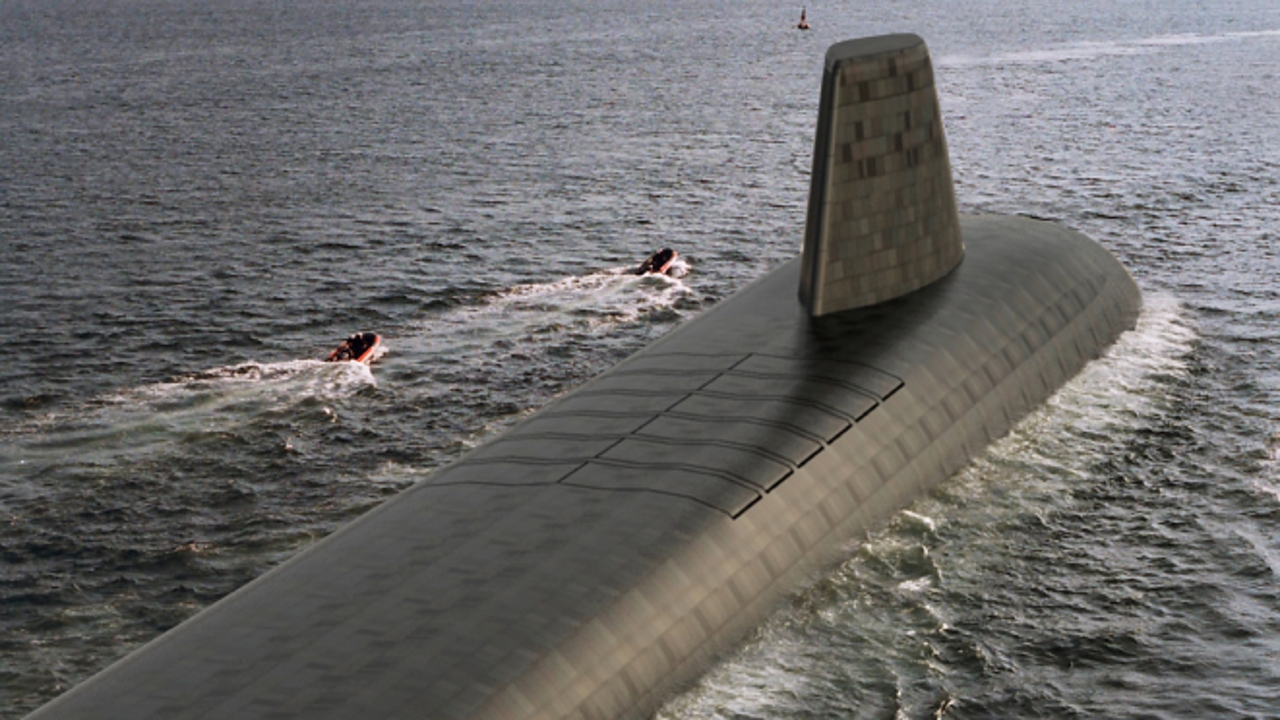
United Kingdom will have a new nuclear warhead called Astraea for use in missiles Trident II D5. These are the ones that will equip the class submarines Dreadnought that will enter service in the next decade to replace those of the class Vanguard. Luke PollardBritish Defense Minister, announced this week that the program Astraea A21successor to the current warhead Mk4A Holbrook used in said missiles SLBM (acronym in English for Submarine Launched Ballistic Missile), has financing within a nuclear investment plan of 15,000 million pounds (17,600 million euros).
The Astraea program will be developed by the Atomic Weapons Establishment (AWE), the agency responsible for the design, manufacture, maintenance and decommissioning of the UK’s nuclear warheads, and is part of the Strategic Defense Review 2025 that seeks to maintain a permanent nuclear deterrent power at sea.
Astraea is developed in coordination with the United States to ensure compatibility with the Trident II D5 system used by both countries. Some non-nuclear components are shared use, such as Mark 7 aerodynamic shroud defining mass parameters and dimensions of the internal warhead. This allows interoperability between US and UK systems.
Astraea’s design uses insensitive explosives -designed to not accidentally detonate due to blows, fire, shocks or high temperatures- and other safety systems that guarantee their reliability in various operating conditions. It will also be the first British nuclear warhead developed and deployed without actual nuclear testsas established by Comprehensive Nuclear Test Ban Treaty.
Its validation is based in simulations and advanced experimentation through the laser Orion of the AWE, capable of recreating temperatures of up to 10 million degrees, together with supercomputing analysis using the system Valiant and hydrodynamic and radiographic tests at the facility EPURE of Valduc in Francewithin the Teutates Project.
According to the strategic review, Astraea’s explosive performance will be between the 90 kilotons of the American W76-1 and the 475 kilotons of the W88, which will probably represent an increase compared to the 100 kilotons of the current Holbrook. The design will incorporate resistance to radiation and electromagnetic interference, as well as countermeasures against advanced missile defense systems. It will also have new arming, fuzing and detonation mechanisms to improve reliability and security, as well as protection protocols against unauthorized manipulations.
The UK objective is for Astraea enter service in the early 2030s, along with the first Dreadnought submarineensuring that there is always at least one British nuclear submarine on patrol.
The largest submarines the United Kingdom has ever built
Astraea will be used to assemble the 4 Dreadnought submarines which the United Kingdom plans to incorporate into its fleet during the 2030s. Last March, the symbolic ceremony of laying the keel took place on the first of them, whose construction BAE Systems started in 2016. They will be the largest manufactured in the United Kingdom.
A Dreadnought submarine will move 17,000 tonswill have a length of 156 meters and a crew of 130 people. The propulsion will consist of a nuclear reactor Rolls-Royce PWR3 paired with an advanced water jet turbine system and will be armed with 12 Trident II D 5 ballistic missiles in 12 launcher tubes.
Each of these missiles, which has a range of 12,000 kilometerscan take up to 12 warheadsso the theoretical maximum for the 12 missiles of a Dreadnought is 144 warheads. However, there will not be so many of them, since they can easily would exceed the limit of 260 warheads in its arsenal that the British Government established in its 2021 Integrated Review. In any case, the United Kingdom retains a deliberate ambiguity about the exact number of operational warheads and missiles to preserve the deterrent uncertainty.