
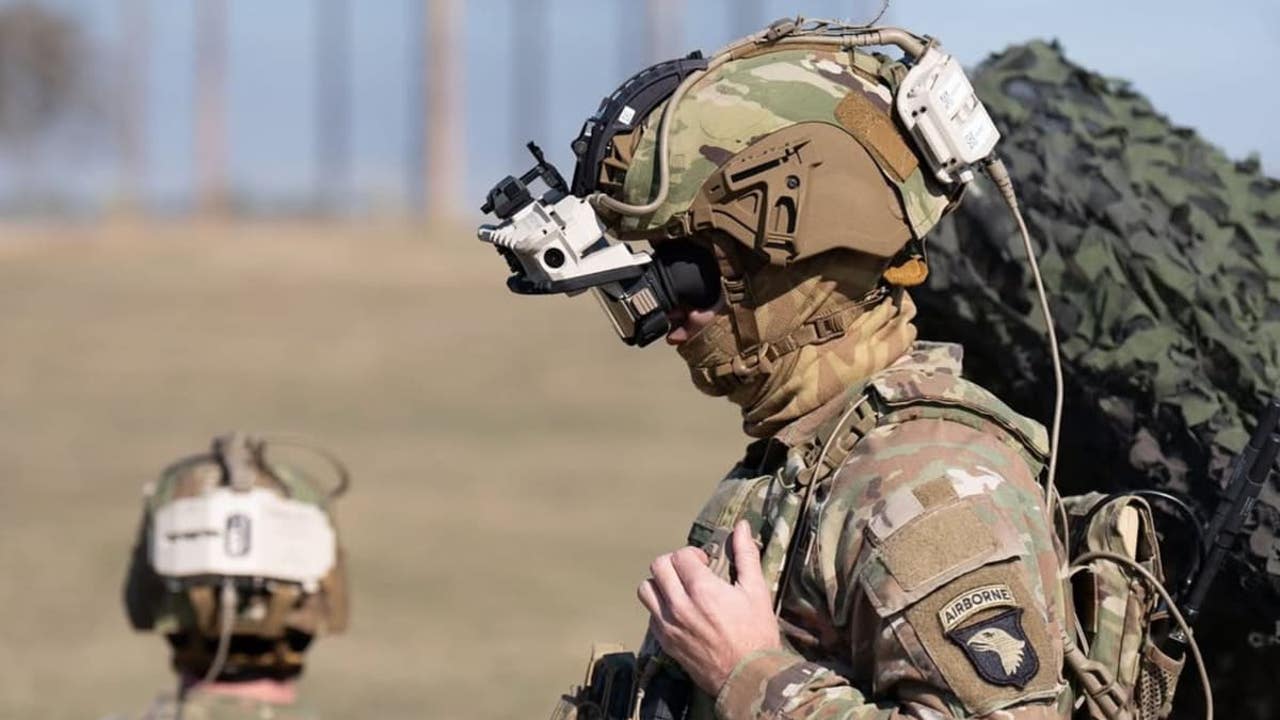
In 2018, the United States Army began the development of the IVA project in collaboration with Microsoft, but very soon suffered delays and technical problems after its launch. The soldiers pointed to headaches and nauseawhich led to Congress to cut financing in 2022.
Now a new program has been announced: SOLDIER BORNE MISION COMMAND (SBMC), The successor of the Integrated Visual Increase (IVA) system of the Army, through a contract for more than 150 million euros, which will be led by the Anduril company.
The company states in The statement that the system seeks to provide soldiers with “superhero skills”merging night vision, augmented reality and artificial intelligence into a single platform.
The goal is faster decision making and a clearer vision of the battlefield in complex environments. Anduril’s system combines advanced optics with real -time maps, intelligence and sensor overlaps.
Instead of having to deal with radios, applications and printed maps, The soldiers will see a unified image through the screens of their helmets.
“Military operations are inherently human, characterized by violence and continuous adaptation of all participants -explains an army publication -a successful execution requires that army forces make and implement effective decisions more quickly than enemy forces. ”
Anduril states that his solution reinvents the battlefield interface. “Our device reinvents the battlefield interface, providing the soldiers superhero skills”, Said the company in its announcement.
The company specialized in defense He is working with goal, OSI, Qualcomm and Peoplex to develop hardware. The screen mounted on the helmet will integrate daytime, night and thermal images with real -time intelligence. Soldiers can select modular components that adapt to their mission.
The base of the software is the mission control architecture at the soldier level (SBMC-A). Developed on Anduril’s Lattice platform, integrates screens with edge computing devices and battlefield sensors.
The SBMC-A It has already been tested with existing ivas 1.2. In recent field tests, the soldiers controlled drones more than three kilometers away directly from the helmets.
Anduril points out that architecture also accelerates software updates: What before taking two days, can now be implemented in 15 minutes. This allows daily changes from the feedback of the soldiers and reduces costs.
The army describes the SBMC as its greatest effort to date to provide each soldier with augmented perception and decision making. The Integra initiative The lessons learned from more than 260,000 hours of data provided by soldiers During the IVA program.
The officers consider that the program is essential to overcome one of the biggest challenges of the battlefield: fragmented information. In many operations, squad leaders They must combine maps, radios and applications only to track their equipment and threats. This wasted second seconds.
When merging sensors, intelligence and command tools into a single system, the army hopes to reverse this disadvantage. Each soldier would see further, I would know more and act more quickly.