
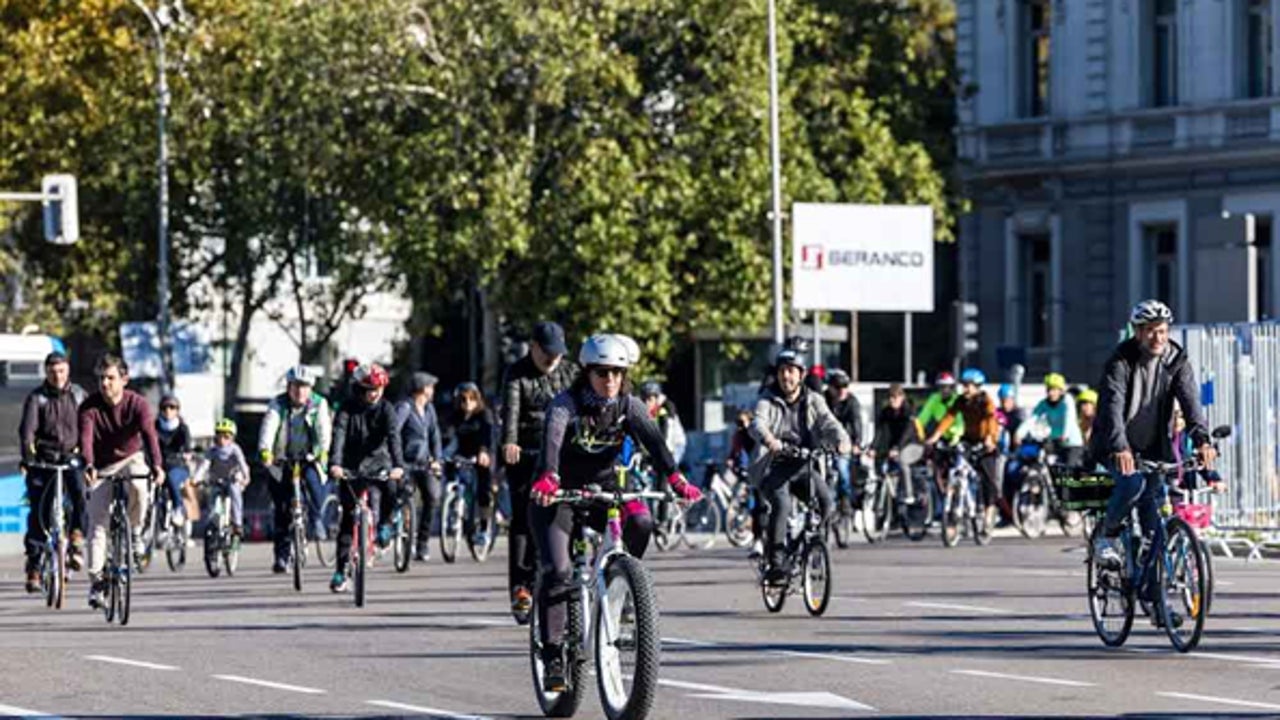
The study, promoted by the network of cities and territories by the bicycle (Redbici), concludes that almost a quarter of the population uses the bicycle weekly (22.8%) and almost half (48.2%) use it on occasion. In addition, since the creation of the barometer, in 2008, the percentage of usual cyclists has increased by 10 points, from 12.7% in 2008 to 22.8% in 2024.
In addition, the report determines that 6 out of 10 Spaniards believe that their municipality is kind to the bicycle, and 84% positively values the shared bicycle systems.
The majority of the population believes that the use of the bicycle must be encouraged and the expansion and improvement of the infrastructure and the public bicycle services of recent years, such as bike lanes, parking and shared public bike systems, must be positively valuing.
Health and sport are the aspects that are most associated with the bicycle, although the number of people who associate it with sustainable mobility and the environment, especially in urban areas, continues to grow. In fact, in the big cities both the mentions of mobility and the environment pass in front of the sport. Mobility and its contribution to the improvement of the environment are the main attraction of the bicycle for young people.
Barcelona is the city that most associates the bicycle with mobility and environment. In addition, the Catalan capital, together with Valencia and Seville, is the city with more cyclists for daily or almost daily use.
Sustainable mobility and renewable energies
World Bicycle Day, which is celebrated today, is closely related to sustainable mobility because it is an ecological, economic and healthy means of transport.
Bicycles produce zero emissions and their generalized adoption can substantially reduce greenhouse gas emissions, a crucial step to address the global climatic crisis. In addition, they reduce the congestion of traffic in large cities and encourage physical activity and health.
In an increasingly aware world of environmental challenges, renewable energies and sustainable mobility emerge as fundamental pillars to combat climate change and reduce dependence on fossil fuels. Both concepts are interrelated, since efficient transport can be enhanced by clean energy sources, thus contributing to a more balanced and responsible development.