
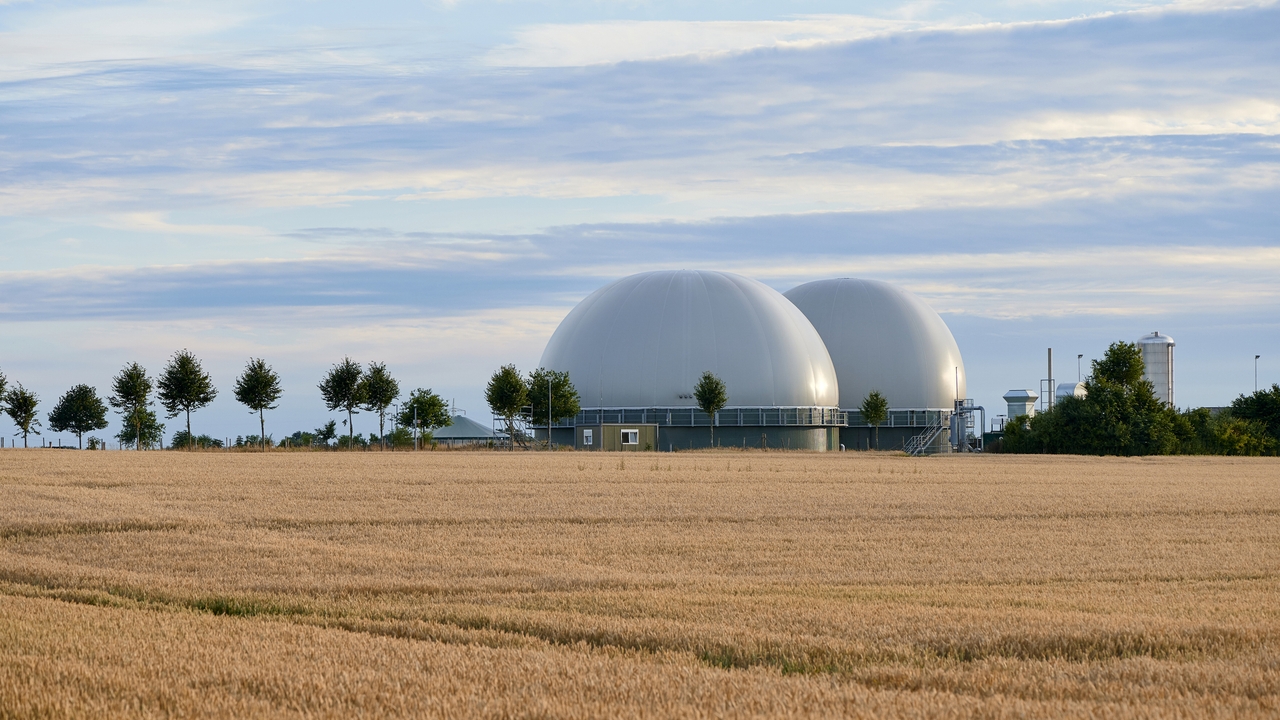
He Biomethanealso known as renewable gas, is a second generation biofuel (2G) that is obtained from the purification of the biogas. This energy vector is positioned as a solution with great potential in Spain. According to the Moeve Energy Insight Nº22 report, not only allows “to reduce more than 100% CO2 emissions in the full life cycle,” but also contributes to the circular economy by reusing organic waste from agriculture, livestock and urban waste.
But, Why can biomethane be a key technology in the energy transition in Spain and Europe? To understand it, the document affects that biomethane is produced by the decomposition of organic waste, by means of a biological process called anaerobic digestion (that is, without oxygen). This causes it to be used for the same purposes as fossil natural gas, having a similar composition and calorific power.
That is, it can replace or mix with it in any proportion and without adapting current gas infrastructure. Among its main applications the report stands out «domestic and industrial consumption, electricity production, vehicle and ships propulsionas well as the generation of green hydrogen by combination with biogenic CO2 ». In addition, it allows CO2 emissions to be reduced more than 100% in the full life cycle, with a neutral or even negative carbon footprint.
The good news, according to Moeve’s studySpain has great production potentialestimated in 195 twh per year by 2050 », which places it as” the third European country with the greatest capacity to lead this market. ” In addition, existing gas infrastructure facilitates its storage and transport, a key factor against other renewable energies with greater logistics limitations that need to develop new logistics infrastructure.
Regulatory barriers
Despite its potential, The development of biomethane in Spain is still slow due to the lack of a specific regulatory framework. Although in 2022 the biogas roadmap was published with a production target of 10 twhh per year by 2030, this was recently doubled up to 20 twh per year (6% of the annual demand for natural gas). However, “current production is only 0.5 twh per year in 11 biomethane plants,” according to work, with others in the construction phase, which leaves Spain “far behind other European markets.”
Administrative process is another important obstacle. «The development of a biomethane plant in Spain can last up to four yearsdue to the long deadlines for obtaining permits, ”warns the report. In addition, the sector claims more stable economic incentives that guarantee the viability of new long -term investments. “Despite having specific aid, the sector claims that stable economic incentives be established, to give greater certainty.”
This Delay in the implementation of the biomethane contrasts with the progress in other countries of the European Union. Within the framework of the Repowereu strategy, the EU has set a production objective of 35 BCM per year (approximately 342 TWH/year) by 2030, and there are already more than 1,350 operational plants that exceed 50 twh annual. Germany is the largest producer, with 13 twh/year and more than 250 plants, and France produces 12 annual biogas twh with an eye on the 50s by 2030.
For Spain to be positioned as a biomethane leader, it will be fundamental accelerate administrative processes, increase economic incentives and foster knowledge About this technology in society. “In Spain, Biomethane is a less known technology, which can generate uncertainty in local communities before new developments,” the report warns. Initiatives such as the private sector, which has already announced around 90 projects with a capacity of 4.5 twh per year, show a positive advance, but still insufficient to achieve the ambitious European objectives.
The biomethane represents a “unique opportunity” for the energy transition in Spainconcludes the report, as it provides a sustainable alternative that “reduces the dependence of imported natural gas, generates employment in rural areas and contributes to the fight against climate change.” Without a solid regulatory framework and greater political impulse, this key resource could continue to be infrautilized in the coming years.