
Looking ahead to viral news, Elon Musk laid precedents with their brain implants, such as Neuralink, but scientists continue to work in the brain-machine interface and have now taken a giant step. A team of scientists from the University of Michigan has developed a device that allows a 69 -year -old man with paralysis to fly a virtual drone using only his thoughts.
The brain-ordered interface (BCI) deciphered man’s brain activity while imagining three groups of fingers in real time. The advance offers the hope that BCIs can one day help people with paralysis to make a broader range of activities, such as machine writing or playing complex video games.
“There are many things that we enjoy or do as humans in which we use multiple movements of individualized fingers, How to write by machine, sew or play a musical instrument -explains the study co -author, Matthew Willsey, in a statement -. This focuses on this line of work, how we allow control of several things at the same time. ”
In the study, published in Nature Medicine magazine, Willsey’s team explains how they developed A brain implant to allow the participant to fly a drone at his own request. To do this, they implemented the device in the brain region of the patient’s left precentral turn, the area responsible for the control of the hand movement.
https://www.youtube.com/watch?v=6hnpkoojtow
The device continuously records the electrical activity of the nerve cells of the brainespecially patterns linked to complex physical movements.
The study was inspired by the participant’s own request to use a BCI to fly a drone. He told researchers to control the virtual object was like playing a musical instrument. “Flying it are small delicate movements from a midline, a little up, a little down, “the volunteer himself explained.
Scientists They registered the activity pattern of the participant’s nerve cells while observing a virtual hand that made several movements. Then they used artificial intelligence algorithms to identify brain signals specifically linked to specific fingers.
These signals could guide the AI system to precisely predict the movements of the fingers provided by the participant. With this information they allowed the participant to control three groups of different fingers, including two -dimensional thumb movements, in a virtual hand. The results showed that this level of precision and freedom of movement had not been possible before.
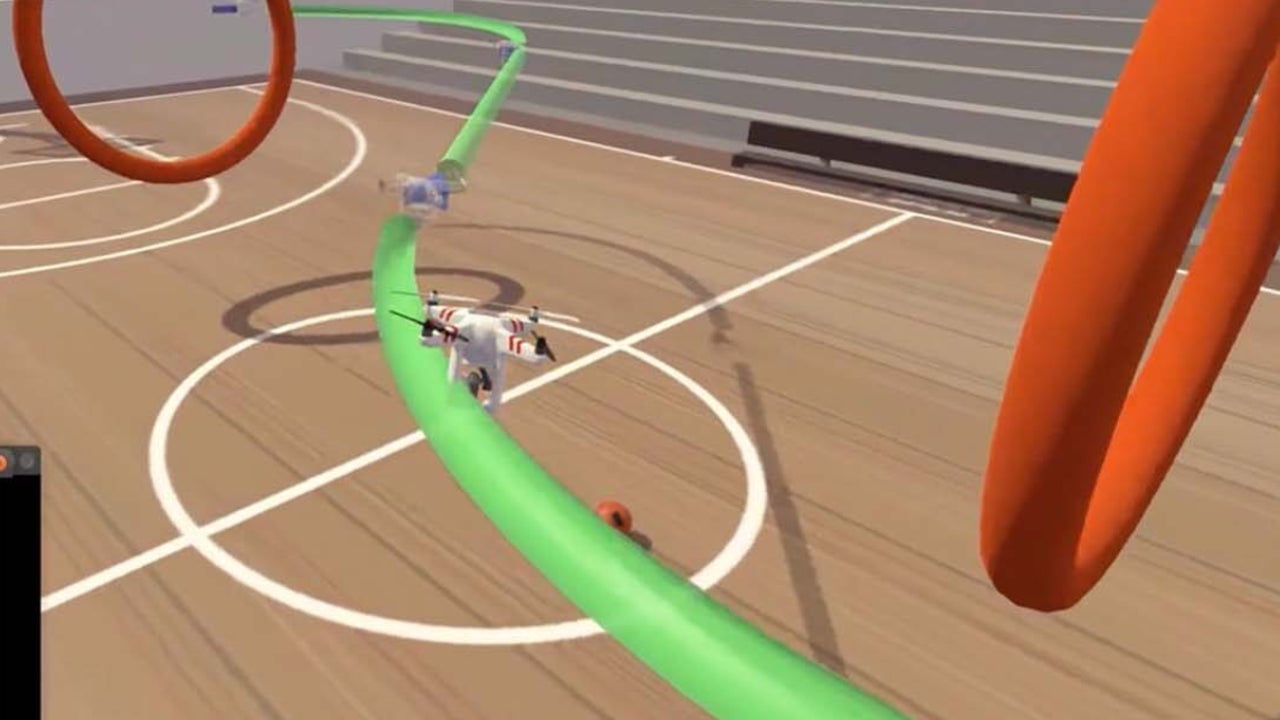
Longer, They used the application of the virtual control of the fingers to a grid video game. The movements of the fingers decoded by the brain implant were programmed to control the speed and direction of a quadcopter in the game. The implant allowed man to pilot drone through multiple obstacles, even crossing rings that appeared randomly in the game.
“This approach of Use fine motor control for IBCI controlled video games You can satisfy unattered needs of people with paralysis, ”explains the study.
This last advance could lead to better implants that help paralyzed people To move the cursors on the screen, paving the way for more advanced online functions such as email, access to publications in social networks or the transmission of programs.