
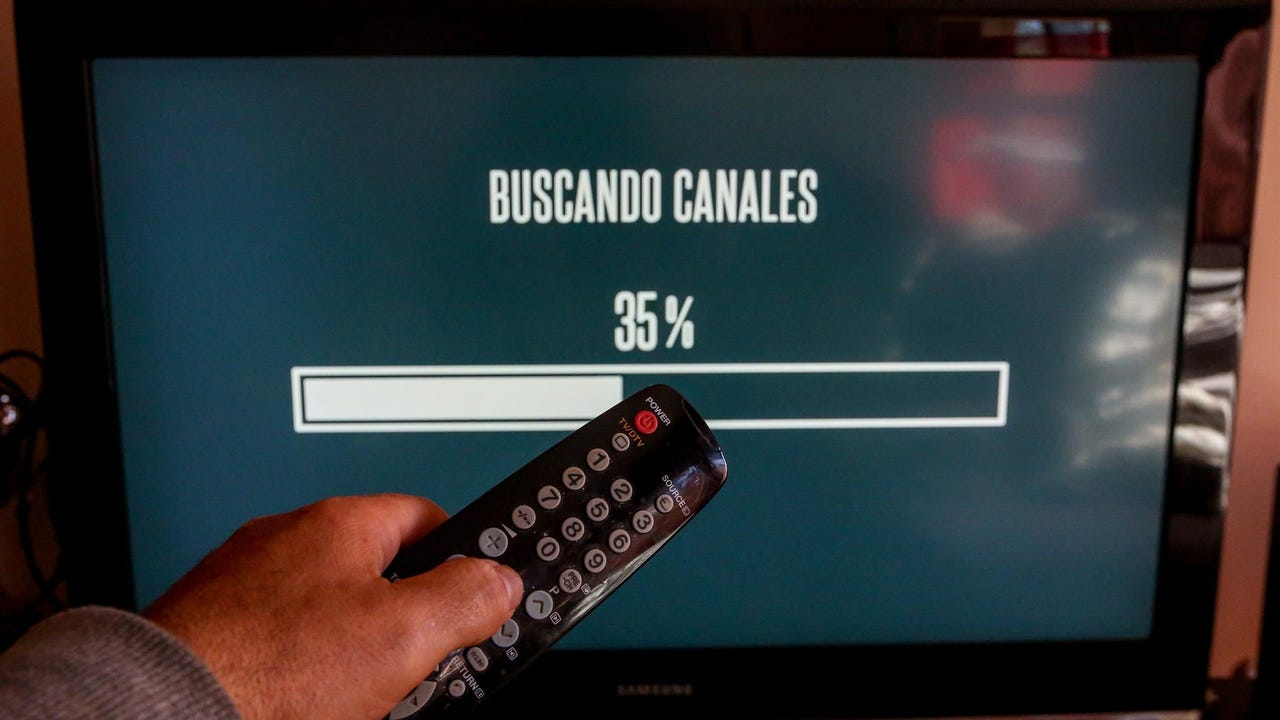
In a few months, we will have to go back to retune Digital Terrestrial Television (DTT). The reason, according to the National Technical Plan, is the addition of three Ultra High Definition channelstwo of them being, in the absence of official confirmation, from Mediaset UHD and Atresmedia UHD.
The reason is the implementation of the DVB-T2 standardwhich offers a higher percentage of capacity and allowing a Greater bandwidth to channelsas well as offering better compatibility with the H.265 video codec.
The implementation of this standard will be divided into two phaseswith the first to be held in 2025. This will consist of changing the container RGE2 through the DVB-T2 inputallowing the channel RTVE UHDa channel Mediaset UHD and another of Atresmedia UHD.
During this first phase, All users who watch television, regardless of the standard they have, will be able to continue watching the usual programmingwith the exception of those who do not have DVB-T2, who will not be able to see the channels in ultra high definition, although that will surely change in a few years, since it will possibly be necessary to have the updated standard to watch DTT.
How do I know that my TV has this standard?
For those modern televisions that work with these resolutions, compatibility with DVB-TB2 will be practically assured, as well as in the new televisions that come onto the market. Now, how do I know for sure if my TV is compatible?
For this, it is necessary look in the TV’s instruction manualwhere all the model specifications appear. These manuals also usually appear on the brand’s websites and on their support, although they may also appear specified on the device’s box. It would also be wise to look at the model of the decoder.
Because DVB-T2 began to be implemented in 2017we must check that our television is not more than seven years old and less than 40 inchessince in this case the scenario could arise of having to buy an external tuner.
For now, this DVB-T2 tuner, according to Government data transferred to television companies, is only present in 58% of the national television fleet, while only 31% of televisions are compatible with this standard, which would complicate, for now, its implementation.