
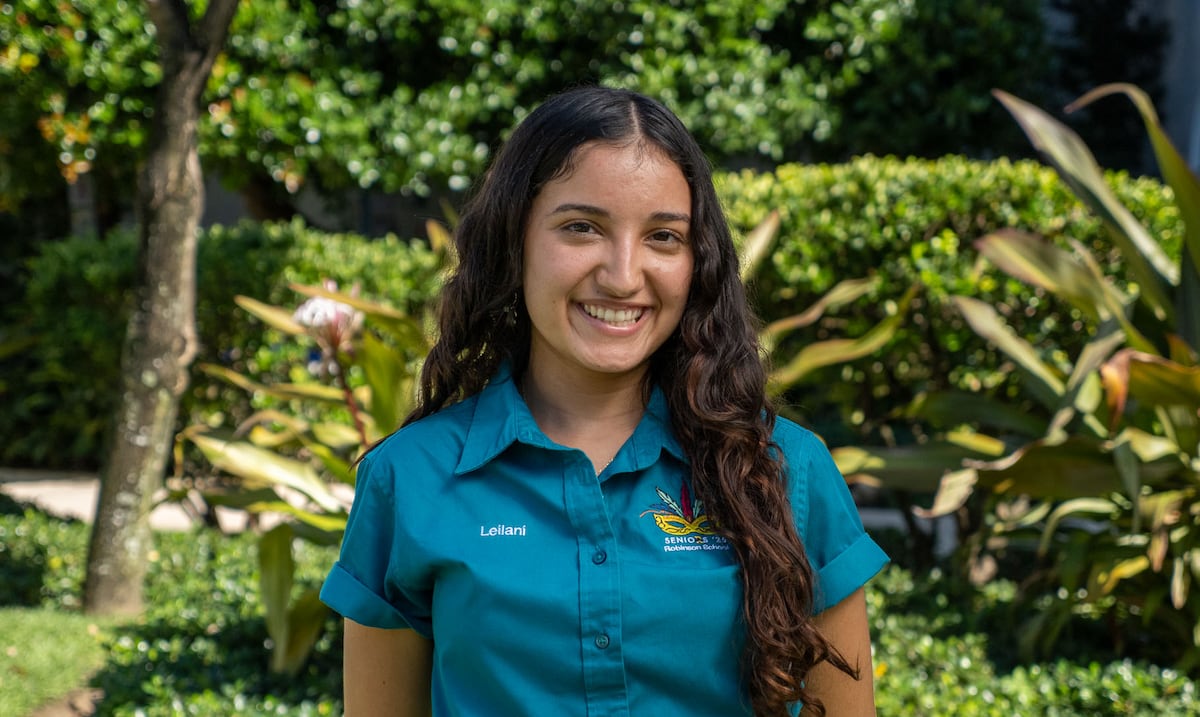
In front of extreme heat and its impact on the students of the public schoolsa student of Robinson Schoolin San Juan, adapted a system designed to generate fresh air in buildings to the Puerto Rican environment, which would alleviate suffocating conditions in classrooms.
Leilani Morales17, captured this idea at the science fair at the school where he has been studying since the ninth grade, winning several awards, including the award for most outstanding exhibit from the Yale Science and Engineering Association. In addition, she became the first Puerto Rican to win the Rise scholarship, a prestigious program for young people committed to the community, which will allow her to go to a summit in London next year.
“I love being able to represent Puerto Rico, because perhaps we don’t have as much representation in science and mathematics careers, and I like to give Puerto Rico that opportunity to shine in these professional careers. And I would love to be part of that group of girls who can empower others to continue and do the same for Puerto Rico.”Morales highlighted.
The young woman’s project adapted the system “Earth Air Tunnel”, technique to generate fresh air in summer and hot air in winter. Essentially, this process circulates outside air through pipes installed deep beneath the Earth’s surface, where the temperature remains constant year-round. This causes a heat exchange to occur as the air passes through the installed piping system.
“The system takes advantage of the fact that underground is colder and, basically, how it works is that it has a part that is like a tower that captures the air from the environment (‘wind tower’ or ‘wind catcher’, in English). , then, that air goes underground, cools and rises again to the rooms. When it is underground at that moment, then it cools down.”said the fourth-year student, in an interview with The New Day.
With the model he created, Morales conducted tests – for two days – to measure the efficiency of the project, taking the temperature every five seconds in a room that had the system versus another that did not have it. The level of efficiency was not as much as I expected, but that could have been because it was a small model and not the full-size structure.
“Within my conclusions, I found that it could be a good way to mitigate emissions carbon dioxide to the environment, since air conditioning consumes more energy and, therefore, it contributes more carbon dioxide to the environment compared to this system that I proposed,” he explained.
The student was confident that this system could be a tool to mitigate the heat faced by students in the public education system. In fact, the Department of Education announced, in recent days, that it would have to invest more than $500 million to install air conditioners in 404 campuses, according to a study.
“It is a right that students can receive a good quality of education, no matter where they are”Morales said, adding that this system is used in countries like India. According to studies, the “Earth Air Tunnel” is ideal in countries where seasonal temperature differences are significant.
The teenager highlighted that her achievements have been possible thanks to Academic Scholarship Programfrom which he has benefited since his arrival at Robinson School, in 2021, and whose call is open until next December 1 for the 2025-2026 school year.
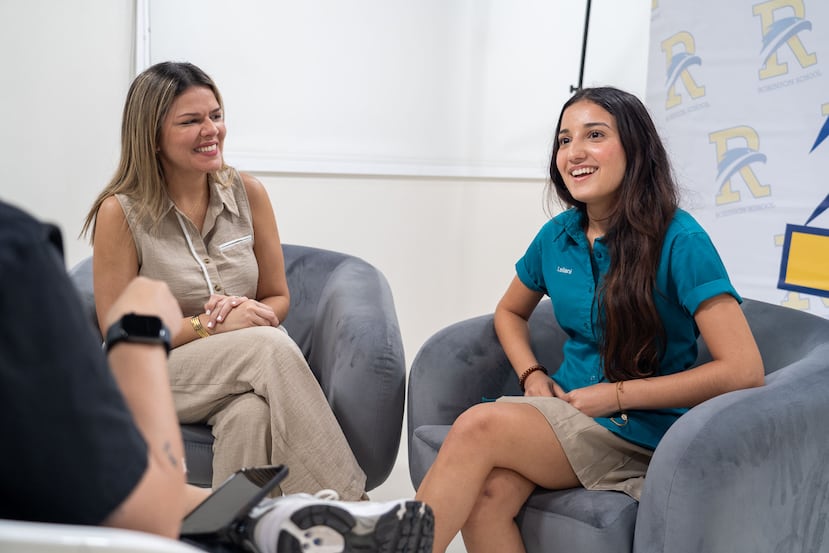
Paola GonzalezDirector of Admissions at Robinson School, explained that the scholarship call is available for new students, from public and private schools, from seventh to eleventh grade and without distinction of their economic situation. The requirements include having passed the college entrance exam, presenting an academic level with a minimum of 3.8 (GPA) and excellent behavior. In addition, interested parties must comply with an interview process.
“What we want most is for them to come, for them to dare (to request). We have the resources right now. (…) It is assumed that (as of December 1) they have submitted all the documents to be able to go through the process”he indicated about the scholarship.
He added that, once selected, the beneficiary student maintains financial assistance each year, until he or she graduates, as long as he or she maintains his or her academic level.
“Not everyone can afford the education that Robinson costs, we are clear. For me, it gives me a little joy to know that I am making an impact in a direct way, that perhaps we would not have been able to do it otherwise if it were not for the scholarships we offer. It is an opportunity that perhaps can change a student’s life,” González added.