
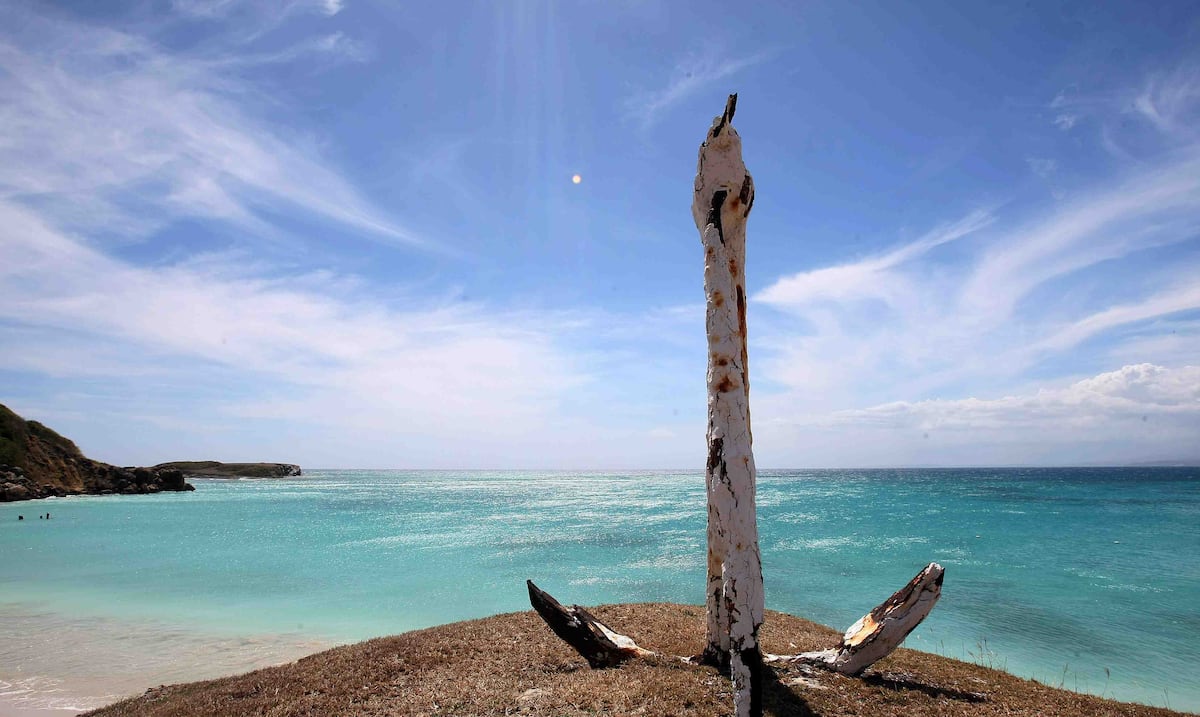
The program Blue Flag celebrates 20 years in Puerto Rico and, for the three women who led its implementation, it is an important achievement in recognition of environmental management on the coasts of the archipelago, which should remain for much longer.
Immediately, “the three musketeers” of Bandera Azul – like the biologist Álida Ortiz Sotomayor; the president of the Sustainable Environment Organization (OPAS), Lourdes Diaz Colon; and its founder, Maylene Perez Roblesthey call each other – extended their congratulations to the seven winners of this 2024-2025 seasonfor joining the commitment that they promoted two decades ago.
With the Blue Flag awards, Puerto Rico is among the 50 countries highlighted for the quality and sustainability of its beaches, marinas and boats. Although, over the years, some flags have been lost in coastal areas, the leaders highlighted their satisfaction with the persistence of the program in the face of the environmental challenges that the country has faced, such as hurricanes and earthquakes.
“Many countries, both Caribbean As in other regions of the world, they have tried to achieve compliance with the strict Blue Flag criteria. Some achieve them, but others, for various reasons, cannot maintain them. In Puerto Rico, we have been constant in the process and its quality”highlighted Díaz Colón, in an interview with The New Day.
The president of OPAS described the trajectory of Bandera Azul in Puerto Rico as “solid and ascending,” while the founder chose to define it as “slow, but firm,” comparing it to countries like Dominican Republicwhich also implemented the program in 2004 and today has 24 award-winning beaches, in contrast to the two in Borinquen.
Even so, Pérez Robles highlighted that Puerto Rico was the first Caribbean nation to raise these flags. Among other main achievements, he mentioned that, in 2010, Pelícano beach, on the island Dead Boxbecame the first in the Americas, within a nature reserve, to receive the Blue Flag.
For his part, Ortiz Sotomayor – who is the first person to achieve a doctorate in Marine Sciences in Puerto Rico – shared that being part of the Bandera Azul leadership allowed him to educate the communities and transmit to them his passion for science and the environment.
“For me, Bandera Azul was the opportunity I had, 20 years ago, to take to the streets everything I taught in school, but in bread and butter”recalled Ortiz Sotomayor, professor emerita at the University of Puerto Rico in Humacao, in a separate interview.
They face the challenges
The three environmentalists highlighted the adaptation of water quality criteria and environmental education as the main challenges of the implementation of the Blue Flag in Puerto Rico.
This program of Foundation for Environmental Education (FEE, in English) was created in Europe in 1987. The team of leaders, together with other experts, spent nearly three years adapting the Blue Flag standards to the reality of Caribbean beaches.
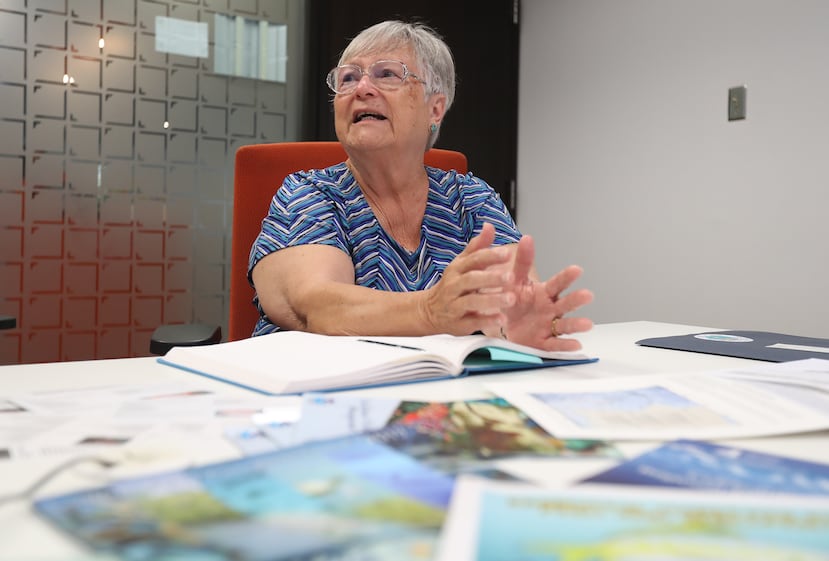
According to Díaz Colón, the natural phenomena that reach Puerto Rico impact the water qualityunlike other countries outside of tropical areas. Inadequate wastewater treatment also affects seawater samples.
He added that the challenge of executing environmental education initiatives on the beaches lay in transform the perspective of visitors and administrators of the area to one of environmental awareness, beyond the enjoyment of the natural resource.
From dream to international impact
Díaz Colón recalled that, in 1999, she was commissioned to adapt the Blue Flag program to Puerto Rico, as director of Product Development at the Tourism Company.
The need for a nonprofit organization to exclusively operate the program was, in turn, met with Pérez Robles’ dream. The then student volunteer longed to create an entity with a focus on environmental education, which guided the founding of OPAS in 2005.
“I never imagined that having that initiative and that push to found the organization was going to have this global impact, to position Puerto Rico, to be able to provide quality beaches to users. “It has been wonderful”Pérez Robles expressed, moved.

The three women were hopeful about the future of the organization and the Blue Flag program in the archipelago. From their perspectives, the work of OPAS will prevail for several generations to come.
“I have a lot of hope and we feel very positive. I think that, perhaps, in two to three years, we will have twice as many beaches as we have now,” said Díaz Colón.
This season, OPAS will focus on providing advice to the two beaches, a marina and the four award-winning tourist boat operators with the Blue Flag, so that they maintain their standards of water quality, education, environmental management and safety.
Specifically, the recognized beaches were Puerto Nuevo, in Vega Baja, and Palomino, in Fajardo, where the Safe Harbor Puerto del Rey marina is also located. Among the tourist boat operators, the award went to East Island Excursions, for East Wind, Caribe Spirit, Eco Isleño, Island Flyer, Tropical Escape, Blue Paradise and Zatara; Bella Venturas, for Josiah’s Reach and U Turn; Caribe Bliss, by La Rabiosa and Abillo; and Sea Ventures, for Coral Queen II.
As a non-profit organization dedicated to environmental conservation and the promotion of sustainable practices, OPAS also engages students and teachers in transforming schools into sustainable centers, through its EcoSchools.