
signature: A project from Guinea
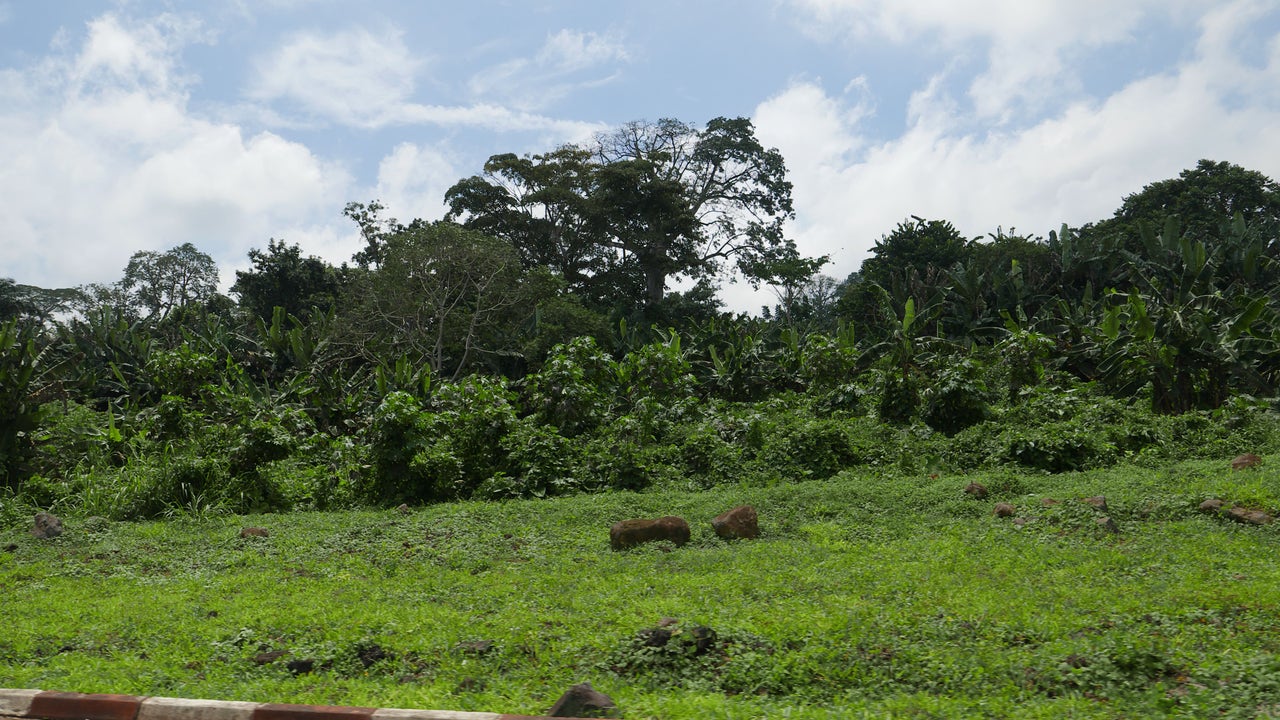
The forests of the Congo Basin are known as the lungs of Africa. This area, which includes countries such as Cameroon, the Central African Republic, Congo, Equatorial Guinea and Gabon, is not only home to thousands of species of animals (more than a thousand of birds alone) and hundreds of plants, but it is the second tropical rainforest in the world after the Amazon. The importance of these forests, called primary because they have not suffered alterations due to human action, lies in their great capacity to absorb CO2. According to data from the NGO Greenpeace, 8% of all the forest carbon accumulated in the planet’s forests is in these forests. Hence the importance of its conservation. As if that were not enough, we know that the Earth has lost 35% of these primary forests.
But, the ecosystem services of these forests do not end here. «They hide the active ingredients of tomorrow’s medicines, as well as the secrets of the past. In addition to being rich in biodiversity,” says Francisco J. Cabezas, CSIC researcher in the “Flora of Equatorial Guinea” project, who clarifies: “What remains to be known about Africa is unpredictable. For every species of flora that was known in Guinea, we found two, which means that there are probably twice as many as is believed. “This means that there may be around 8,300 species of plants.” And these jungles are “the most complex terrestrial ecosystem on earth.”
During the 19th century, English and German botanical expeditions arrived here; The first Spanish one did not arrive until the middle of the 20th century, when Equatorial Guinea was still a colony. The work of cataloging the flora began just then but has not yet been completed. «Emilio Guinea is the first to consider making an inventory of the country’s flora. There have been several campaigns and some breaks and today 12 volumes of flower families have already been published, in total 197 taxa. That is more than 4,000 species of plants in an area of 28,000 km² total, like Galicia in Spain,” explains Cabezas, who also recalls that there has been collaboration until a few years ago between researchers here and the University of Guinea. Then the funding ran out and, with it, the knowledge and training in conservation as well.
The CSIC has also investigated the presence and evolution of “homo sapiens”. «Not much is known about when the African rainforests were occupied and we look for evidence and remains. It is possible to think of ancestors of the pygmies but it is difficult to find organic remains from more than 50,000 years ago,” says researcher Antonio Rosas, scientist at the National Museum of Natural Sciences.
Protected areas
Both the Monte Alén natural park (150,000 hectares) and the Bioko island of Equatorial Guinea are considered biodiversity paradises by the international scientific community and are only the best known of the 16 protected areas that the country has. The forests that cover 98% of the surface of Equatorial Guinea are characterized by their great plant and animal biodiversity (109 mammals in Alén alone, including gorillas and chimpanzees). Its ecosystems include humid tropical forests (tropical rainforest), swampy and floodplain forests, mangroves, subalpine formations and high altitude grasslands. «The vegetation works here in layers; There are up to four from the humus layer of the soil to the tall trees 30 meters high of up to 80 different species,” says Rosas.
The wealth and extent of forests make them an important natural capital for the population, which is sustained thanks to them, and for the economy. In fact, the FAO recalls on its website that since 2015, Equatorial Guinea has been part of the Central African Forest Initiative (CAFI in English), which aims to recognize and preserve the value of the forests of Central Africa to mitigate the climate change, reduce poverty and contribute to sustainable development. That is precisely one of the challenges that the country has in terms of conservation: balancing the balance between
human activity, such as agriculture (the soils of Bioko Island are especially fertile because they are made of volcanic material) and the ecosystem services of virgin forests. “Agriculture today is a minority and does not represent a serious threat to conservation, but as in other African countries there is a lot of pressure from hunting and the logging industry,” says Rosas.
The deforestation situation, however, gives signs of hope. In collaboration with WRI, the country’s Ministry of Agriculture and Forests (MAB) recently published the Interactive Forest Atlas of Equatorial Guinea version 1.0, which documents land use in the territory over the last 15 years and constitutes the first open source of information in the country’s forestry sector. «The Atlas reveals that forest management in Equatorial Guinea has improved in recent years. For example, protected areas increased, while forestry concessions decreased,” he says.