
José Manuel Lara Hernández, a businessman from El Pedroso, a town in the province of Seville where he was born in 1914, said that the greatest thing he could imagine to name a company with was something called Planeta. That is the name he chose for the label he founded in Barcelona ago. 75 years and that changed the world of publishing in our country forever. With the support of his wife María Teresa Bosch, The first reader and advisor on the many, many manuscripts that arrived at the offices of the initial Editorial Planeta, on Pérez Cabrero Street, Lara Hernández laid the foundations for what is today the publishing giant.
The publishing house begins its journey in the middle of the post-war period, at a time when the Catalan capital begins to be the natural home of some of the main labels that were born at that time, some of them short-lived while others will prolong their presence in the world. time. Lara Hernández, who until dedicating himself to publishing had been a mechanic, a cookie seller or a dancer in Celia Gámez’s company in the magazine “Los niños del Savoy”, had previously tried his luck in the world of printed letters after purchasing from Félix Ros la Editorial Tartesos for 100,000 pesetas and which, in the hands of the Andalusian, became Editorial Lara, although things did not go as expected and it was acquired by Janés, that is, the competition.
With a capital of less than 100,000 pesetas, Planeta began its journey. Lara Hernández himself would explain to José Martí Gómez and Josep Ramoneda that the starting point was a condition: “To set up a publishing house, the first thing you have to do is not have money.” The editor considered that in this way the publication of bad books was avoided. All of this was exemplified by what happened with the premiere of the Planeta publishing house in bookstores: “While the city sleeps”, by the American Frank Yerby.«This book came to Spain with the title “Weak is the meat” at the time when meat was not found in the markets and I don’t know if people took it as an offense, but the fact is that it was not sold. not a single copy. When I read the work I realized that it was very important, I bought the rights, I changed the title and more than a million copies have been sold.he noted in the aforementioned interview that appeared in the magazine “Por Favor” in October 1976.
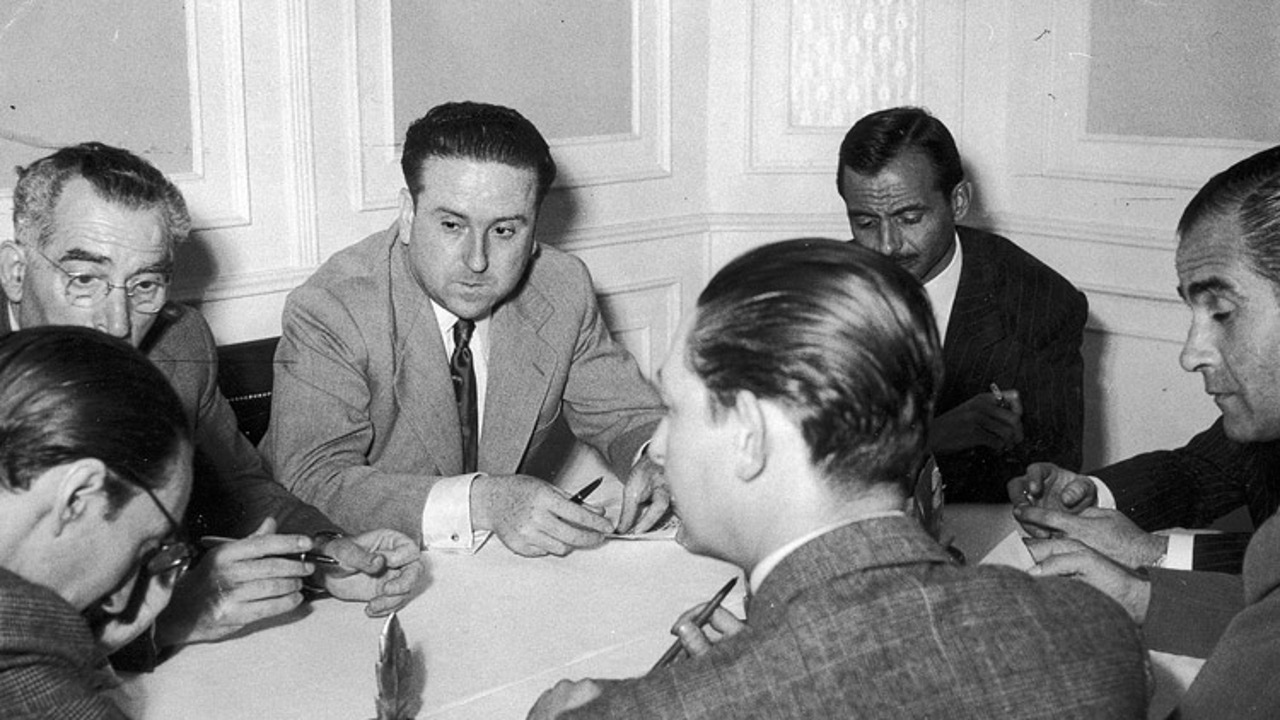
The first years of the label are a commitment to foreign literature, especially some of the names of the moment in American fiction, as proven by the presence of titles such as “Knight Without a Sword” by Lewis R. Foster; “This is my harvest”, by Lee Atkins; “Nina”, by Susana March, or “The Last Hope”, by Mildred Masterson McNeilly. However, there was a pending issue in that first Editorial Planeta and it was the Spanish authors. In order to find new voices, in addition to promoting others from more veteran creators, In 1954 the Planeta Prize was born. The first edition of the award, with an initial prize of 40,000 pesetas, was celebrated on October 12 with an evening at the Lhardy Restaurant in Madrid with a jury formed by Bartolomé Soler as president, César González Ruano; Tristán La Rosa; Pedro de Lorenzo; Romero de Tejada; José Manuel Lara himself and Gregorio del Toro as secretary. 247 original works were submitted and Juan José Mira was the winner with the novel “In the Night There Are No Paths” which hit bookstores the following year with a first edition of 5,000 copies. The finalist was Severiano Fernández Nicolás with “Land of promise”.
The fact that Mira obtained that first Planet was a declaration of principles because in Franco’s Spain they had chosen an author who was trying to make a name for himself with his detective novels. The writer had not had it easy after having participated during the Civil War on the Republican side and being a member of the Communist Party already in hiding. That was one of José Manuel Lara Hernández’s maxims and one that continues to be maintained: give space to all voices, regardless of their political position. In this way, with the passage of time, in Planeta, especially with the help of the legendary Espejo de España collection, the memories of some of the ministers of Franco’s governments would be collected, but also those of Santiago Carrillo or Dolores Ibárruri, those of the first president of the Second Republic Niceto Alcalá-Zamora or those of General Emilio Mola, for many the director of the coup d’état.
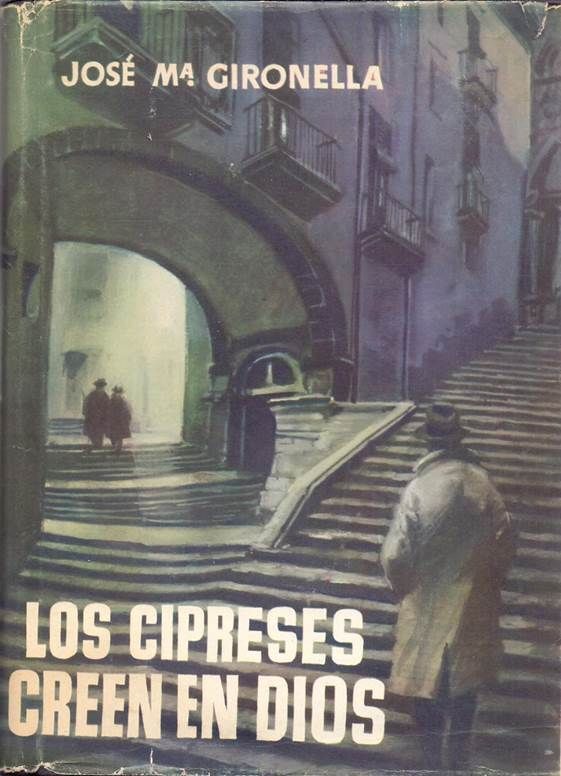
But we have taken a leap in time and it is convenient to return to one of the key moments in the history of Editorial Planeta and that will be fundamental for its consolidation. When he was thirty years old, a young and ambitious Catalan author named José María Gironella had settled in Paris to write a novel about the Civil War. It took him four years to complete a voluminous 800-page manuscript. Back in Spain, Gironella took him to some publishing houses, such as Destino by Josep Vergès, where they did not read a single page. It was González Ruano who told him about “a colorful editor” who might be interested in that work and Gironella did not hesitate to take it to him, standing in line, like other writers, to get an appointment. That same day, at night, María Teresa Bosch woke up her husband at three in the morning after spending hours reading the text from that stranger. «Pepe, this book is going to save us»he commented. The next day, as Gironella told the journalist Xavier Moret many years later, fsigned the publication contract for “Los cipreses believe in God” with Lara. The book was the first great publishing phenomenon in Spanish literature of the 20th century. Everyone read the novel, even Franco himself.

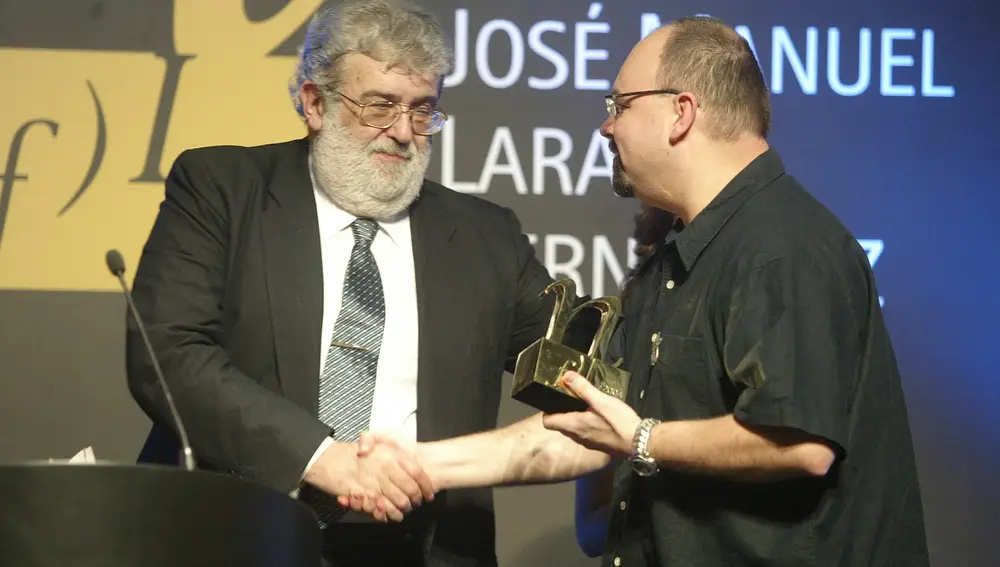
Gironella, in 1953, opened the doors to literature aimed at all types of readers, a phenomenon that could be compared, also in Planeta, with that experienced by “The Shadow of the Wind” by the writer Carlos Ruiz Zafón. We are talking about titles with thousands of copies sold in our country, but also with abundant translations around the planet, often thanks to word of mouth, which is the best publicity that can be achieved.
Planeta was creating its own team of authors, with writers as different as Pío Baroja, Wenceslao Fernández Flórez, Carmen Kurtz, Ana María Matute, Juan Goytisolo, Luis Romero, Concha Alós, Ramón J. Sender, Carmen Laforet, Mercedes Salisachs, Manuel Vázquez Montalbán, Juan Marsé, Juan Benet, Francisco Umbral or Terenci Moix. Added to this are such interesting proposals as the publication of the complete works of foreign authors of the stature of Franz Kafka, John Dos Passos or Ernest Hemingway.
The visionary Lara Hernández began a policy of alliances with other labels that would give him very good results. In 1963, Editorial Planeta’s first major agreement took place with an international partner, the French company Larousse, which allowed the credit sales business to be consolidated. In this way, Planeta began the publication in Spanish of the Larousse encyclopedias. Planeta Crédito will later become Editorial Planeta Grandes Publicaciones.
Likewise, Planeta created an entire galaxy with the acquisition of different publishing houses, whether literary –Seix Barral, Destino, Tusquets or Espasa– or dedicated to essays –Crítica, Ariel or Deusto–, constituting a group that today is made up of seventy imprints that publish in Spanish, Catalan and Portuguese, with presence in the Peninsula, but also throughout Latin America.
Grupo Planeta is not only dedicated to the world of publishing but also has a prominent presence in the media through Atresmedia Corporación de Medios de Comunicación, where we find Antena 3 Televisión, la Sexta or Onda Cero. On the other hand, the newspaper LA RAZÓN belongs to Grupo Planeta. In recent years, there has also been a great commitment to the world of education through proposals such as Planeta Formación y Universidades, with 22 institutions.

That initial investment of just under 100,000 pesetas by the editor José Manuel Lara Hernández from an apartment in Barcelona to set up Editorial Planeta, last year achieved a turnover of 1.8 billion euros, with more than 12,000 employees. Happy anniversary!