
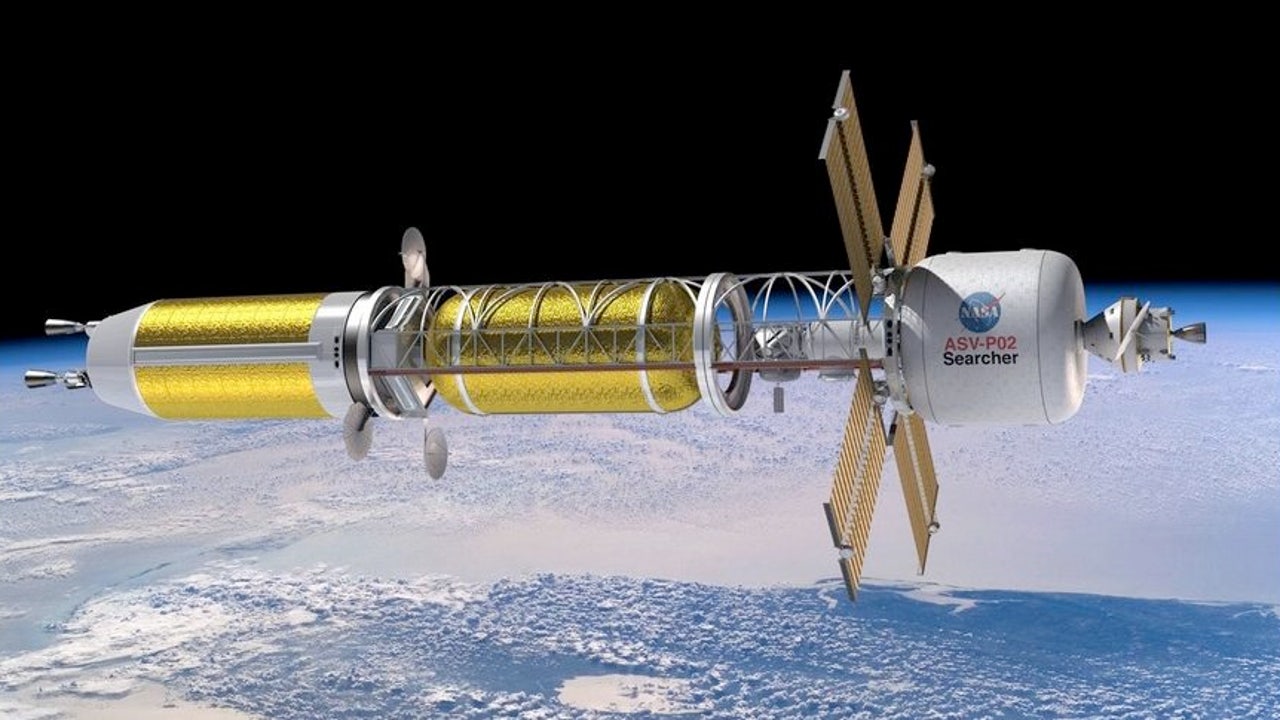
NASA, Space could take several months, even years if traditional chemical fuel is used. The second option is to use nuclear energy.
This alternative technology to propelled rockets whatYotechnology that NASA now develops is called propulsion.eitherntandnuclear energy and uses physicaleithern nuclear, something that couldYoto somethingorn.d.Yoto propel a rocket that makes the trip in only half the time.
Nuclear fission involves using the large amount of energy released when an atom is split by a neutron. This reaction is known as a fission reaction. “Fission technology is well established in power generation and nuclear-powered submarines, and its application to power a rocket could one day give NASA a faster, more powerful alternative to powered rockets whatYomically” explains Dan Kotlyar of the Georgia Institute of Technology.
NASA and the Defense Advanced Research Projects Agency (DARPA) are jointly developing this technology and aim to deploy and demonstrate the capabilities of a prototype system in space in 2027which could make it one of the first of its kind to be built and operated by the US.
Nuclear thermal propulsion could also one day boost maneuverable space platforms that would protect American satellites in and out of Earth’s orbit.
The Kotlyar team builds models and simulations to improve and optimize nuclear thermal propulsion system designs. Its goal is to design the nuclear thermal propulsion engine that will take a manned mission to Mars.
At the moment, more than 400 nuclear reactors in operation around the world They use nuclear fission technology. Most of these operating nuclear reactors are light water reactors. These fission reactors use water to slow neutrons and absorb and transfer heat. Water can create steam directly in the core or in a steam generator, which drives a turbine to produce electricity.
Nuclear thermal propulsion systems work similarly, but use a different nuclear fuel that has more uranium-235. Also They operate at a much higher temperature, making them extremely powerful and compact. Nuclear thermal propulsion systems have a power density approximately ten times greater than a traditional light water reactor.
Nuclear propulsion could have an advantage over chemical propulsion for several reasons: They are lighter, and their thrust makes the rocket accelerate faster. He nuclear thermal propulsion engine will be different from all existing fission energy systemsso engineers will have to create software tools that work with this new engine.
“My group designs and analyzes nuclear thermal propulsion reactors using models – concludes Kotlyar -. We model these complex reactor systems to see how things like temperature changes can affect the reactor and the safety of the rocket. But simulating these effects can require a lot of computing power.”