

With a focus on climate changehe San Juan Bay Estuary announced this Tuesday its collaboration with the Department of Natural and Environmental Resources (DRNA) and the Aqueduct and Sewer Authority (AAA) to develop strategies that improve the quality of the bodies of water that make up the ecosystem.
In a press conference, the executive director of the non-profit organization, Brenda Torres Barretoexplained that the process is part of the new review of the Comprehensive Estuary Management and Conservation Plan (Estuary Plan), which will be published in 2027. The entity published the original plan in 2000 and last revised it in 2016, as the document that governs its work.
The San Juan Bay Estuary is a body of water that connects lagoons, rivers and canals with the Atlantic Ocean. According to Torres Barreto, the pollution It represents a threat to the well-being of the communities and species that inhabit these areas.
“What is new (in the Estuary Plan), really, is to identify those risks that are new since 2000, that had not been worked on in a way that they are addressed with actions and budget. “These challenges are largely guided by climate change.”said Torres Barreto, to questions from The New Dayat the headquarters of the Tourism Company, in Old San Juan, where the conference was held.
The new review of the Estuary Plan will focus on proposing infrastructure to improve water quality, such as integrating nature into urban systems, known as green infrastructure. Some of the bodies of water that belong to this ecosystem are the Martín Peña channel, the San José lagoon, the Los Corozos lagoon, the Piñones lagoon, the San Juan bay, the Condado lagoon and the Las Cucharillas swamp.
Together with the DRNA and the AAA, the Estuary will evaluate solutions to protect the life of the hundreds of species of plants and animals that take refuge and feed in the ecosystemsuch as wetland plants, bass fish, coquí and Antillean manatee.
In addition to the contamination of water bodies by solid waste and toxic liquids, the passage of hurricanes Irma and Mariain 2017, deteriorated the natural and material infrastructure of the estuary. Faced with this vulnerability, Torres Barreto highlighted, the Estuary Plan will seek to strengthen communities and the ecosystem.
During the press conference, the director of the Caribbean Division of the Federal Environmental Protection Agency (EPA, for its acronym in English), Carmen Guerrero Pérezhighlighted some environmental challenges that impacted the stability of the estuary during recent decades, such as droughts.
“We now have emerging contaminants, we have exotic species, we have so many challenges and, at the same time, the element of the importance of addressing demands for environmental justice in communities throughout Puerto Rico has been highlighted”, Guerrero Pérez stated.
Among the most common contaminants in bodies of water are microplastics. solid wasteresidues of medicines and chemical products discharged by industrial or domestic activities. In recent decades, scientists have identified invasive species that threaten the native species of the estuarine ecosystem, including lionfish, African red mangrove and invasive algae.
Meanwhile, climate change in Puerto Rico has caused extreme heat, sea level rise, erosion, floods and reduction of bodies of water. These effects affect the life of the fauna, flora and people that live in the aquarium.
“Climate change is not a projection; It is a reality that, in fact, we have to incorporate new actions to be even more effective”said Torres Barreto.
While the review of the Estuary Plan is developed over the next three years, the organization will continue to support dredging efforts in the Martín Peña channel, the decanalization of the Juan Méndez stream, and the reforestation of the estuarine flora.
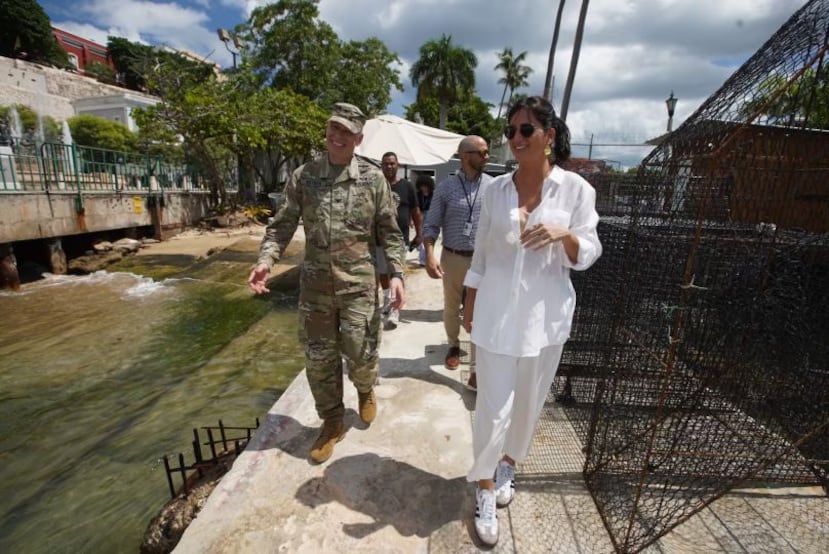
At the end of the conference, the organization took a boat ride through the estuary, with a route focused on the areas of the Atlantic Oceanthe San Juan Bay and the Martin Peña pipe.
In addition to San Juan, the estuary includes parts of Guaynabo, Toa Baja, Cataño, Bayamón, Carolina, Loíza and Trujillo Alto.