
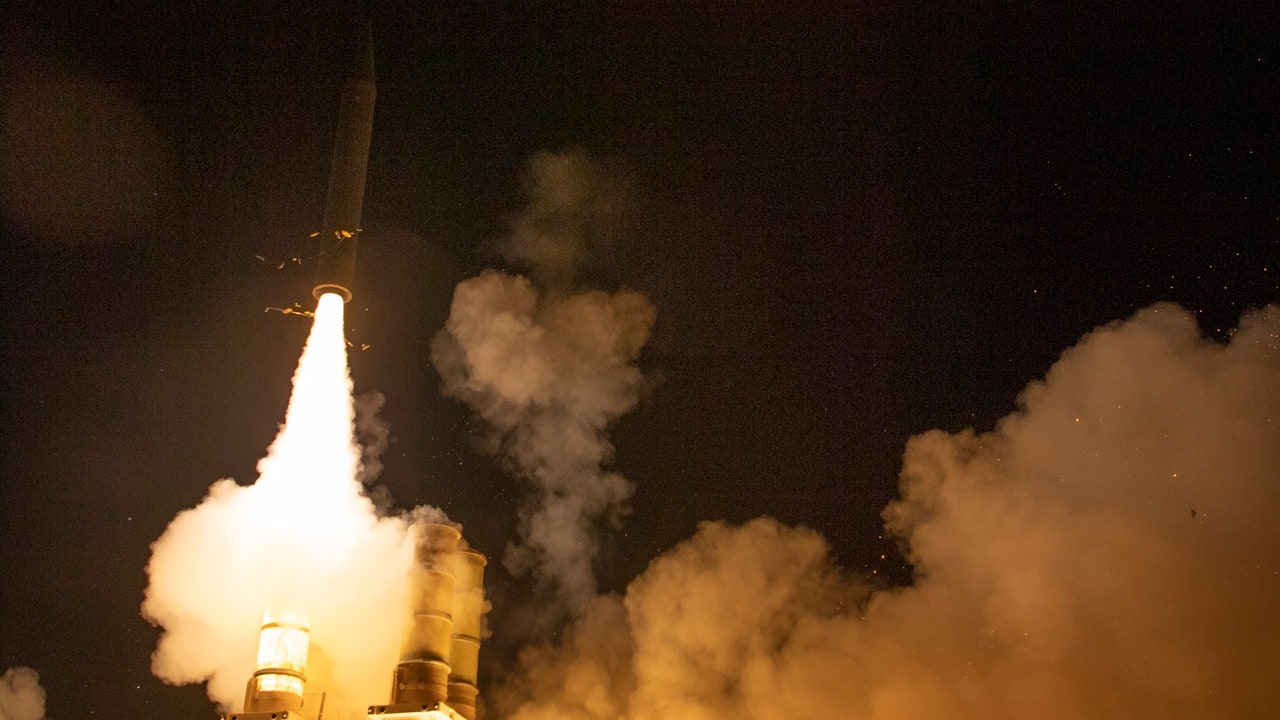
Hamas, Hezbollah, the Houthis…Israel is attacking several enemies at once with fighter jets and sometimes with tanks and ground troops. At the same time, The Jewish State must protect itself from the attacks of its enemies from various directions. Hezbollah in Lebanon alone has an arsenal of approximately 150,000 rockets, including apparently medium-range weapons with a range of 1,500 kilometers.
Israel keeps secret the size of its weapons arsenals. “The detailed figures are closely guarded by the Israeli Defense Ministry, are likely only known to Prime Minister Benjamin Netanyahu and his senior government colleagues, and can only be shared with its closest ally, the United States,” says Douglas Barrie. , a defense expert at the International Institute for Strategic Studies in London. However, since Israel has long been surrounded by threats, it “has undoubtedly built up considerable stockpiles of its most important weapons.” he adds.
Furthermore, in Israeli territory there are U.S. weapons and ammunition warehouses worth up to $4.4 billion. In an emergency, Israel can purchase supplies from these American warehouses on short notice.
According to Barrie, the Israelis have been prepared to fight on multiple fronts for many years. “They pay great attention to ensuring that their arsenal of weapons -from artillery ammunition to short, medium and long range anti-aircraft missiles- “It is not clear how to defend against extensive missile attacks. However, it is difficult to make an estimate when only publicly available information is available, Barrie says.
Israel can still export weapons
Ulrich Kühn, head of the research department on arms control and new technologies at the Hamburg Research Institute for Peace and Security Policy, thinks the same. Israel has a “very robust” arms industrywhich even allows it to continue exporting weapons. It also has help from the United States: “The Americans have been supplying a significant number of the most modern rockets and bombs for many years,” says Kühn.
Hezbollah also has a huge rocket arsenal. Many of these weapons were Iranian-made. “However, Israel has removed some central weapons depots in Lebanon in recent days,” he added.
Iran has also improved enormously in recent years, especially in short- and medium-range missiles and drones, as well as air defense. However, the success with which Iran can use its weapons against Israel is questionable, says Kühn, referring to the Iranian attack on April 14 of this year. “Most of the Iranian drones and missiles were shot down by Israel and the US Navy. Furthermore, Israel was able “precisely disable Iran’s missile defenses protecting the uranium enrichment facility at Natans”. This shows: “Iran has mass, but not necessarily class.”
However, in the most recent attack against Israel on Tuesday of this week, Iran was much more successful, surpassing Israel’s three-tiered missile defense several times and hitting military targets in the country. This was probably successful because, unlike April, this time Iran apparently relied on ballistic missiles, which fly significantly faster than kamikaze drones and cruise missiles.
“There are not enough Iron Domes in the world to intercept all of Hezbollah’s missiles”Tom Karako, a missile defense expert at the Center for Strategic and International Studies in Washington, told the New York Times. Missile defense saves time. “But we must make good use of this time to end the threat by other means.”
Hamburg researcher Ulrich Kühn says he is less concerned about Israel’s purely material war capabilities. “The situation is different when it comes to a long-term political strategy: the Netanyahu government does not seem to have it.”