
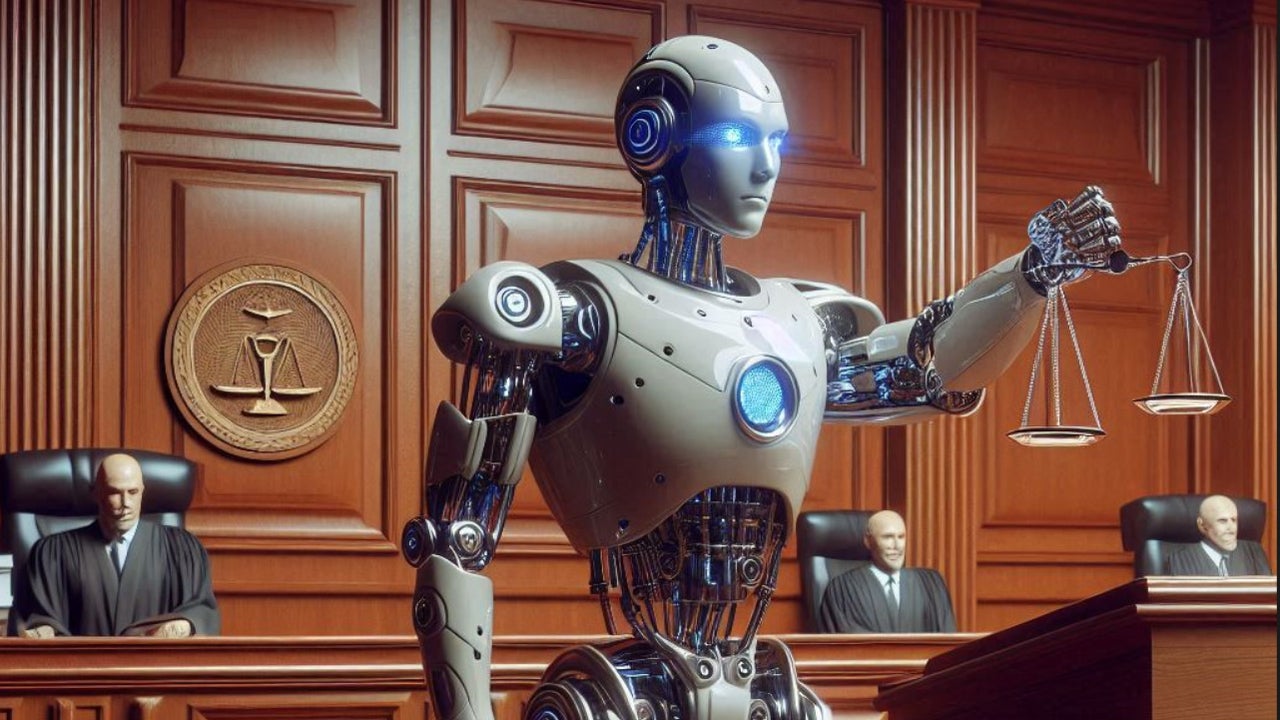
Artificial intelligence no longer stays alone in companies or in the private sphere, It has also been introduced into public administration and more recently in a fairly controversial area: justice. And with different results.
One of them is the AI4Justice project in Catalonia. Here the AI is used to help judges in the writing of sentences, basically acting as a search engine: looks for key words in prior jurisprudence. This Initiative has allowed reducing the drafting time of sentences from two hours to approximately 20 minutes.
From the same Ministry of Justice, they point out that approved a policy to improve the efficiency of the judicial system thanks to the use of AI. The document establishes the “rules of the game” to use this technology without neglecting the ethical part.
The benefits are quite evident. The use of AI allows faster and more efficient administrative management. It would also guarantee consistency in judicial decisions, by dispensing with subjective data. Finally, It can become a very powerful legal resource for people with less resources.
But not everything is good news. The first of the risks is that an AI is a tool programmed by humans and here biases can reflect prejudices that alter a verdict. At the same time, It is very difficult to understand how an AI reaches a sentencewhich complicates to think of an appeal if the path that this “judge” followed is not known. And to this we must add two strictly technological aspects. The first of these is that justice dehumanizes, human factors disappear in an area that is. The second aspect is that, if AI makes a mistake … Who is the culprit?
To know what an AI thinks in this regard, we consult Chatgpt. This is your answer: “AI could be a great tool to support the judicial system, but should not replace human judgment. Its best use would be as an assistant that helps judges and lawyers, not as an entity that dictates sentences. Justice is not just data and rules, it also implies interpretation, equity and empathy, aspects in which AI is still far from humans. ”
The interesting thing is that we also ask about The difference between the mistakes that a human can make and those who can have an AI And why we understand the first.
“That is an excellent reflection -explains Chatgpt -, and touches the heart of the debate on AI and Justice. Why do we trust a human judge more, with their biases and limitations, than in an algorithm created by humans? When a judge is wrong, we understand that humans are fallible. We can appeal, discuss and contextualize your mistake. But when an algorithm is wrong, the sensation is different: we perceive it as something mechanical and inflexible, and the worst thing is that it can make the same error in a massive and systematic way without anyone noticing it in time. So, Can we trust an AI in court?
Perhaps the key is not to “trust or not trust”, but to define its role. AI can be a tool to help judges, improve efficiency and detect biases, but not to replace human criteria. ”