
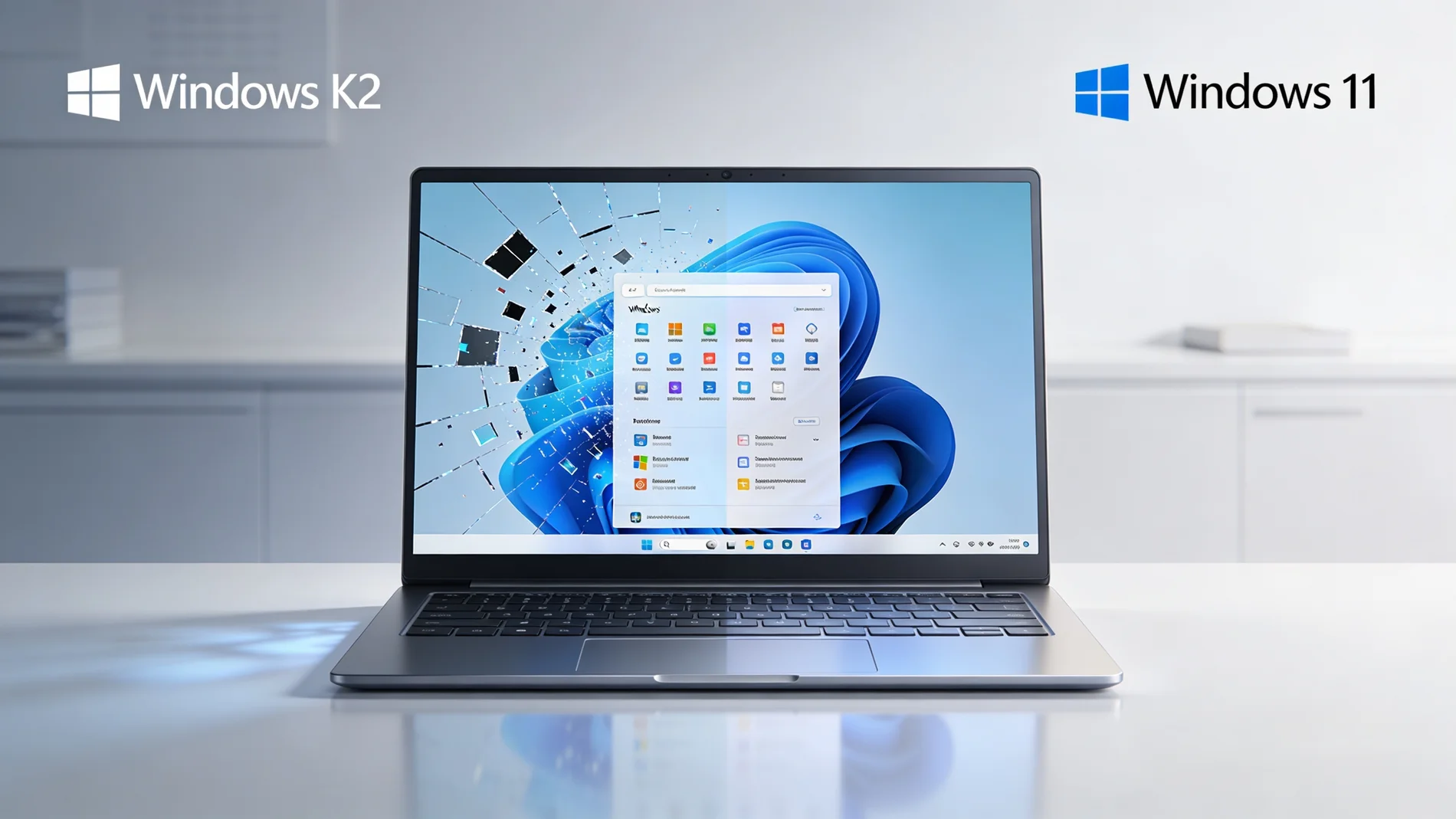
Last February, Pavan Davuluripresident of Microsoftconfirmed to The Verge that the company was working on a plan to address Windows 11 issues that have been eroding trust in the operating systemwhich will be five years old this fall. As Windows Central now reports, that plan has a name, Windows K2. Microsoft has been working on it since the second half of 2025 and hopes that, by the end of this year and 2027, Windows 11 is a platform that users are proud to use.
Windows K2 addresses the main complaints received in recent years, from from AI feature overload and bloatware to performance issues and reliability issues. This is not a specific version of Windows 11 that will arrive in the future, but rather a continued effort that seeks to guarantee the quality of the operating system with improvements that will be implemented progressively. Some of them, in fact, have already been launched, such as the removal of the Copilot button in some apps.
The pillars of Windows K2
Microsoft believes that the Windows experience is based on three pillars and that, if one of them fails, the whole suffers. These are performance, product care and reliability.
The company is promoting an internal cultural change to improve themseeking to ensure that internal teams can better contribute code to Windows. It is also moving away from the approach it has maintained in recent years, focusing on agility when implementing new functions, something that has ended up affecting quality and reliability. For this reason, new features cannot be released before reaching a certain quality level internally. This already existed before, obviously, but now the bar is much higher.
Performance and reliability
In internal documentation seen by Windows Central, Microsoft acknowledges that it has allowed performance to deteriorate in applications such as File Explorer and games, as well as system interface elements such as context menus. To the point that some performance tests show that Windows 10an operating system with more than a decade behind it, It is faster than its successor.
Regarding video games, the reference is Steam OSthe operating system of the portable game console Steam Deckbased on Linux. Microsoft wants Windows 11 to perform as well as the Valve with the games and for this ‘fundamental changes’ will be introduced in the coming months.
A third party application called File Pilot it is in the case of File Explorer. You will receive performance improvements and will speed up browsing, file processing and searching on your computeradding features like ‘instant search by file name’.
Microsoft also wants to make Windows 11 reliable enough to reduce the pace of updates with Windows Update and you only have to restart your computer once a month.
There is also an effort to make Windows 11 consume less resources and run better on low-end hardware, as well as more fluidly on high-end and handheld game consoles on which it is used.
Interface and user experience
Microsoft plans to bring back Windows 10 features that users miss in Windows 11, such as the ability to move and resize the taskbarone of the most requested in Windows 11.
Windows K2 also seeks for Microsoft Teams to reduce the fragmentation of legacy technologies and interfaces from previous versions. The goal is to make menus, windows and other system elements faster, more stable and more consistent with each other. This will allow you to modernize parts of Windows that still have old designs, such as the Execute or the control Panel.
According to sources cited by Windows Central, Microsoft is also preparing internal changes to make the interface more responsive and consume less memory, so basic elements such as the Start menu or taskbar continue to function smoothly even when the computer is under heavy load.
As part of that work, Microsoft is rebuilding the Windows 11 Start menu from scratch. The new version will be until 60% faster than the current one and will offer more customization options, such as changing its size or hiding some of its sections.
Microsoft is also expected to fix other aspects that have degraded the user experience, such as ads in the Start menu and the intrusive presence of MSN in the Widgets panelprioritizing these instead.