
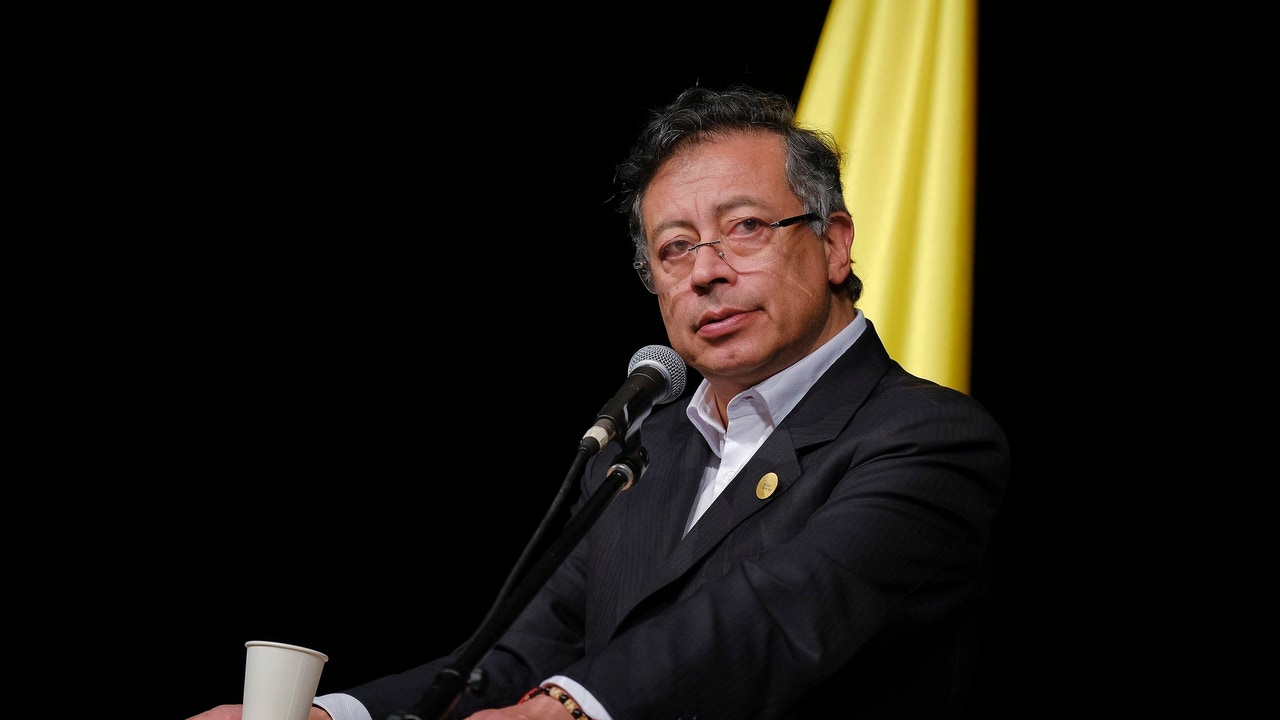
The president of Colombia, Gustavo Petro, has raised the confrontational tone against Donald J. Trump in recent weeks. The Colombian president seeks to get the US president to “get in the ring” with him, in an attempt to divert attention from the serious internal problems facing Colombian society and which, after three years in office, his government has failed to resolve.
These problems include the continued tensions between the Executive and other State institutionsin the face of accusations that Petro seeks to exceed his powers. More worrying is the failure of its security policy. Between 2022 and 2024, kidnappings for ransom increased by 31.9%, total kidnapping by 30%, extortion by 26%, computer crimes by 20.5%, domestic violence by 20.4% and sexual crimes by 11.5%.
So far in 2025, a increase in terrorist attacks against infrastructure, such as oil pipelines, and an increase in kidnappings compared to 2024. Illegal armed groups, for their part, have expanded their territorial presence, which demonstrates that the “total peace” strategy has not managed to significantly reduce the power of these organizations.
Second, Petro’s verbal attacks on Trump seem to respond to the “external enemy” strategy: present a powerful figure that unifies internal public opinion around the leader. Under this logic, the Colombian president challenged Trump – and, more broadly, the institutions of the United States – by inviting North American soldiers to disobey the orders of his president. He later called Trump “rude, ignorant and a liar.”
Days ago, the journalist Daniel Coronelfrom the American Hispanic network Univisión, questioned Petro about the diplomatic crisis with Washington and the situation in Venezuela. The Colombian president responded by pointing out Trump as the main person responsible for both situations. Petro, in this context, seems to be preparing the ground for the crisis with the United States to escalate until generating an environment of national tension that allows it to consolidate internal support in the face of the legislative elections in March and the presidential elections in May and June 2026.
Its objective – according to analysts – would be to remain in power, either by reforming the Constitution to allow his re-election, or, if the constituent project fails, by promoting a close candidate who guarantees his continuity and political impunity. Meanwhile, Petro will continue to celebrate every response he receives from Trump. Domestically, these exchanges offer him an opportunity: they reinforce his political narrative and allow him to present the United States as a national threat. In this context, it would not be strange if the crisis between both leaders deepens as the next elections in Colombia approach.