
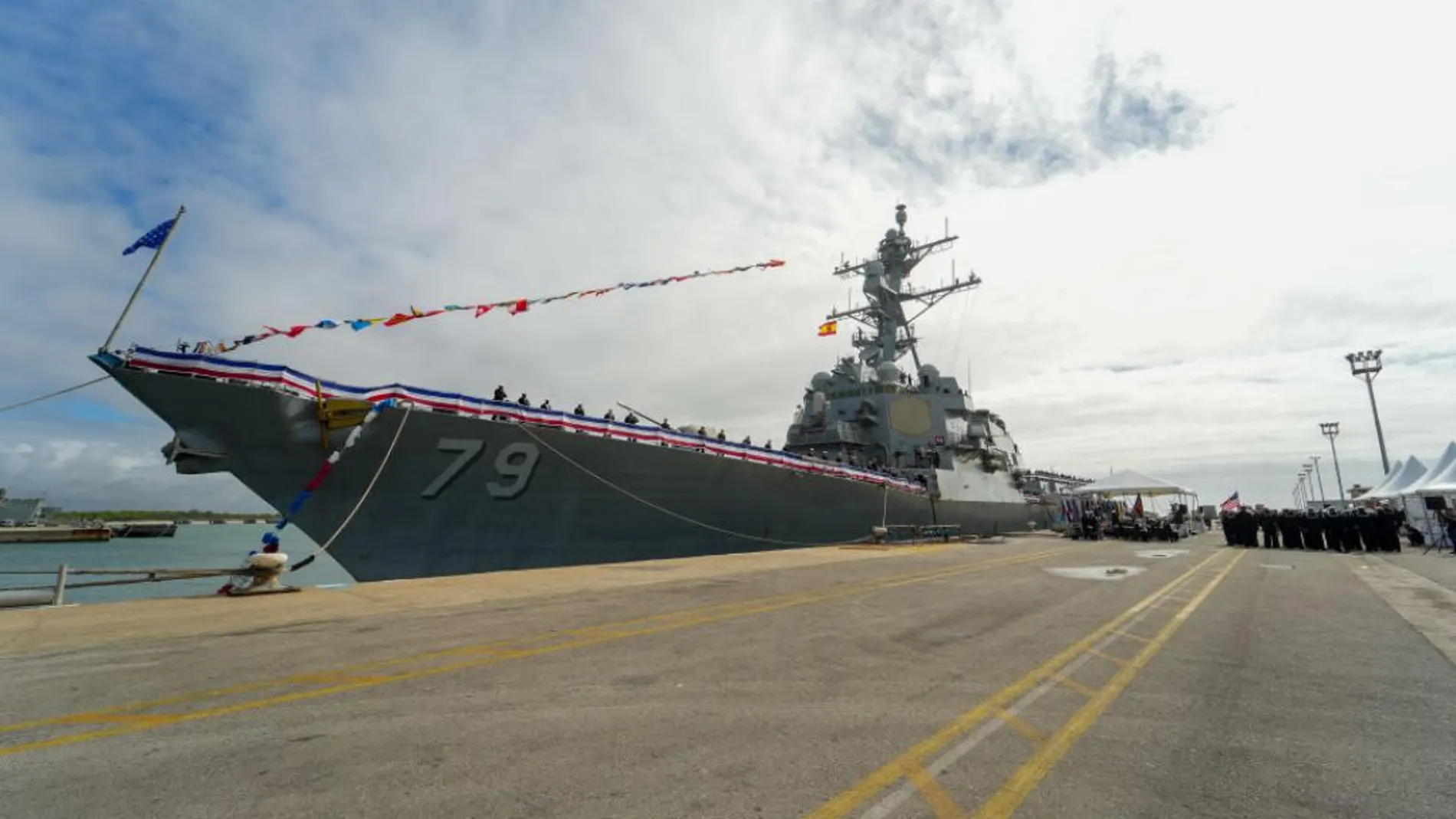
The consequences of the threat by the president of the United States, Donald Trump, to put relations with Spain on hold are far from known. The North American leader said this past Tuesday that he intended to “cut off all trade” with our country after refusing to participate in the attack on Iran and, even more so, not allowing the US air fleet to use the military bases of Morón and Rota.
The measure, announced after a meeting with German Chancellor Friedrich Merz, has many signs of not being carried out, or of being retracted as has already happened with the tariffs, but there are two ministries that could see their capacities reduced: Interior and Defense. Spain is highly dependent on foreign countries to supply spare parts, software and ammunition for its Army, but also for police units. Trump’s rejection, together with the veto of the Government of Pedro Sánchez to trade with Israel in military matters, may leave the departments of Margarita Robles and Fernando Grande-Marlaska largely isolated, although in an unequal way.
Sources from the military sector explain that the one that will suffer the most is the Navy, with relations with the United States “very strong for many years.” Specifically, they point to the new F-110 frigates that Navantia is building and that have the SPY-7 radars installed, “born” at the AEGIS SCOMBA Integration Center, a test facility that the Spanish company has with Lockheed Martin in New Jersey. “That’s where we’re tied.”
The engineer Sener has different alliances with American companies for the development of different missiles, key especially after Spain’s veto to import this type of material from the Hebrew country. Trump’s decision could affect this section, with which Spain has no alternative. In addition, spare parts for the F18 fighters that are still operational, and for the Harriers, the other aircraft currently used by the Air Force, arrive from the United States.
In 2023, Spain formalized the purchase of eight anti-submarine helicopters from the aforementioned Lockheed that have not yet been delivered. They are designed precisely to be attached to future frigates, so the parts for their maintenance in the future also depend on the United States.
The problem with the Ministry of the Interior is more operational than supplies. Spain has found alternatives in the European market – a commitment by the Government to strengthen the community defense sector – to replace Israel. But tensions between the two countries could leave some holes in the exchange of key information such as drug trafficking, terrorism or illegal immigration.
Although it is early, the sources consulted in intelligence have not noticed “major problems”, but they do not deny that uncertainty is not good for their work. Some voices believe that the situation could resemble that experienced almost two years ago, when two CNI agents were arrested for passing information to the North American CIA.