
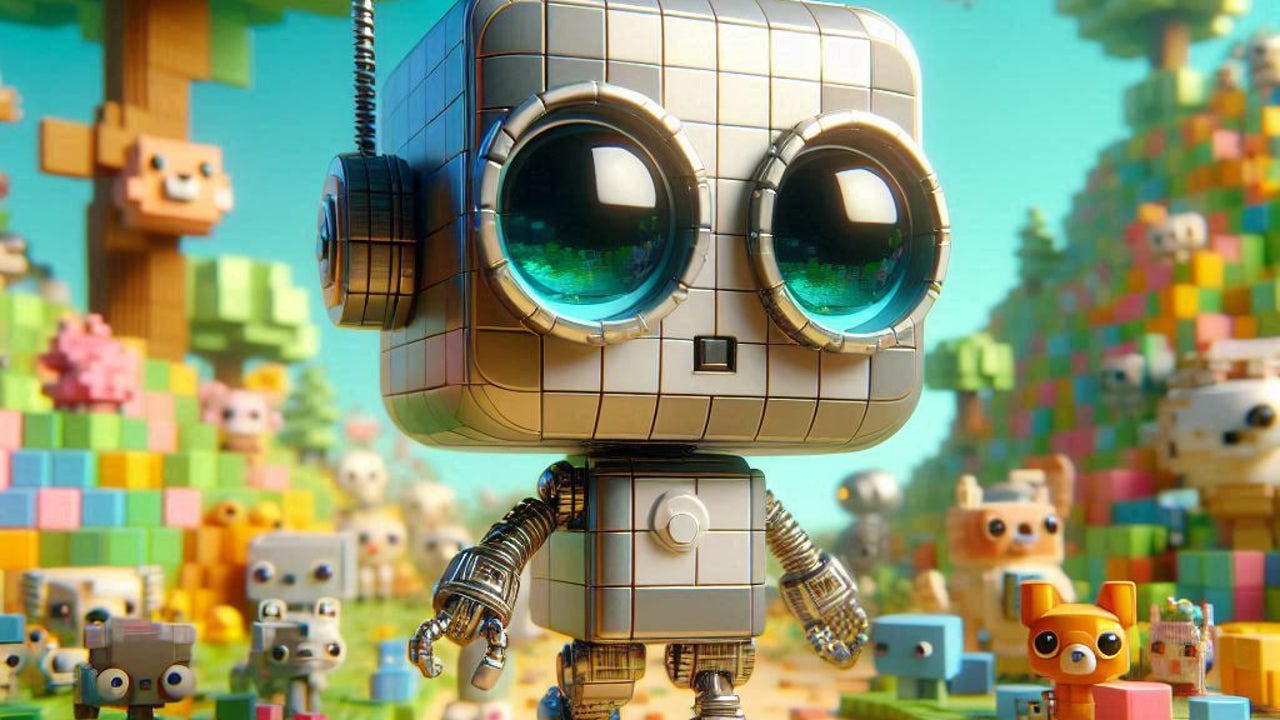
Exactly one year ago today, a team led by Robert Yang, a computational neuroscientist at MIT, closed its laboratory and launched a company, Altera, whose goal is to “create digital human beings who live, care and grow with us.” Each one with its personality and unique qualities. And now, a thousand of them have been sent to Minecraft for an experiment.
The Altera team is made up of true industry leaders: eexperts in computer science, physics and engineers from MIT, but also from Stanford, Google, Supercell and more.
“We believe that digital beings and digital relationships will enhance, not replace, human-to-human interactions – Altera explains on its website. As digital humans vastly outnumber us, they should become a source of empathy, fun, friendship and productivity.”
Since September, Yang’s team has released 1,000 of these “digital humans” in the popular Minecraft universe. And he let them act. The result, according to an article published by MIT itself, has been outstanding.
Yang’s team began the experiment with small steps. They first released small groups of about 50 agents into Minecraft to observe their interactions. Over the course of 12 days of play (4 hours in the real world), the agents began to exhibit different behaviors… when they were all originally designed the same. For example, some became very sociable and made many connections with other characters, while others seemed more introverted. Each agent’s “likability” rating (as measured by the other AIs) changed over time as the interactions continued. Agents were able to track and react to these social cues: In one case, an AI chef tasked with distributing food to the hungry gave more to those he felt valued him most.
More human-like behaviors could also be observed in a series of simulations of 30 agents. Even though they all started with the same personality and the same general goal (create an efficient village and protect the community against attacks from other creatures in the game), They spontaneously developed specialized roles within the community, without anyone programming them for it..
They diversified into roles such as builder, defender, merchant and explorer. Once An agent had begun to specialize, his actions in the game began to reflect his new role. For example, an artist spent more time picking flowers, farmers collected seeds, and guards built more fences.
“We were surprised to see that if you give them the right kind of brain, they can have really emergent behavior – Yang points out -. “That’s what we expect humans to have, but we don’t expect machines to have.”
As more and more AI agents joined the experiment, their interactions they became more specific in responding to needs, but maintaining their empathy.
Yang’s next goal is to bring these digital humans to the Roblox universe… and then to the real world: he not only wants them in a video game, but also in our daily lives. Their dream is that they care about us and work with us to help us solve problems, in addition to keeping us entertained. “We want to create agents that can really love humans, like dogs love humans, for example,” Yang concludes.
The problem? In the same way that these digital agents have developed their own personality through interaction, we must ensure that it never leans towards bad habits. Or what We humans begin to interact exclusively with them.