
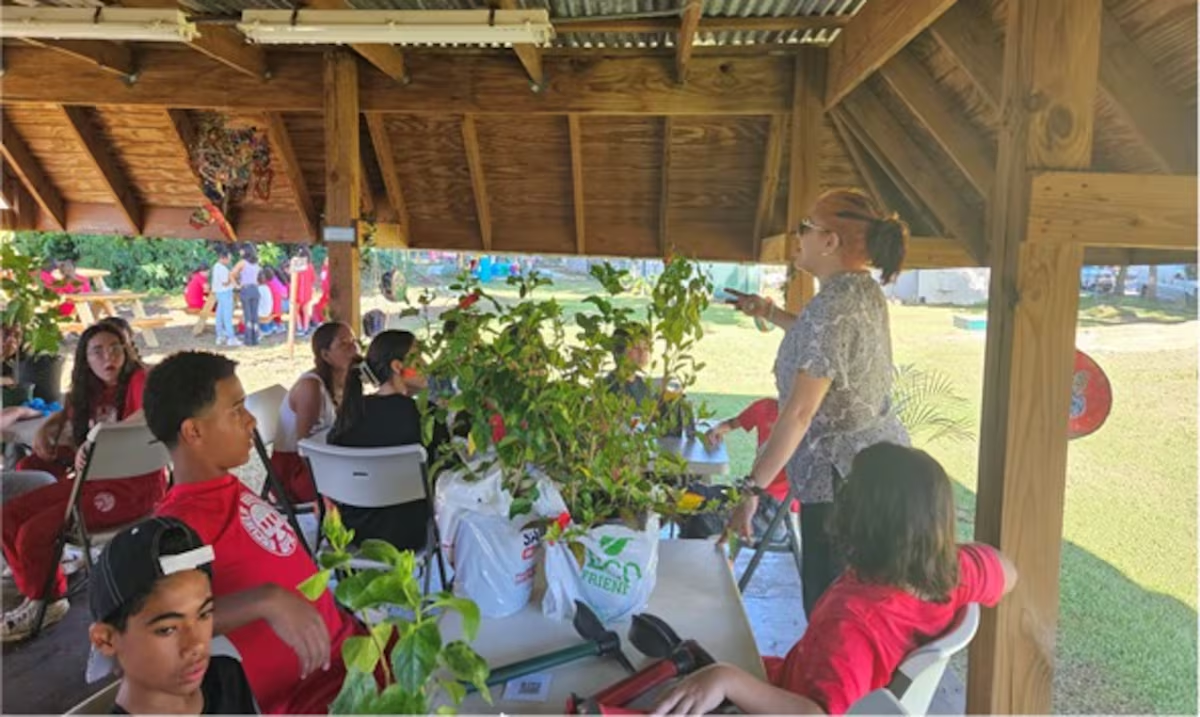
Promote green spaces as living laboratories to teach sustainability from an early age to university education. This is how the mission of the Environmental Education and Sustainable Development Laboratory (LEADS) of Río Piedras Campus of the University of Puerto Rico.
In a context where Puerto Rico is highly vulnerable to the effects of the climate changethe project, inaugurated in 2023 under the leadership of Dr. Keyla Soto Hidalgois committed to rethinking the use of existing spaces within the facility and converting them into active learning tools.
“We asked ourselves: ‘How can we develop already available spaces and give them a double use to educate ourselves and generate environmental awareness?’”explained Dr. Soto Hidalgo, professor at the Faculty of Education of the Rio de Janeiro campus.
Based on this question, a study was carried out a year ago in collaboration with the campus Geography Department and the Mathematics area of the University of Puerto Rico High School (UHS)through which a Mavic 3T drone was used and the software DJI Terra to capture a thermal image of the LEADS aerial view. The analysis, carried out with thermal sensor technology and geospatial processing, showed the positive effect of vegetation cover on urban temperature.
“The ‘data’ shows how that LEADS space is a lung in the facility. It lowers the temperature drastically compared to the parking area and the areas surrounding the street,” highlighted Soto Hidalgo.
Environmental awareness
The area known as “EcoCreando”, developed by LEADS, functions as an outdoor learning space within the Río Pedrense campus, where interdisciplinary projects are integrated in contact with the natural environment.
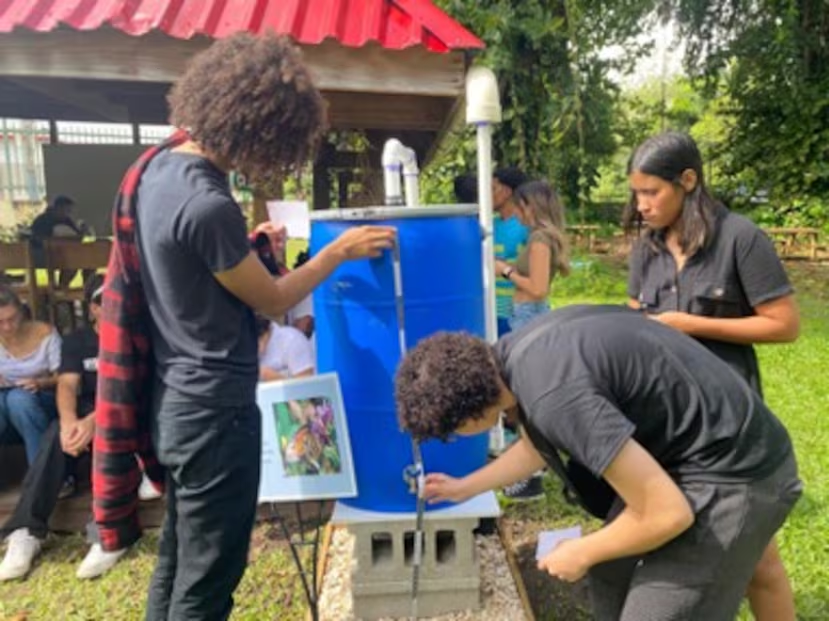
In this place, adjacent to the campus’s Nursery School, the students have worked on initiatives, together with the UHS Mathematics and Physics team, such as the design of irrigation systems using geometry concepts, as well as renewable energy exercises and rainwater harvesting through storage systems.
“Before, children spent a lot of time in parks and forests, they shared much more contact with nature versus now, when technology attracts more of their attention every day, and from closed places,” he explained. Yanitza Lebron Camachoteacher at the UPR Nursery School in Río Piedras and assistant coordinator of LEADS activities.
“While they are in nursery school, they can have that balance between the environment of a classroom and time outside in the playground”he continued, before sharing how the children are excited to study under an 80-year-old ceiba tree, an area they call the “Little Green Corner,” which provides shade for reading and writing in the laboratory patio.
The space also serves as a “relaxing therapy” for students with functional diversity “because it calms them and helps them focus more by exploring new experiences and pleasant sensations,” said the preschool teacher.
The initiative also responds to the shortage of green spaces in Puerto Rico, and proposes an educational model based on the integration of the natural environment into the teaching process.
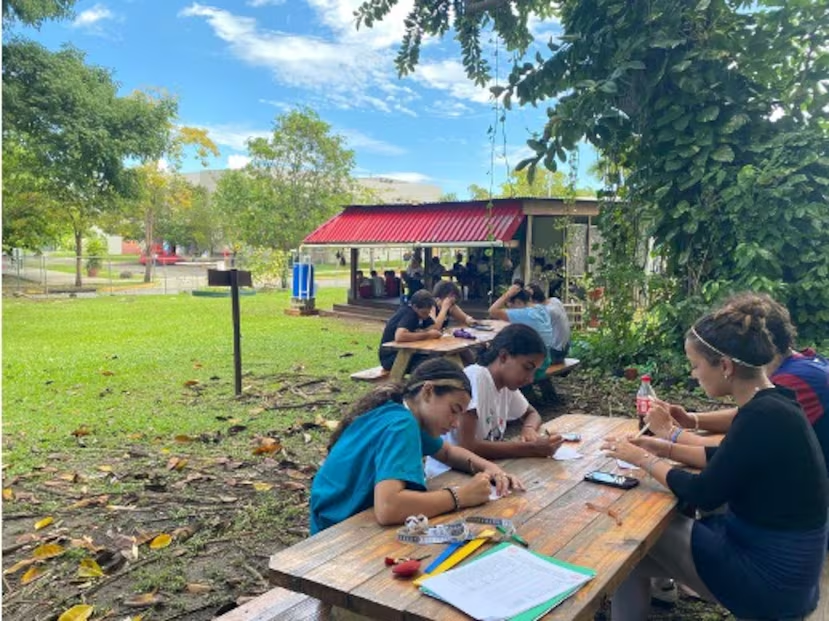
Derived from the LEADS project, Soto Hidalgo promoted the Congress of Environmental Education, Climate Change and Sustainable Developmentwhich was held for the third time this year to strengthen education, integrate science and promote collective action as essential resilience strategies.
Early teaching of ecological planting
80% of the food in Puerto Rico is imported. In response to concerns about food insecurity, LEADS teaches how to grow resilient products to address the effects of climate change.
“Children are used to seeing food in supermarkets, but they don’t see how it grows. We want to offer them the experience of growing, with them directly, in a space like this, at school,” said Lebron Camacho. He highlighted that, after planting activities in the environmental laboratory, the students have shown interest in continuing the practice from their homes.
In the school garden, they have collaborated with professors from the Faculty of Education and Science teachers from the Elementary School of the UPR and the UHS to develop planting workshops. Also, they have worked with the Department of Natural and Environmental Resources in planting native plants and trees.
As part of these workshops, they have planted a variety of foods, including bananas, pigeon peas, lettuce and avocados. Currently, a group of students from the Environmental Sciences program of the Faculty of Natural Sciences are developing projects on the cultivation of cassava and sweet potatoes to learn how resistant they are to climate change.
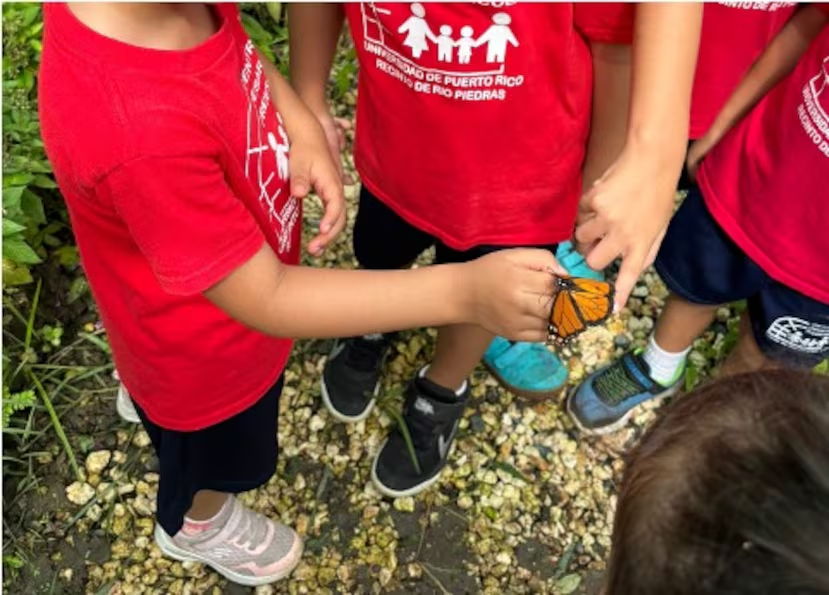
Apart from instructing about sustainable planting, they also educate about the importance of pollinators. In the green area, they maintain a butterfly garden, in which the successful reproduction of the monarch butterfly and the study of the zebra butterfly, rare in the area, were achieved.
Looking to a sustainable future
“You, as an individual, ask yourself, ‘How can I mitigate and adapt to an environmental situation that I can no longer control?’ Well, definitely, the only thing we have left is education”Soto Hidalgo reflected.
With that certainty, the doctor examined the University’s curricula and noticed that many graduates had never taken a course on basic concepts of environmental education.
For this reason, beyond offering the LEADS space and the possibility of participating in activities such as the Environmental Education Congress, Soto Hidalgo created the first elective course aimed at all students: Environmental Education with an emphasis on Climate Change and Sustainable Development, which will be offered for the second time next semester at the Faculty of Education.
In May, the program will work in collaboration with that Faculty as part of the commemoration of Educational Week, where they will bring portable butterfly houses to educate about the metamorphosis cycle of butterflies and their importance in ecosystems.
“Sometimes, we think that with some classes we are not necessarily going to change someone’s life, however, we can. Sometimes, a small intervention can change the entire dynamic and the entire decision-making, from the professional level to someone’s personal level,” Soto Hidalgo concluded.