
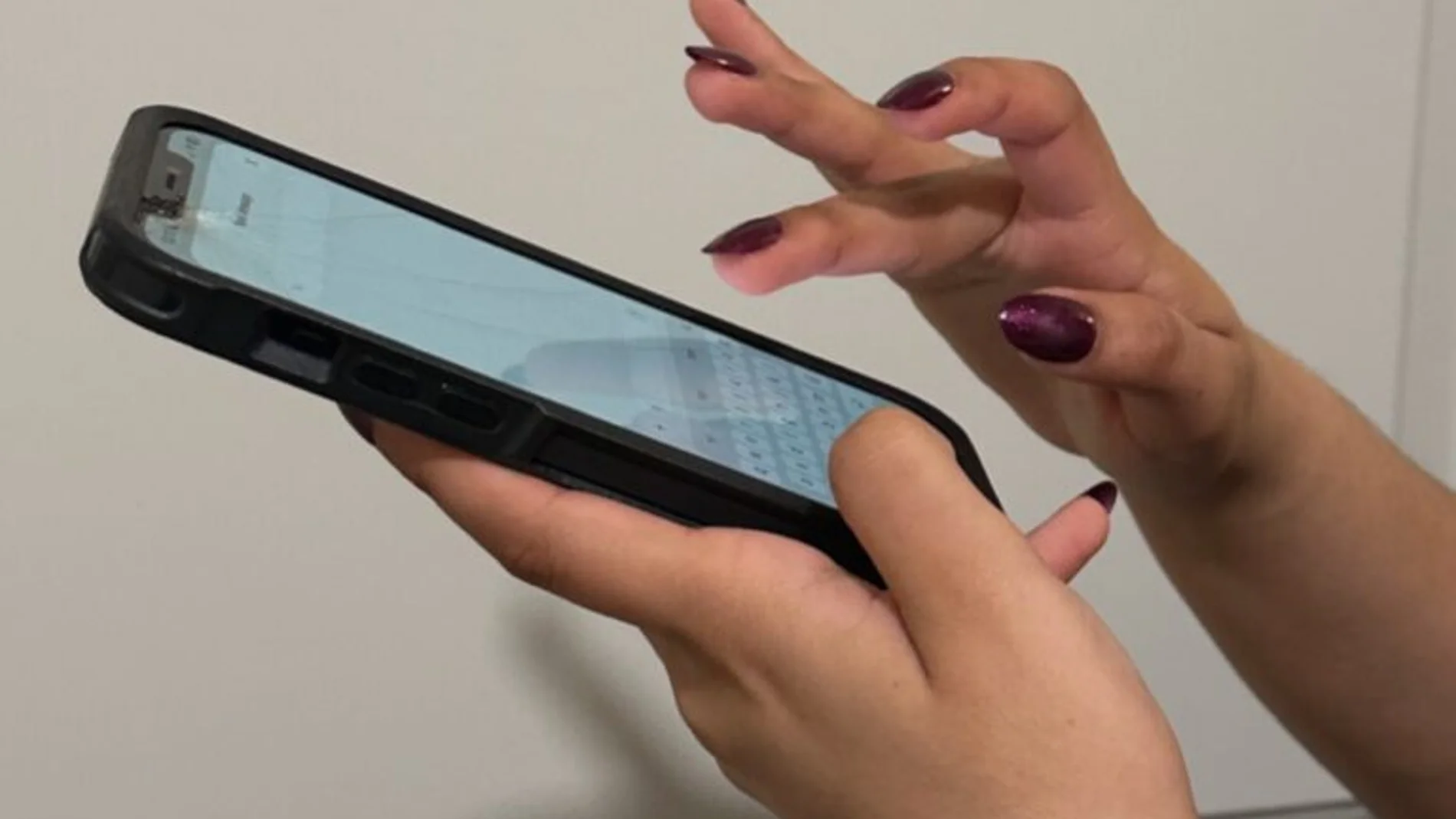
Whoever wears long nails has more than once encountered problems using a capacitive touch screenlike those who usually use mobile phones, tablets and other devices. The reason is that nails are not conductive and They do not alter the electric field of the screen as the skin of the fingertips does.so your contact is not registered as a touch, which in this case is a nuisance. The solution could be a conductive nail polishaccording to research presented in the American Chemical Society in Atlanta, Georgia.
It all started as a project Manasi Desaiuniversity student Centenary College of Louisiana interested in cosmetic chemistry, who wanted to look for a way to make nails compatible with touch screens better than the current ones. There are already conductive enamels that use carbon nanotubes, conductive polymers or metal particles mixed with a transparent base. It was also presented at the CES from Las Vegas, in 2013 and 2014, an adhesive false nail with a capacitive tipalthough that technology does not seem to have reached the market.
Desai knew that the conductive enamels that already exist resort to potentially problematic additives if inhaled and, furthermore, they hardly leave aesthetic margin, because they tend to give a black or metallic finish. Together with his supervisor, the organometallic chemist Joshua Lawrenceproposed to develop a transparent, colorless alternative free of toxic materials that could be applied on any manicure.
Desai started with 13 commercial clear nail polishes and wasadding different additivesevaluating its driving performance to determine the appropriate combination. Among more than 50 candidates, he identified as viable options the ethanolamine and the taurinebut neither was the perfect solution on its own. Ethanolamine had the necessary conductivity and compatibility with enamel, but has some toxicitywhile taurine, a common dietary supplement, is not toxic, although It is not completely transparent either.. However, By combining both, Desai achieved the results he was looking for.
Desai’s conductive enamel solution for touch screens is not ready for marketing. Although tests using a bead of modified enamel held with tweezers They did manage to register on a touch screena thin layer of the prototype enamel does not leave enough additive to activate the screen consistently. Besides, ethanolamine evaporates quicklyso the polish only works for a few hours.
But it is a promising first step. Future research will continue to evaluate other compounds and combine them in new formulations. ‘We’re doing the hard work of finding things that don’t work, and in the end, if you do that long enough, you find something that does work.’Lawrence has stated.