
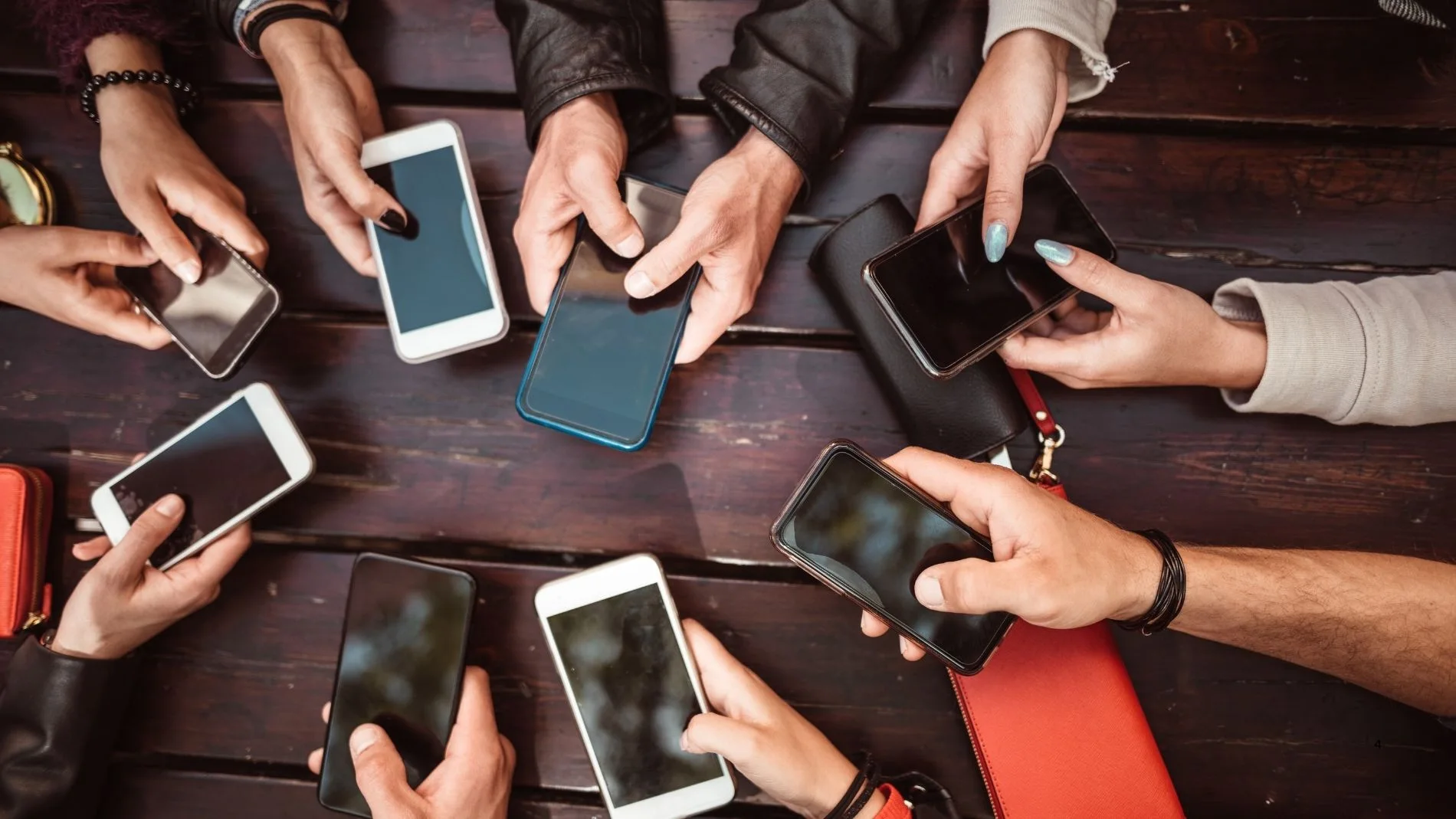
We just have to look around us and see how the scene is repeated in any subway, terrace or waiting room: young people (and not so young) looking at their cell phones almost without looking up. It is not just a question of leisure, but of habit. Or something else. In recent years, the use of social networks has gone from being entertainment to becoming, in many cases, a routine that is difficult to control.
A hyperconnected generation
Experts have been putting figures on what many intuited for some time. An editorial in the Journal of the American Medical Association warned of worrying patterns among adolescents:
- 48% lose control of the time they spend on their mobile
- 25% use it to escape or can’t stop thinking about networks even without using them
- 11% recognize impact on their studies
- 17% have tried to reduce it without success
The key, according to experts, is not so much in the hours of use, but in addictive behaviors. In fact, some specialists already compare this relationship with the mobile phone with that of certain substances.
Perception change
The interesting thing is that, little by little, perception is also changing. More and more young people are beginning to question this constant relationship with the screen. They don’t just talk about “using your cell phone less,” but about recovering attention, time and, in many cases, peace of mind. Some are encouraged to share it on networks to make it known that it is not personal.
As is the case of Juan Domínguez, known for being one of the promoters of “I have a Plan”, along with his friend Sergio Beguería.
One of the most listened to entrepreneurship and personal development podcasts in Spain, with interviews with more than 200 references and a community of millions of followers. Its impact has even led it to appear on prominent lists such as Forbes Spain in 2025.
But beyond the content he creates, Domínguez decided to test himself.
John’s challenge
The idea had been on his mind for some time. He wanted to change his iPhone for an old-fashioned flip phone for 30 days. For calls only
A basic device of about 25 euros to disconnect from everything that was not essential.
Juan says on his social networks that he thought the most difficult thing would be boredom. It wasn’t. The really shocking thing was realizing everything that the cell phone was “covering”: his attention, his calm and even his desire to do things.
The challenge has been led by a specialist, Dr Ana Asensio,@vidasenpositive_anaasensio, specialist in neuroscience and psychology
The 4 learnings that I did not expect
The experiment left deeper conclusions than I imagined.
It wasn’t lack of attention, it was saturation
Before the challenge, he took an attention test and scored 20th percentile. After 30 days the percentile was 80th.
The conclusion was clear, it was not a cognitive problem, but one of overstimulation. “My brain was not worse, it had just been saturated for years”he summarizes.
Scrolling does not relax, it stresses
One of the great myths that he dismantled was that we use our cell phones to “disconnect.”
In his case, after these days, his stress dropped by 30% in just one month without changing anything else. What seemed like rest was actually generating more activation.
I didn’t know how to be alone
Without the cell phone, awkward moments arose. Not because of anything profound, but because of something simpler like boredom. He had lost the habit of being with himself in silence.
The cell phone not only takes away time, it takes away desire
During that month, he learned to solder, something he had been putting off for a long time.
This is all about a simple, but revealing example. It wasn’t a lack of time, but rather a lack of energy and focus.. The cell phone not only takes up hours, it also reduces initiative.
Go back to the iPhone, without going back to the same thing
Upon returning to the iPhone, Domínguez was clear that he did not want to repeat the same patterns. That’s why he started using some applications to set limits on use:
- Dumb Phone: turns the mobile into a minimalist version
- One Sec: introduce a pause before opening networks
- Forest: gamifies not using the mobile
- AppBlock: blocks applications according to schedules
- StayFree: shows usage statistics as native features like “Screen Time” or “Digital Wellbeing”
Your ultimate goal
It is not about eliminating the cell phone, but about regaining control. The case of Juan Domínguez is not isolated, but it is representative of something that is beginning to change.
On the networks there are more examples of young people who are beginning to challenge themselves to disconnect.
A generation that has grown up with their cell phone in their hand is now beginning to wonder how much it is costing them to keep it there.