
According to the International Energy Agency (IEA), reaching the objectives of the Paris Agreement will involve capturing between 7,000 and 14,000 million tons of CO2 every year until 2050, so these technologies will play an essential role in the fight against climate change, especially in those industrial sectors where the reduction of emissions is technically more complex.
Spain is the only great economy in Europe that lacks an implementation strategy of the technologies chain for the reduction of CO2 emissions (CCUS).
In addition, there are regulatory barriers at the country’s level and the European Union (EU), which make Spanish projects cannot access all the funds granted by the European Commission, with the consequent loss of competitiveness of the Spanish industries of difficult decarbonization and the risk of deindustrialization that this entails for our country.
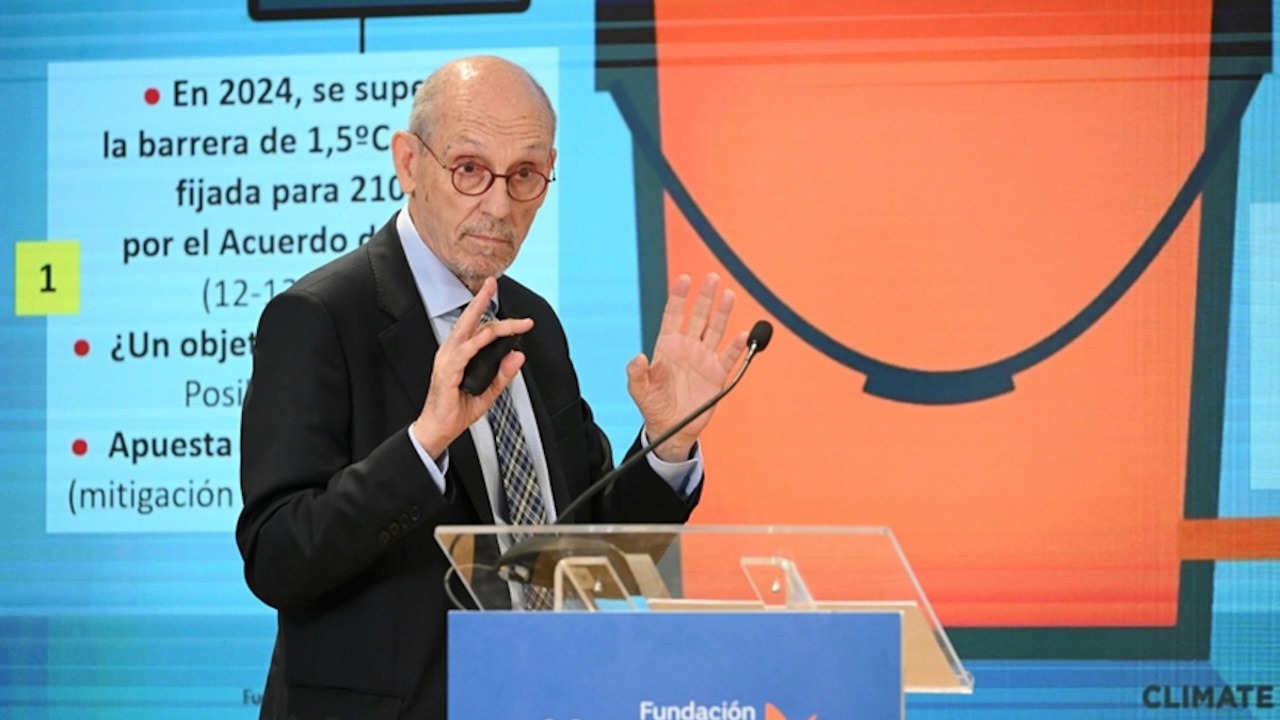
These are some of the main conclusions of the report ‘Atmospheric CO2 management, an introduction to technologies‘, Presented by Fundación Naturgy and prepared by the Emeritus Professor of the University of Barcelona, Mariano March.
Technological chains
The report analyzes the main technological chains for carbon capture, use and storage, highlighting its role in the energy transition and its potential to contribute to industrial decarbonization. Besides, addresses climatic benefits, the degree of development and implementation perspectives in different geographical contextsof these technological chains.
The study concludes that the world energy transition cannot be achieved without the large -scale deployment of technologies that allow capturing, reusing or storing carbon dioxide.
The document identifies the CCUS technologies chain (carbon, use and storage) as a key tool in industrial sectors difficult to decarbonize and as support for the production of hydrogen and combustible with low carbon footprint.
Key innovation for carbon management
The author of the document points out that to avoid the worst impacts of climate change it is necessary to use all technologies currently available in the market, in addition to developing and implementing new ones.
In this line of innovation, the main international organizations on climate and energy assign a crucial role to the so -called “carbon management”. This includes both technologies that allow a reduction in CO2 emissions related to energy and industrial processes, such as actions and technologies that allow the elimination or withdrawal of historically stored CO2 in the atmosphere.
Specifically, The report highlights three large technological chains with great climate mitigation potentialas are the aforementioned traditional CCUS, to which the BECCUS is added, which combine bioenergy with capture and storage or use of CO2, and the so -called Daccus, which allow to directly extract CO2 from the air.
According to Mariano Marchdespite the fact that these technologies can be a viable solution, “they still face economic barriers for their short -term deployment.”
With regard to Europe, the document reveals and value its progress in the development of these solutions. Although North America currently concentrates more than half of the CO2 capture operational capacity, shows expansion speed data much lower than those in Europe, which provides that its total capacity multiply by 43 between 2024 and 2030.
In the specific case of Spain, the report reflects the geological and technical potential that the country has, which makes it the ideal place to establish a strategy based on these technologies.
Also, March says that “although it will not be easy to reach 2050 with zero net emissions, especially with 60% fossil fuels even in the world energy mix, the more we advance in its adoption, the closer we will be the goal.” Therefore, in your opinion, It is essential that “administrations support those who are already acting and work in a strategic plan for the country.”
Country strategy
Pedro Mora, president of the Spanish Technological Platform of CO2, considers that “in order to implement CO2 capture and storage technologies, Spain needs a country strategy, as the European Union is already doing. About 15% of our broadcasts require these technologies, however, we are the only major European economy without a clear road map”.
For default, decarbonization must be competitive and, for this, a plan led by the Government and supported by all agents is necessary. “It is not enough to seek neutrality, we must aspire to negativity, reducing emissions and capturing what cannot be avoided.
According to the president of the Spanish technological platform of the CO2 “recovering the industry, having native solutions and managing our renewables well, it is essential for a sustainable energy transition.”
For its part, Esperanza Montero, Energy Transition Business Development Manager in metal carbides of the Air Products Groupalso emphasizes the importance of having a clear national strategy in decarbonization, “putting production plants near where gas is captured and stored is fundamental, to increase industrial and economic competitiveness.”
Finally, Rafael Villaseca, president of the Naturgy Foundation, In the presentation of the report, he highlighted the importance of CO2 capture technologies. “Capture, treat and withdraw CO2 with effective technologies is key to achieving the objective of zero broadcasts by 2050. However, we continue to broadcast huge amounts worldwide, and the efforts to withdraw them are still irrelevant. Getting to 2050 will be very complicated if we do not accelerate the development and deployment of real solutions. ”