
The PSOE is actively working to install in public opinion the perception that the contest in Castilla y León is open. In a community structurally favorable to the PP, if the victory of the right is taken for granted, it is expected that abstention on the left will grow. And if a possible tie is predicted between the PSOE and the PP, it is also expected that the useful vote will be activated, or, at least, that is what Moncloa intends. As happened in Extremadura and Aragon, This 15M electoral battle will also be fought nationally.
The CIS survey, which surprisingly predicted a technical tie, is pure party strategyand is being accompanied by “leaks”, by different socialist spokespersons, aimed at making it credible.
Castilla y León is a territory with tight seats and decisive rural weight, where the D`Hont system penalizes fragmentation with special harshness. If the PSOE manages to get closer to the PP, Sánchez will try to sustain (despite the difficulties) the narrative of resistance and will also try to dismantle the dominant narrative – a product of results at the polls and polls – that we are facing a cycle that inevitably blows in favor of the right. For this reason, the result on March 15 will have a symbolic value much greater than its territorial value.
The “tie operation”, that thesis pushed by the socialist environment that the difference with the PP has been reduced to minimal margins (although the PP continues to appear ahead in the polls), has three clear objectives: mobilize the aforementioned useful vote, force the concentration of space on the left and deactivate the feeling that there is nothing that can be done to prevent the right from taking over regional and national governments.
According to demographic strategists, The 15M electoral game is not decided in large rallies, but in small municipalities, local networks, agricultural associations and that more traditional social fabric. Each percentage point can decide seats, and the significant presence of regional parties, such as Unión del Pueblo Leonés, Por Ávila and Soria Ya, can influence provincial balances.
The PP faces these elections under the pressure of the clash with Vox, intentionally sought from Santiago Abascal’s party. The memory of Vox’s management on earth should not be good due to the results of that stage of government in coalition with the PP. and the organic fires of recent weeks should also take away from those of Abascal, but they have already demonstrated their ability to electorally overcome crises that would be of high cost for the traditional parties. Although some surveys are placing them in a slight decline, Nor would it be the first time that there is a dissonance between the demoscopic and media discourse and its results on the ground.
The PP does not govern Castilla y León only because of ideological tradition, but also because of its strong territorial structure. A powerful municipal network, councils, institutional control and strong capillarity in the rural world. Castilla y León is, therefore, the showcase of its classic territorial model. And it is also a territory that concentrates debates on depopulation, agriculture, CAP, infrastructure or regional financing. Vox does not have that organic power, but it does move comfortably in the face of these structural problems, from the freedom of offering solutions without the burden of the exercise of management.
The analysis has reduced the debate of the pulse on the right to the discussion about how much the PP will depend on Vox, but the problem is much deeper because Vox does not compete for seats or territorial power, but rather for setting an agenda in the conservative bloc. And in rural territories, such as Castilla y León, it has in its favor that the identity discourse has greater margin for emotional roots.
“Governing is not just adding.” This phrase, from a deputy from Castilla y León, places the emphasis on the weakest part of the current right-wing framework. A Government stressed by constant identity demands, which is what Vox lives off, loses executive capacity, and management is especially sensitive in aging and dispersed territories, as is the case.
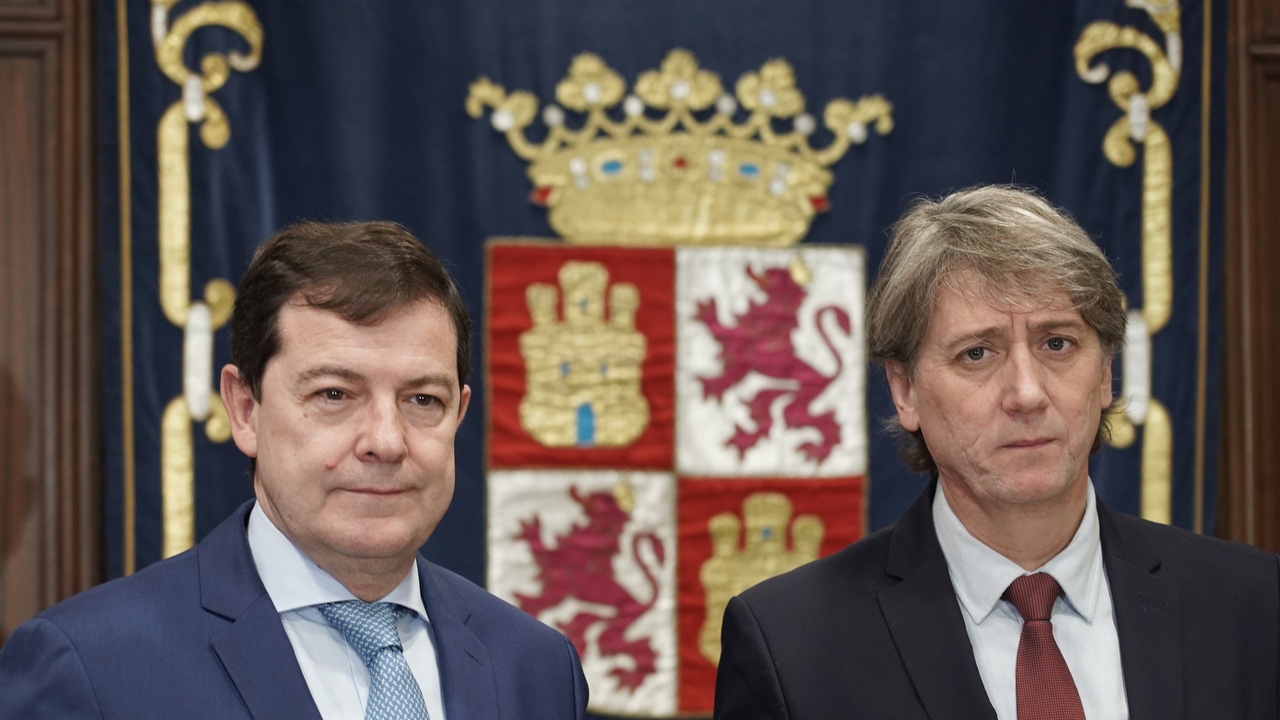
On the left side, the main merit they attribute to the PSOE candidate and mayor of Soria, Carlos Martínez, is that he is going on his own and that he departs from the logic of “sanchismo.” Moncloa does not care about this analysis because it will not give it autonomy in the campaign. The President of the Government will not give up space or prominence as he did not do in other electoral contests
While the PSOE inflates its expectations, The PP opts, however, for prudence. The surveys that indicate that Vox shows signs, for the first time in this electoral cycle, of a slight downward trend, are not believed, and the mobilization of all resources (national and regional) is a gesture that confirms that they do not take anything for granted in one of their most loyal territorial fiefdoms.