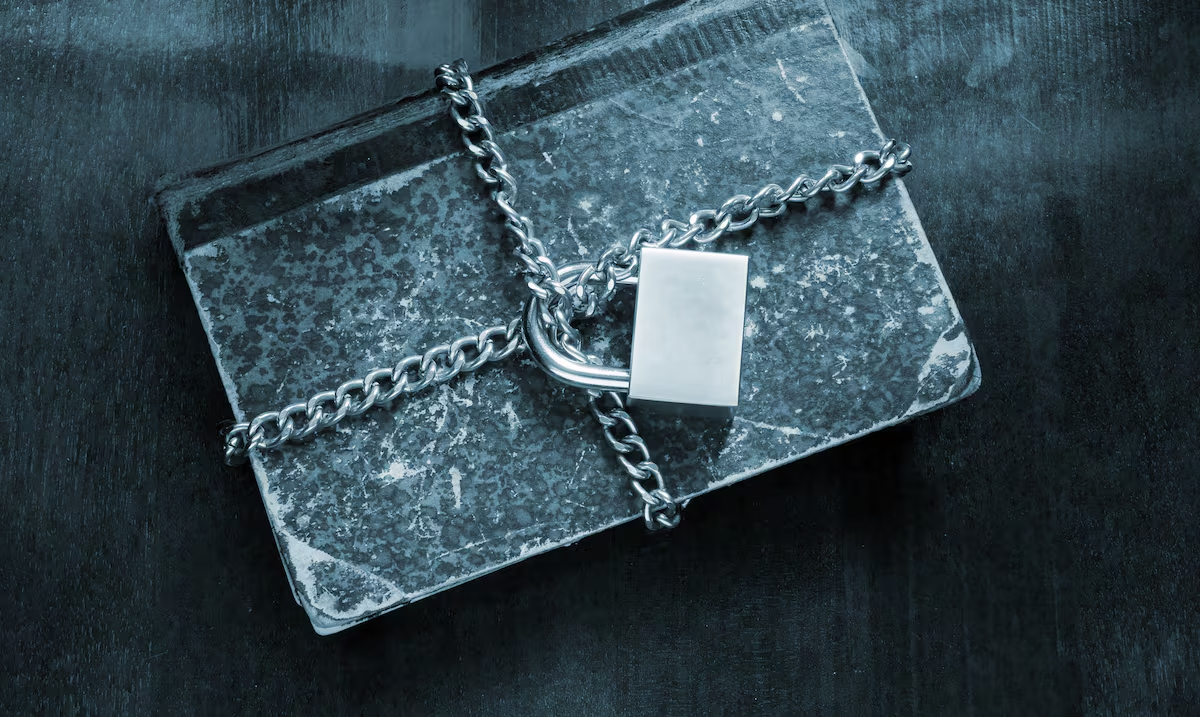
The attempt to censor books is almost as old as the printing press itself. Throughout history, lists of banned books have been made that eventually ended up at the stake. From the persecution of Casiodoro de Reina and Cipriano de Valera by the Spanish Inquisition for translating and publishing in Spanish in 1569 the first complete version of the original biblical texts written in Hebrew and Greek, known as the “Bear Bible”, to the attempt to censor James Joyce’s novel Ulysses in the United States between 1918 and 1933, where the authorities, driven by puritan societies, confiscated and burned hundreds of copies at the New York customs facilities on the grounds that the novel was obscene. Likewise, totalitarian regimes, both right and left, established official bodies in charge of censoring the publication of books such as the Ministry of Public Enlightenment and Propaganda (led by Goebbels) in Nazi Germany, the Censorship Department in Francisco Franco’s Spain, the Glavlit institutionalized in the former Soviet Union by Stalin and the Cultural Revolution Group in China established and directed by Mao Zedong. These institutions not only created blacklists of banned authors but also directed the burning and physical destruction of thousands of works to ensure that the unique thought of their respective States would not encounter resistance based on the ideas that could arise as a result of reading a book.