
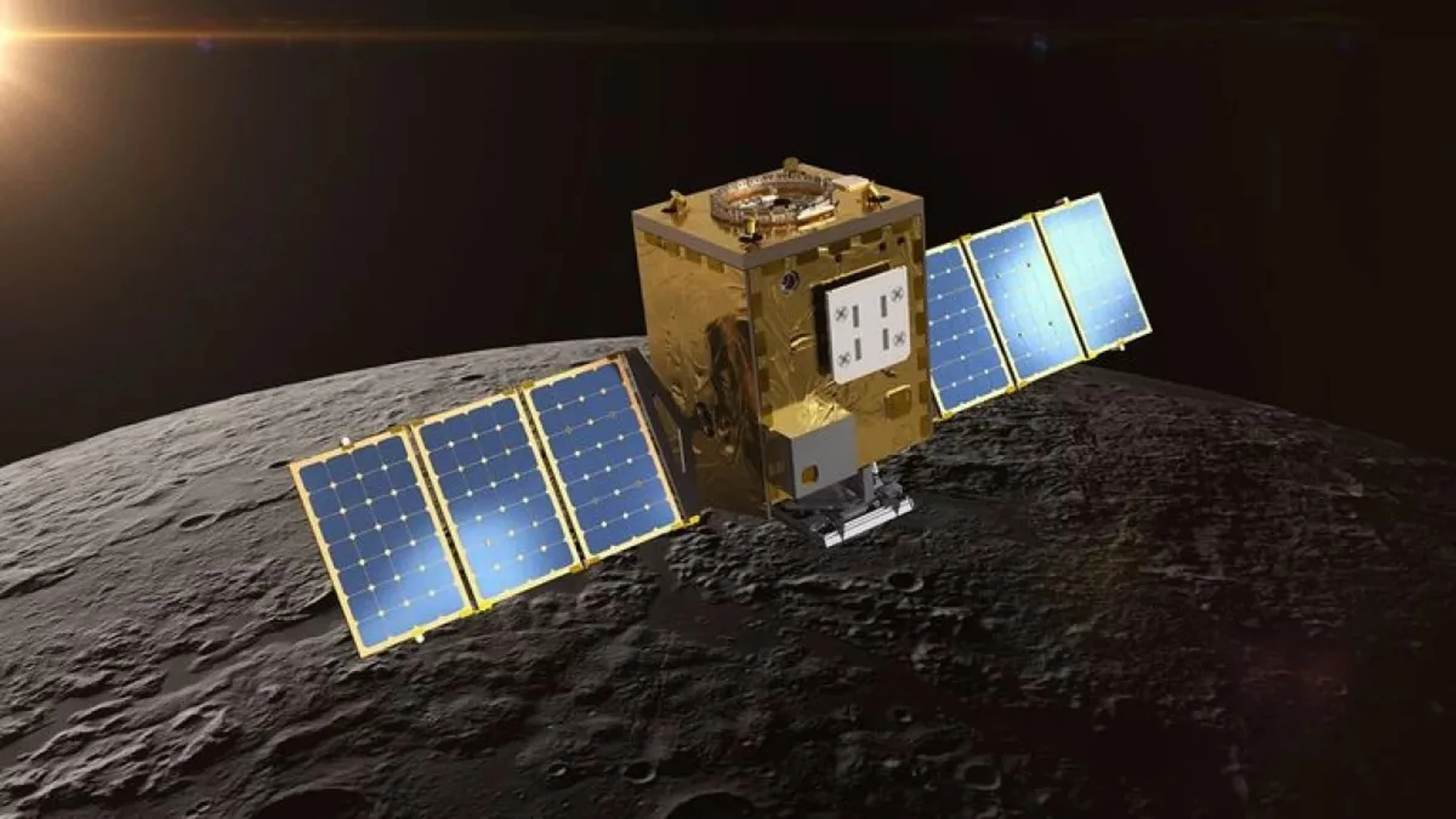
On February 27, 2025, the probe Lunar Trailblazer took off from the Kennedy Space Center aboard a Falcon 9as a secondary mission load IM-2. Barely a day had passed in what was going to be a flight of several months to the Moon when the probe stopped responding. Although in the first hours ground control had received messages indicating that everything was going well and that it was continuing on its path, NASA could no longer communicate with her. Now, a year later, we know why.
The solar panels were facing in the wrong direction.
Launching spaceships is difficult and doing so successfully is even more so. So much so that even organizations as experienced as NASA and the satellite manufacturer Lockheed Martin they make mistakes, like the software failure that caused the loss of this ship before it even left Earth’s orbit.
According to the report of a review panel convened by NASA to explore what went wrong, which NPR has now reported, a software glitch caused The solar panels will point 180 degrees away from the Sun.rendering them completely useless for capturing energy. As the satellite ran out of power, it entered a critical low power state, with very little energy available and no orientation control. This caused him to lose communication with the teams on the ground, without anyone being able to correct the problem.
Unfortunately, the onboard systems couldn’t fix it either. As the media highlights, ‘numerous erroneous fault management actions on board’ caused Lunar Trailblazer to lose power for an extended period, effectively destroying its chances of recovery.
Although it was hoped that, when traveling beyond the Moon, its panels would capture enough sunlight to better orient the ship, That did not happen and the mission was finally terminated at the end of 2025..
According to the report, NASA and Lockheed Martin they didn’t test the timing of the solar panels enough before launch. This test would have detected the error in the code that caused the panels to misalign, allowing it to be corrected. Lockheed Martin noted, however, that although its cost exceeded $70 million, Lunar Trailblazer was a low-cost D-class missionand that this type of mission can be more risky because lacks the same safeguards and procedures as other more costly initiatives.
If Lunar Trailblazer had deployed its panels in the correct orientation, it would probably have continued into lunar orbit, where it was to observe with state-of-the-art instruments. How water is distributed on the surface of the Moon and what factors can affect that distribution. It would have been useful data for future missions Artemis from NASA, who plan to take humans to the Moon again in the coming years.