
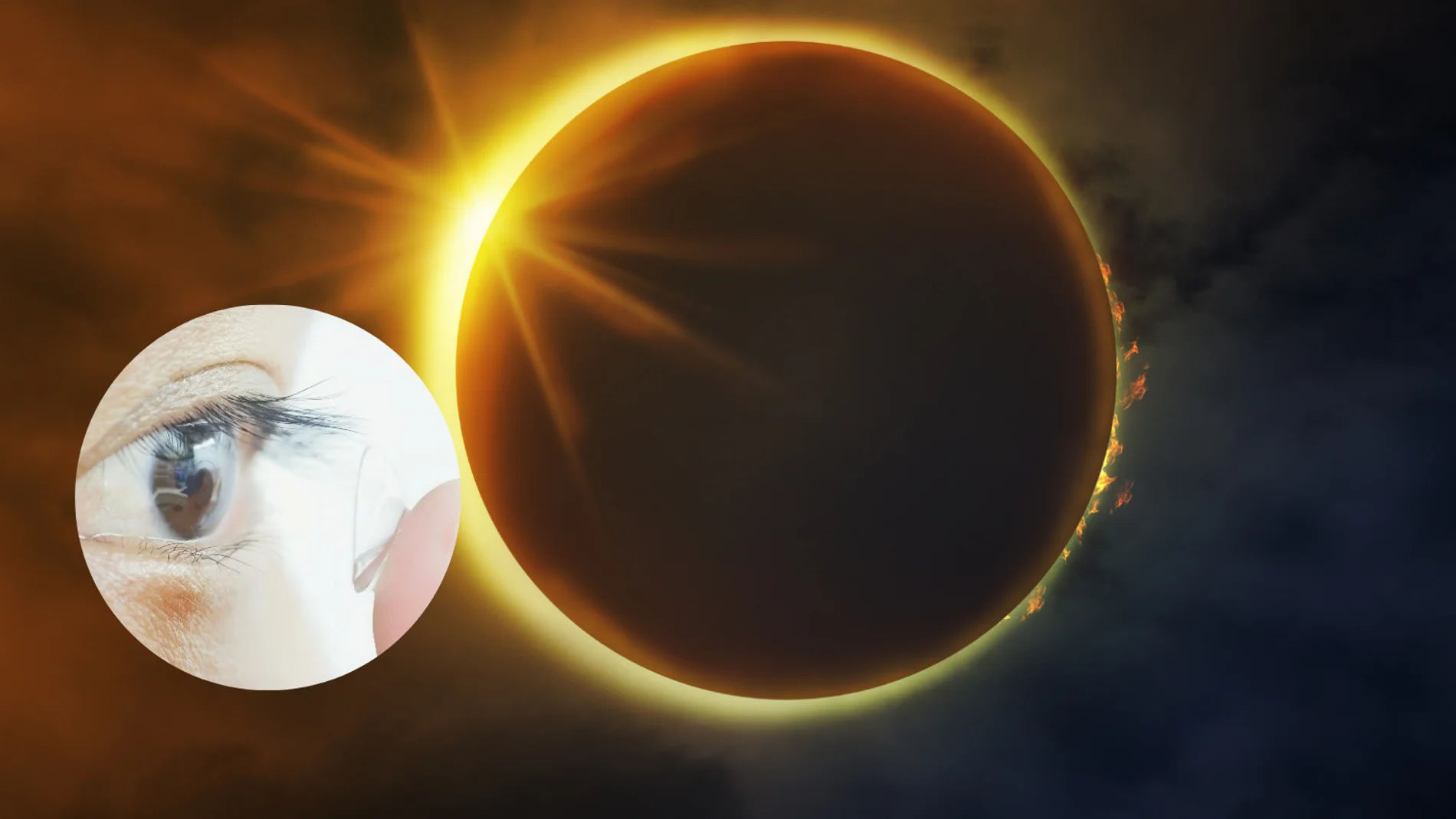
One of the dates most anticipated by Spaniards this year is approaching: the day in which much of the Iberian Peninsula will be plunged into total and partial darkness during the solar eclipse on August 12. An astronomical event that It has not been seen in our country for more than a century and that no one wants to miss. Not even those who, because they have myopia or astigmatismthey have doubts about whether they will be able to see it with their contact lenses.
Total solar eclipses are one of the most impressive natural spectacles to see. The large star is completely hidden behind the Moon, not only creating momentary complete darkness, but also the so-called “diamond ring” in the sky. This spectacular effect can only be seen during the beginning and end of the phenomenon, creating a halo of light around the satellite.
However, in order to see this phenomenon, it is completely essential observe it through glasses approved with ISO 12312-2 certification, as these will prevent permanent injuries from occurring to the retina. Out of fear of suffering these damages, many people with myopia and astigmatism who need contact lenses in their daily life They doubt whether they can use them to see the eclipse.
Can you wear contact lenses to see the total solar eclipse on August 12?
Due to the increase in this type of doubt in medical consultations, opticians and the Royal Observatory of Madrid have wanted to resolve the mystery. Yes, you can wear contact lenses or even normal glasses while observing the eclipse; only It is necessary to place approved glasses over these. Of course, they must also ensure that light does not enter from the sides to avoid being exposed without protection to solar radiation.
To do it correctly, it will only be necessary to put on the contact lenses as usual and, later, put on eclipse glasses like anyone else. If you prefer to wear prescription glasses, you must first put them on and then the approved glasses. This exercise must be done even if contact lenses have UV protectionsince they only cover the cornea, leaving both the pupil and the retina unprotected.
It is completely essential to correctly place the approved glasses, avoiding holding them with one hand or placing them slightly below the eyes. These errors, although they may seem minor, can cause permanent damage to your eyes. In addition, it is important to check that the glasses are in perfect condition and buy others if you see bends, scratches or holes in the lenses.
Extreme caution should be taken with children
As recalled by the Royal Observatory of Madrid, You cannot use homemade filters, sunglasses, binoculars, telescopes or any other device to observe the eclipse. “They are not safe and are totally inadvisable.” Furthermore, even if you have approved glasses on, You should not look directly at the Sun for more than one minute at a time..
The only time during the eclipse when approved glasses can be removed will be during the solar coronathat is, “while the Sun is completely hidden, during the totality of the eclipse.” However, this moment will only last a few minutes or even seconds, depending on the area in which it is going to be observed. Therefore, The safest thing will be to keep them on throughout the entire phenomenon..
Once this astronomical phenomenon ends, it will be necessary look away from the sun before taking off your glasses. A simple process, but necessary to comply with all precautionary measures to be able to safely enjoy the August eclipse. Therefore, those who are going to observe it with Children wearing glasses or contact lenses must be supervised at all times and even hold their glasses in case they are too big.