
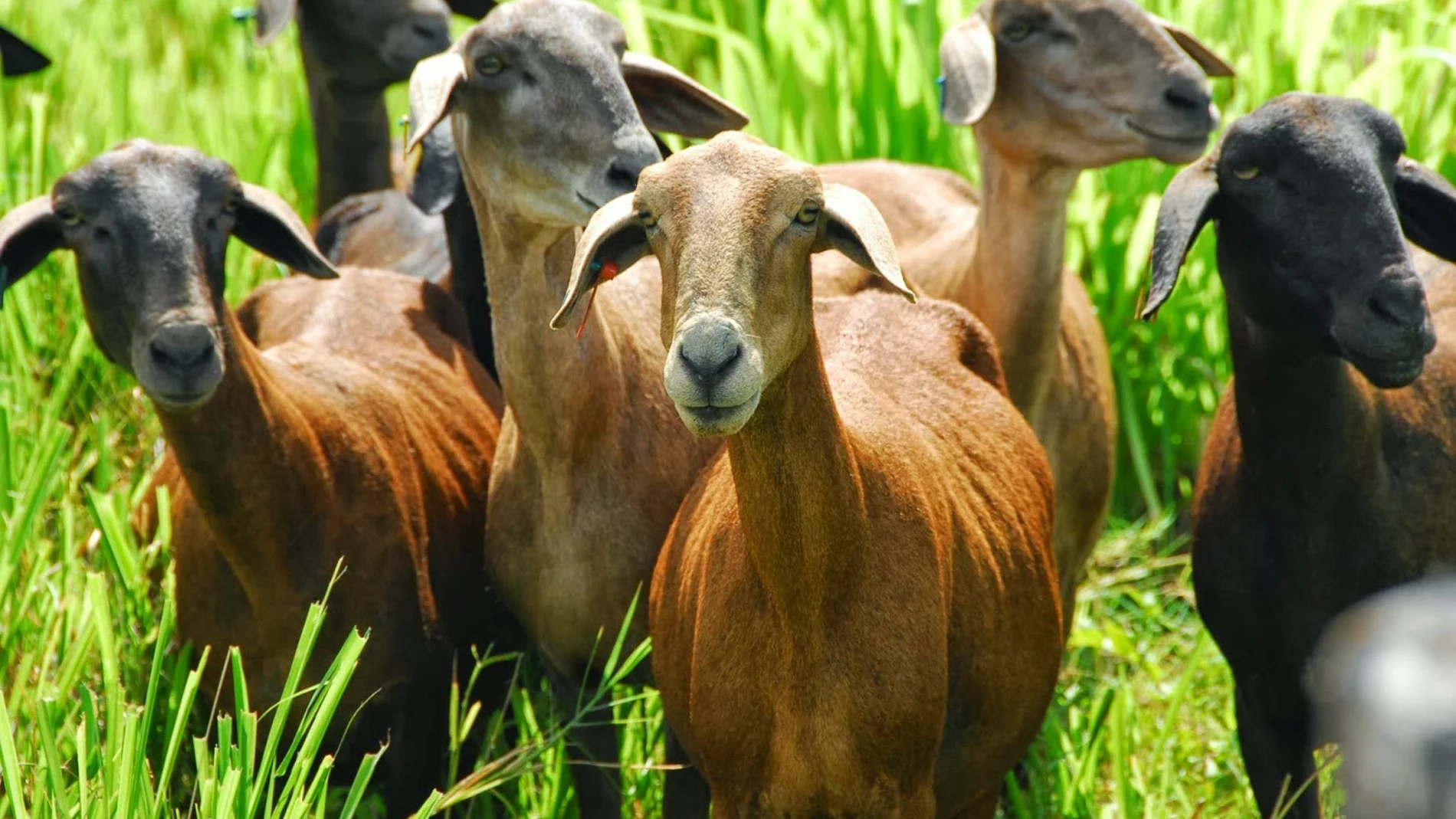
In the 19th century, a group of seal hunters decided introduce a herd of goats to Guadalupe Islandoff the Baja California peninsula in Mexico. The reason, they used their meat to stay fed while the long expeditions in the area lasted. When they left, the animals remained in the territory, where they multiplied and began to feed on the native vegetation.
In 2001, when the goat population was close to 10,000, a conservation biologist named Don Coll arrived on the island and observed the serious effects that these animals had caused on the local fauna and flora. On the island, with a surface area of 244 square kilometers, almost There were no young trees, as these ended up being devoured by goats. before they could grow.
This situation caused the disappearance of many of the island’s forests, leaving only a few scattered throughout the territory. Something that worried groups of conservationists from different organizations, including Coll, who began the work of restoring the local vegetation. To do this, they decided to fence the goats in certain areas, preventing them from Its presence will harm the growth of new shoots.
They decided to eliminate the goats to recover the native vegetation
After the first year, ecologists observed how the trees They began to repopulate the areas where the animals were not foundconfirming that their disappearance was due to the fact that they had become goat food. Before finding this result, the researchers had also focused their assumptions on the disappearance of seeds.
However, upon noticing that the vegetation was growing back in those areas free of goats, they determined that they were the main cause of the deforestation of the island. Therefore, they determined that, to ensure that the trees occupied space again in the territory, they had to eliminate this species that had ended up being invasive and harmful to the native plants. Their objective changed, from replanting the area to completely eliminate these specimens.
However, this task was not easy. The island of Guadeloupe is characterized by having quite uneven terrainwith numerous mountainous areas and difficult access. Therefore, they needed a team that was capable of climbing and reaching these spaces. Likewise, all supplies and tools had to be transported by sea, since the island is located 241 kilometers from the coast of the Baja California peninsula.
Ten years later, thousands of sprouts were beginning to grow
This mission began in 2004 and, due to its difficulty, was extended until 2007, when they managed to eradicate approximately 10,000 specimens. A drastic decision that, although it did not cause immediate changes in the island’s ecosystem, did allow the plants that were already in the growth phase to survive. The native vegetation, which had been under constant pressure from animals, suddenly it had room to grow and repopulate the territory.
According to the data collected during the study, in 2001, when conservationists began to act on the ground, the island had 220 adult trees. However, ten years later, the group of ecologists recorded the presence of several thousand sprouts in full growth, not only of trees, but also other species such as shrubs and flowers.
An action that also increased the presence of native birds
It was not until a study carried out in 2019 when researchers from the Island Ecology and Conservation Group stated that the native vegetation was beginning to recover from the presence of goats, achieving coverage of 52% of the territory. Among the species that managed to grow again on Guadalupe Island are the island oak, the Guadalupe cypress and palms.
However, the disappearance of the forests not only affected the vegetation, but also the presence of birds, who began to look for other areas to nest. Since this restoration work was carried out, The percentage of reproductive success of the different species has increased cconsiderably, achieving the highest number of all albatross colonies, according to Island Conservation.