
For decades, the evolution of the mobile phone has been about adding elements. First came the external antennas, then the physical keyboards, later the cameras, fingerprint readers, proximity sensors and multiple rear lenses. Each new generation seemed to add another piece to the puzzle. However, for some years now the industry seems to be pursuing exactly the opposite objective and that is to make all that technology disappear. With The antennas were simple, similar to fingerprint readers and physical keyboards, but until now there was a Gordian knot in one of these elements: the cameras.
The paradox is fascinating. The more engineering mobile phones contain, the less it should be perceived. Since the birth of the smartphone, the screen has been conquering the entire front of the device. The huge frames surrounding the screen were reduced. The notch arrived, which was later replaced by a small hole for the front camera. Each step removed one visible element. Now there is only one left. That tiny black circle that houses the selfie camera is the last reminder that, behind the glass, there is a complex set of sensors and electronic components. Eliminating it would mean completing a process that began almost twenty years ago.
The latest information from China suggests that Huawei could make the future Mate 90 the company’s first model equipped with a front camera completely hidden under the screen. The company has not confirmed these rumors, but if they end up materializing, They would represent much more than an aesthetic improvement: They would be a new step towards an old dream of computing: building devices whose technology is practically invisible.
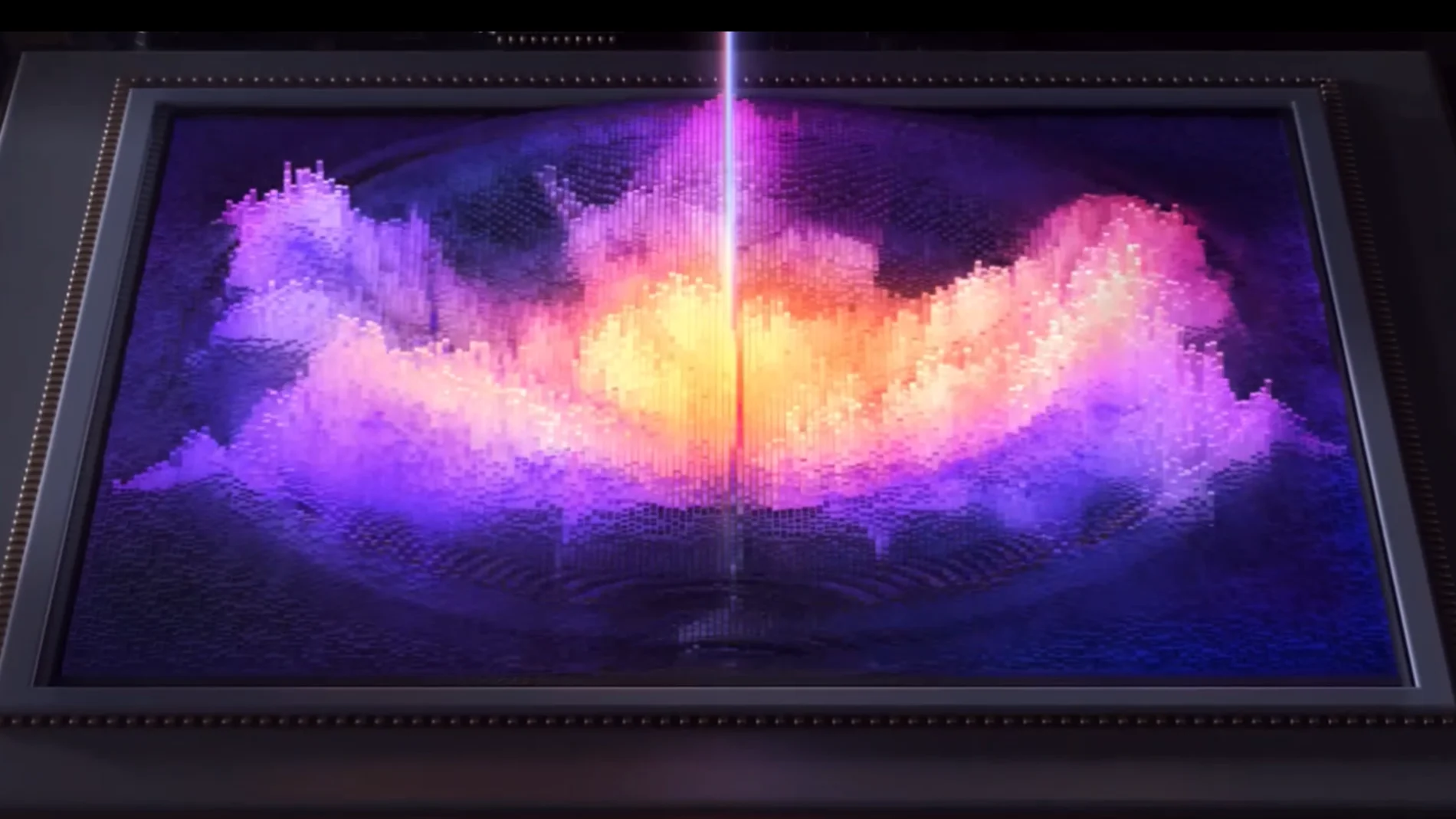
Hiding a camera behind a screen seems simple on paper. Simply place it under the OLED panel. The reality is much more complicated. A screen is not a transparent sheet. It is made up of millions of transistors, electrical connections and different layers of materials that absorb and scatter part of the light. Although some pixels may be temporarily turned off to let the image pass through, the camera continues to photograph the world through a kind of microscopic curtain.
The result usually translates into less sharp photographs, lower luminosity, loss of contrast and reflections that are difficult to correct. That’s why under-screen cameras have been one of the biggest challenges in mobile photography for years. This is where optical engineering begins to mix with artificial intelligence. Images captured by a camera located under the screen inevitably arrive degraded. Instead of limiting itself to improving the sensor, Huawei would be working on digitally reconstructing that lost information using algorithms. capable of compensating for diffraction, correcting color, recovering detail and eliminating artifacts produced by the screen itself.
We always believed that Photographic quality depended almost exclusively on the hardware: the lens, the camera, the lenses, the internal mirrors of the SRL … Today, in digital cameras, each photograph is the result of a constant collaboration between optics, sensors and artificial intelligence models that reconstruct the image before the user even presses the shutter button. In a way, today’s best cameras no longer just photograph: they also interpret.
If the Mate 90 finally incorporates this technology, it probably won’t be perfect. As happened with the first folding phones or the first touch screens, The first generation will serve more to demonstrate that the path is possible than to reach its definitive form.