
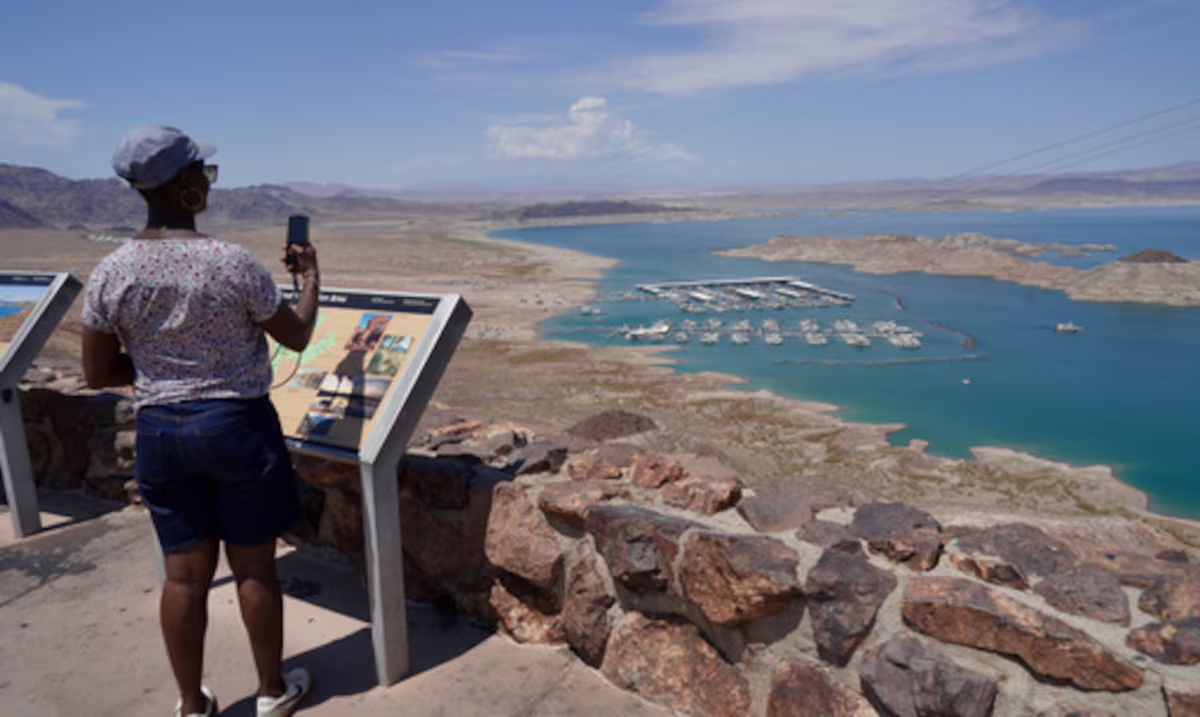
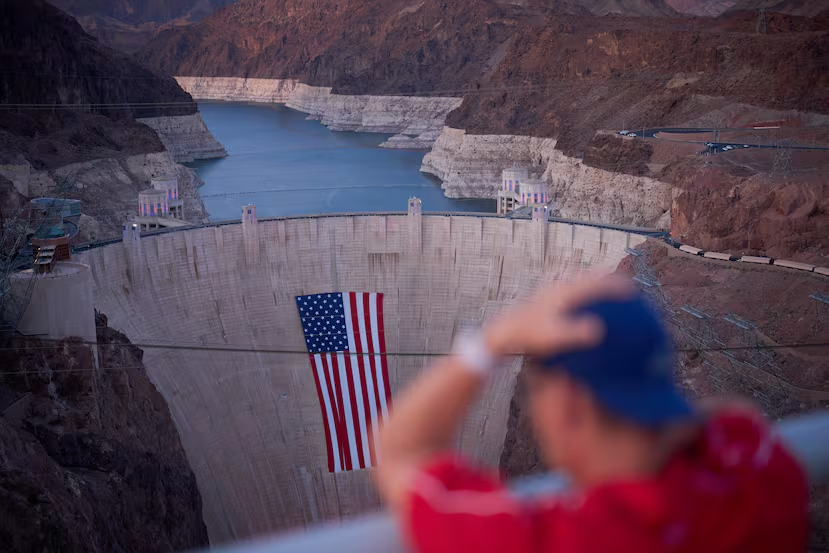
Boulder City, Nevada— Lake Mead, the largest reservoir in USAhas dropped dramatically to its lowest level since it filled about 90 years ago, another sign of the crisis plaguing the Colorado River system.
Water levels at the reservoir, which straddles the Arizona-Nevada border outside Las Vegas, reached 1,040.4 feet above sea level on Friday, according to federal data. That figure is just below the record set on July 28, 2022, according to the United States Bureau of Reclamation.
‘It is something extremely significant and very worrying. “Three-quarters of the population of the Colorado River Basin, some 30 million people, are directly affected by the risks that threaten Lake Mead,” said JB Hamby, president of the Colorado River Board of California and a member of the board of directors of the Imperial Irrigation District, the largest consumer of river water.
Hamby said it is essential that states that use Colorado River water reduce their consumption.
Drought and arid conditions extend along the entire course of the Colorado River and are especially intense at its source, in the Rocky Mountains.
The melting of snow brings a significant volume of water to the river. However, last winter saw the lowest snow depth in history in the Colorado River Basin.placing an additional burden on farmers, industry, wildlife, and hydropower producers, as well as the 40 million people in seven U.S. states, tribal nations, and Mexico that depend on this watercourse.
Years of overuse, coupled with drought and rising temperatures, have caused the depletion of Lake Mead and Lake Powell, the second largest reservoir in the country. Both are at their lowest level in the last seven decades.
In order to protect the hydroelectric power generation capacity of an already overburdened system, federal officials announced Thursday that they will not release cold water from Lake Powell from the dam Glen Canyonin the north of Arizonato protect an endangered species of native fish, the “humpback chub,” whose habitat is located between both reservoirs.
Federal officials recently announced a short-term proposal to avert a crisis in the troubled waterway after the states that depend on it—California, Colorado, Arizona, Nevada, New Mexico, Wyoming and Utah—failed to reach an agreement on how to allocate the increasingly scarce resource over the long term.
The federal proposal called for the lower basin states — Arizona, California and Nevada — to reduce their water consumption. The Bureau of Reclamation, which unveiled the plan, said it was flexible: more drastic cuts could be made in times of greater drought, while states would have more time to jointly agree how to manage scarce resources.
The severe drought of 2022 in Lake Mead, dammed by the Hoover Dam, exposed human remains and forced the authorities responsible for Las Vegas’ water supply to pump water from the deeper layers of the reservoir to continue supplying millions of people.
The level of Lake Powell has dropped so low that it is now difficult to get low enough to reach the water. Boat ramps have had to be moved, closed or rebuilt.
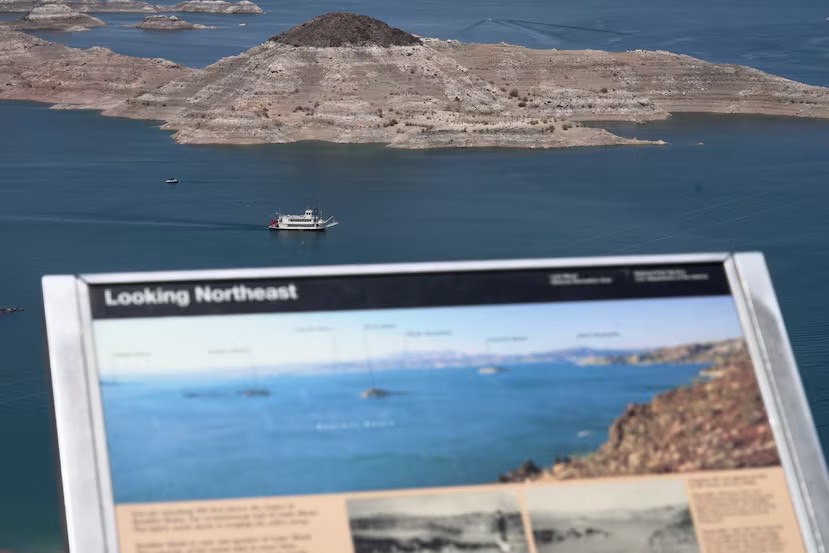
Lake Mead and Lake Powell aren’t the only ones. Of the 54 reservoirs in the western United States that the Bureau of Reclamation oversees, nine have recently recorded their lowest levels in three decades.
Federal authorities do not believe that the level will remain as it is. According to models developed in July, the level of Lake Mead is expected to continue falling for much of the rest of the year.