
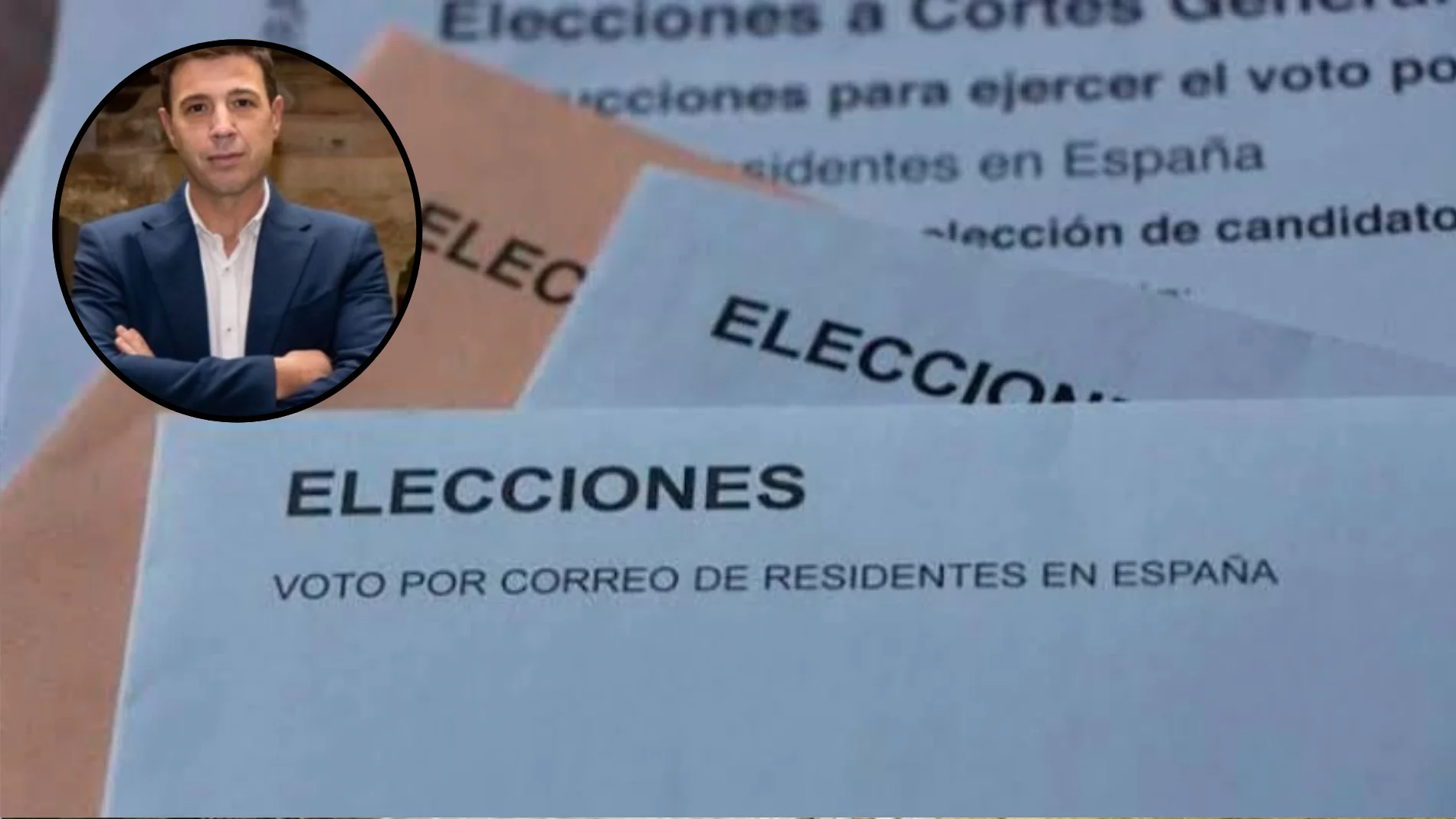
Ildefonso Ruiz, former provincial deputy of Ciudadanos in Jaénpublished this Tuesday a thread on X in which he questions the controls of voting by mail before the general elections of the November 29. In his messages, he proposes an alleged fraud mechanism based on the use of electoral census data, although he expressly recognizes that there is no evidence that it is being attempted.
Ruiz, who is introduced in the publication as a Postal worker with 25 years of experience in managing postal voting, begins with a statement about the security of the procedure. “Voting by mail is safe,” he writes, before noting that the possibility of a vote sent by a citizen being changed is “virtually zero.”
However, in the following message he maintains that “Elections can be rigged by voting by mail”. His argument focuses on alleged deficiencies in census control and the political use attributed to organizations and companies that intervene in the electoral process.
What do you say about the electoral roll?
“The Government knows the precise data of the electoral census,” says Ruiz in another publication. Based on that premise, it raises the possibility of using information about people who usually abstain from casting votes on their behalf.
The former deputy accompanies his explanation with hypothetical calculations on how a small number of votes distributed among different tables could influence the allocation of a seat. These examples do not prove that fraudulent votes have been cast. nor that the operation it describes has occurred.
In fact, the author himself introduces that distinction in the thread. “I have no evidence that electoral fraud is being attempted through this system,” he acknowledges. Its publication raises suspicions about possible risks, but does not document electoral rigging.
Who controls the census and the postal vote
The Electoral Census Officeintegrated into the National Institute of Statistics, is the body in charge of preparing the census. Its powers are exercised under the direction and supervision of the Central Electoral Board. The existence of administrative data on voters does not in itself prove that they are used to impersonate them.
The postal vote procedure incorporates identification controls in different phases. The request and receipt of electoral documentation is subject to identity accreditation requirements, with specific procedures for the legally provided representation cases.
Furthermore, the Instruction 5/2023 of the Central Electoral Board requires identification of the voter when handing in the vote at a Post Office. When another person makes this delivery on your behalf, you must present the required authorization and documentation.
Votes are counted at the tables
Correos transports electoral documentation, but does not count the ballots. The envelopes are sent to the tables and added to the ballot boxes at the end of the in-person voting, following the established checks.
The notation of the request to vote by mail in the census prevents the voter from also voting in person. Therefore, the hypothesis proposed by Ruiz would have to explain how these controls would have been evaded and provide evidence of specific impersonations. The shared thread does not present that documentation.