
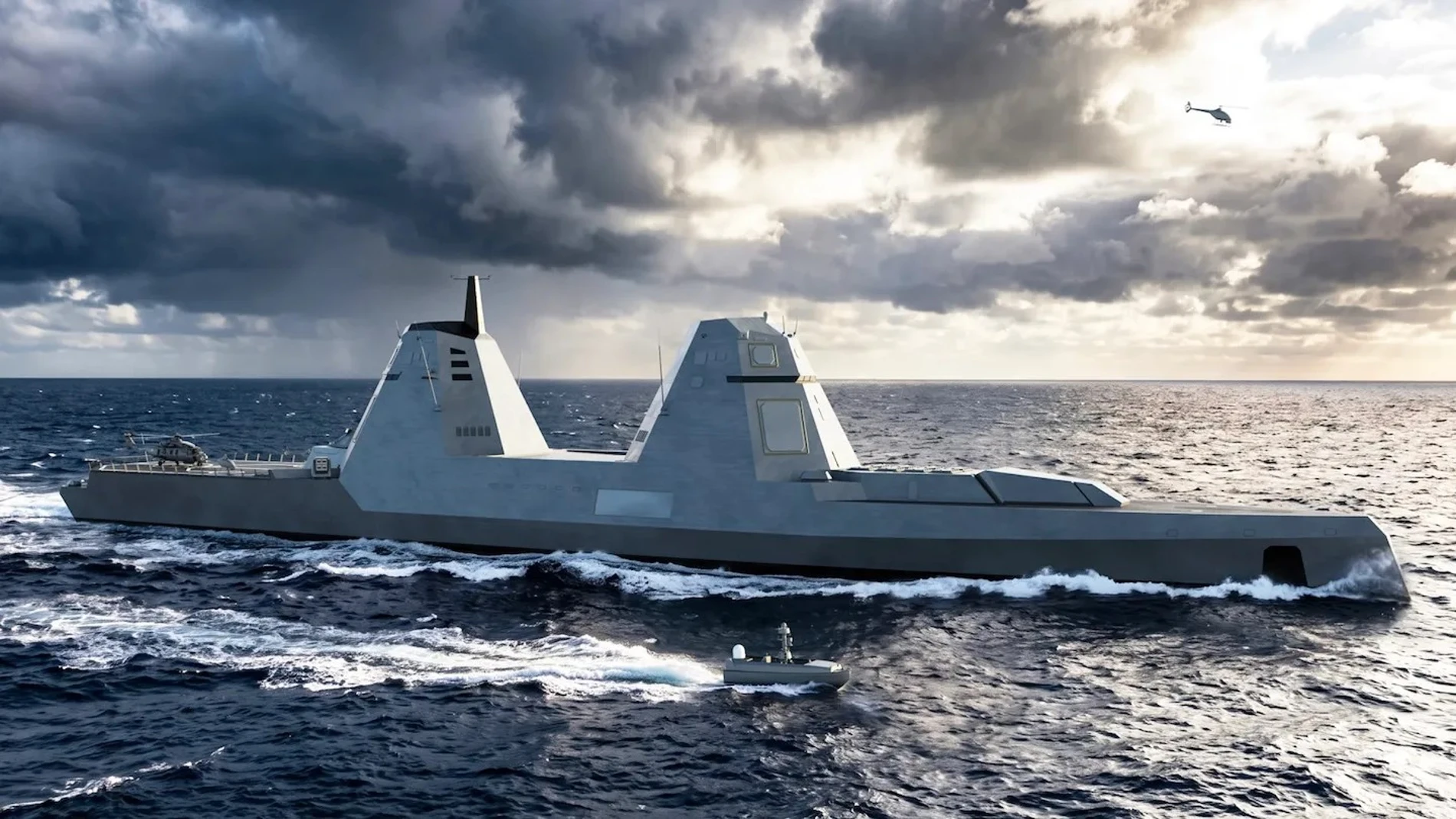
The French shipbuilder Naval Group presented last Tuesday at the fair Euronaval 2026 of Parishis proposal for a next generation surface combatant. Under the name of SCX 26the concept explores how to combine missiles, directed energy weapons and drone operations on the same platform. For now, the project is a design study whose construction is not scheduled.
This contemplates 170 meters length for the SCX 26, about 8,000 tons displacement and a maximum speed of 55.6 km/hwith an autonomy of approximately 14,800 kilometers. Its angular shapes and clear surfaces seek reduce your radar detectionwhile sensors and other essential ship equipment are distributed in two large separate structures on the deck.
According to The War Zone, the proposed configuration has twelve Sylver vertical launch moduleseight in the bow and four in the stern, which add up to 96 cells. Each cell is a compartment from which the missile is stored and fired, and with one projectile in each the ship would carry at least 96. Among the planned weapons are anti-aircraft missiles Aster 30 and cruise missiles MdCNintended to attack ground targets. Other configurations that are also being studied, such as housing four missiles CAMM smaller per cell or incorporate future launchers Sylver NGwould increase that number.
Vincent @VincentLamigeon shows beautiful photos 📸 du concept ship @navalgroup du SCX26 au @SalonEuronaval #Euronaval2026 https://t.co/QXyr8FxIZ3
— Philippe Top-Action (@top_force) November 3, 2026
Among the proposed weapons stands out an electromagnetic cannon capable of rapid fire. While a conventional cannon uses the gases produced by a chemical propellant to propel the projectile, an electromagnetic one uses electrical energy to generate the magnetic fields that accelerate it. This technology promises to launch projectiles at very high speedsbut it poses difficulties such as high electrical consumption and barrel wear.
Close range defense includes two modular launchers Rampart and a laser 100 kilowatts. The latter would concentrate energy on a point on the target to heat and damage it, offering an alternative to using missiles against threats such as drones.
The stealth destroyer could also act as an aerial, surface and underwater drone basethanks to a space located in the stern to transport, maintain, deploy and recover them. These facilities, which would also support helicopter operationswould feature a high-capacity elevator and lifting equipment, and could be reconfigured to surveillance, intelligence or anti-submarine warfare tasks.
The sensors include a ultra high frequency radar, UHFaimed at defense against ballistic missiles, sonars to detect underwater threats and electronic warfare systems. The distribution of essential equipment throughout different areas of the ship and the incorporation of backup systems would help keep it operational if it were damaged
The planned provision is 150 sailorswith accommodation for another hundred people, including commanders and specialists. The automation and artificial intelligence would help interpret information and coordinate own systems and drones, while operational decisions remain in the hands of the crew.