
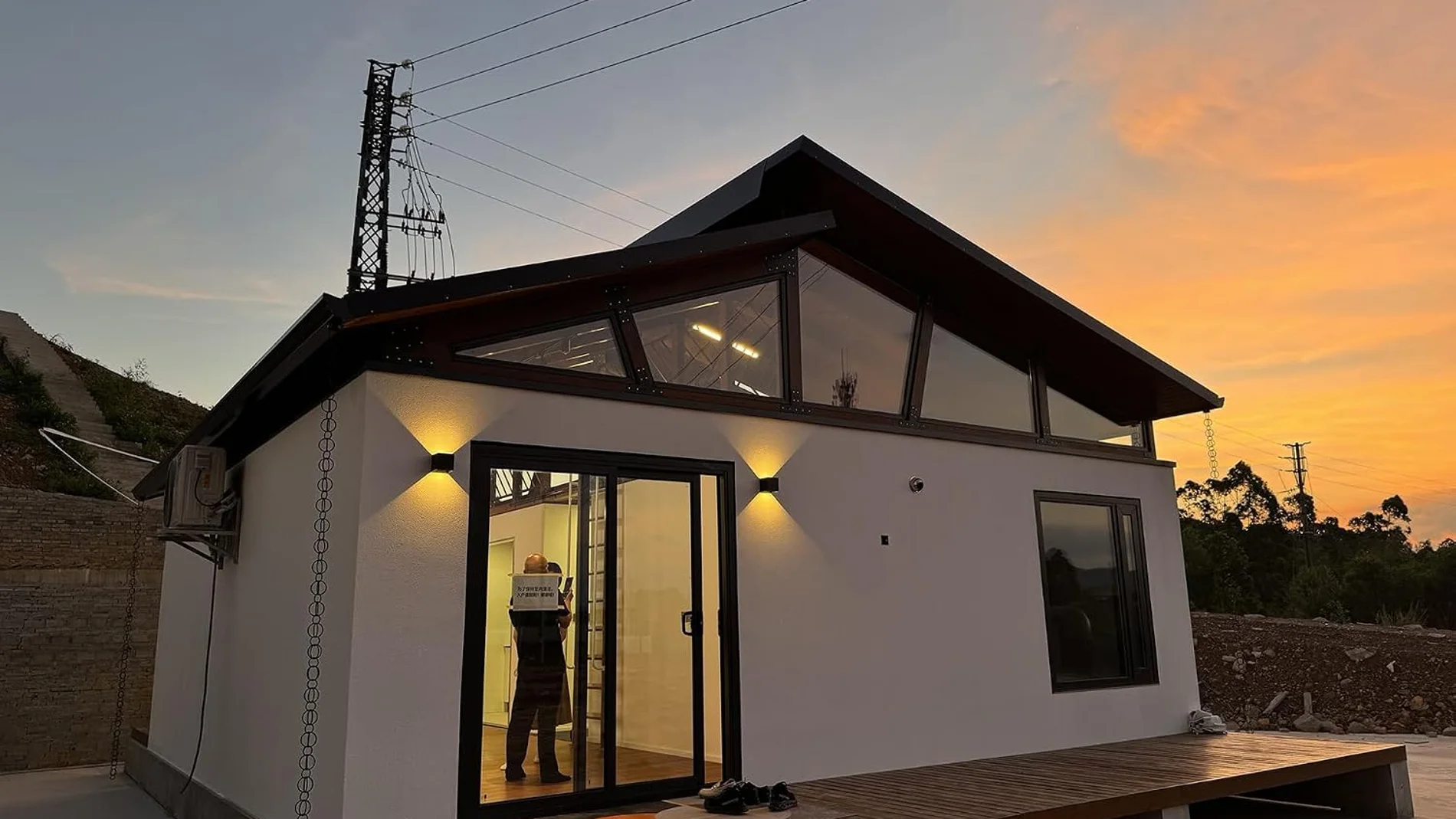
Buy a rustic land and place a prefab It may seem like a simple alternative to have a home for less money. The urban reality is much more complex. Just because a house is previously manufactured and then moved to a plot does not mean that it can be freely installed on any land.
The first question to check is not how the home was built, but What classification does the land have and what uses does it allow?. In Spain, rural or non-developable land is subject to important restrictions and, as a general rule, is not intended for the construction of housing.
That doesn’t mean that building is impossible in all cases. There are exceptions and important differences between autonomous communities and municipalities. Therefore, before buying a plot with the intention of placing a prefabricated house, it is essential to consult its urban situation.
A prefabricated house is not exempt from urban planning regulations
One of the most common mistakes is to think that a prefabricated house has a completely different treatment than a traditionally built home. If installed permanently, must comply with urban planning requirements and obtain the corresponding authorizations.
The fact that your pieces have been previously built in a factory does not in itself change the use made of the land. A permanently installed prefabricated home may require a technical project, a building permit and subsequently the necessary procedures to be legally occupied.
Therefore, buying a cheap plot classified as rustic and placing a home on it does not allow you to avoid the restrictions that would prevent building a conventional house there.
Can a prefabricated house be placed on undeveloped land?
In general terms, Rustic or non-developable land is not buildable for residential use. These are lands that can be used for agricultural, livestock, forestry activities or for the protection of the natural environment, among other uses.
However, there are situations in which regulations may authorize certain constructions. It is common for exceptions to appear for buildings directly related to a agricultural or livestock operationauxiliary constructions necessary for that activity or certain projects considered of public interest.
In some territories, detached single-family homes, rural accommodation or other specific uses may also be authorized under certain conditions. There is no identical answer for all of Spain because the autonomous communities have powers in territorial planning and the town councils have their own urban planning.
The fact that the house is mobile does not guarantee that you can install it
Another common doubt arises with mobile homes and homes that do not have a conventional foundation. The possibility of moving them can make differences compared to a permanent building, but Having wheels or being self-sufficient does not automatically turn any rustic piece of land into a liveable place..
The use made of the installation and its specific characteristics are decisive. If a house is placed for permanence and is used as a residence, the Administration may consider that it is subject to the corresponding urban planning limitations.
In fact, there are judicial resolutions related to mobile homes installed on non-developable land when the circumstances showed a permanent use of the land. Therefore, trusting only that a home can be dismantled or moved can end up generating urban planning problems.
Exceptions depend on where the land is
The answer can vary considerably from one autonomous community to another. Regional regulations determine what actions can be authorized on rural land, while municipal planning specifies the conditions that affect each plot.
Among the requirements that may appear are a minimum plot arealimits on square meters built, setbacks from boundaries, height restrictions, availability of access or conditions intended to reduce the impact on the landscape.
Furthermore, not all rustic floors have the same degree of protection. The possibilities are much smaller when a plot is located in a space specially protected for environmental, landscape, cultural or conservation reasons.
What to check before buying land
Before purchasing a property to install a prefabricated house, it is advisable to check the classification and exact urban situation of the plot. The Cadastre can provide information about the property, but the possibility of building must be contrasted with the planning and applicable urban planning regulations.
The consultation that makes the difference must be carried out before the corresponding city council. There you can find out what uses the plot allows, what its buildable conditions are and whether the project you intend to develop can obtain authorization.
If the regulations finally allow housing, the corresponding permits will have to be processed. Depending on the project, a basic and execution project, topographical and geotechnical studies, an urban planning license and the subsequent documents necessary to legally occupy the house may be necessary.
Installing it without permission can end in sanctions
Placing the home first and then checking if it was legal is a particularly risky option. An unauthorized urban planning action can lead to files, fines and orders to restore legalitywhich may require the removal or demolition of what was installed.
In the most serious cases, building without authorization on certain land can even have criminal consequences. Article 319 of the Penal Code contemplates penalties for certain unauthorized urbanization, construction or building works carried out on protected or non-developable land in the circumstances provided for by the law.
The conclusion, therefore, does not depend so much on whether the house is prefabricated as of the land on which it is intended to be installed and the use that is going to be given to it. On non-developable land, residential housing is restricted as a general rule, but there may be exceptions. Before buying the plot or ordering the house, checking the regional and municipal regulations prevents discovering too late that the home cannot be legally installed.