
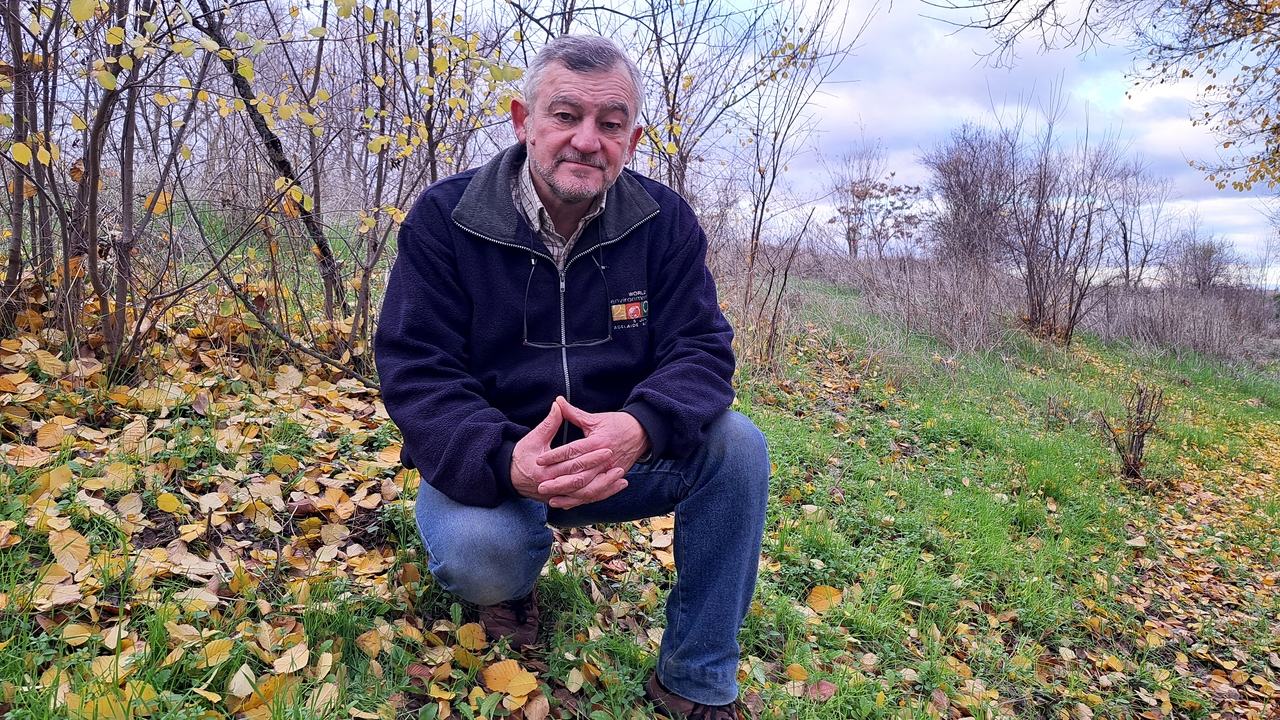
The environmental journalist Carlos de Prada, UN Global 500 Award and National Environment Award, presented his new book “Toxic-Free Home. How to Eat Healthy in a Toxic World”, an ambitious informative work of more than 700 pages that brings together the most complete compilation of scientific evidence on the presence of toxic substances in food and in which he warns that current legislation does not sufficiently protect consumers and, in addition, defends that only knowledge allows “self-defense” through consumption. informed. La Razón spoke with the author about the topics addressed in his new publication.
Is it dangerous for the consumer to be surrounded by so many reliable studies, but, at the same time, also by misinformation, alarmist messages and pseudo-scientific hoaxes?
It is what I always take care of and, in fact, that is why in the book there are more than 1,400 references, which in reality are more, because perhaps within a reference there are several scientific studies. The important thing, in the face of misinformation, is to go to the scientific sources that can be found in databases of scientific studies and always base yourself on what the scientific community is saying. What they say, for example. the studies published by the Endocrine Society, which is the world reference entity on the subject that has to do with hormonal diseases, what the most prestigious research centers on the planet say and even reports from the World Health Organization (WHO) itself. The important thing, faced with the avalanche of misinformation, which can often gratuitously alarm and misinform, is to go to reliable sources. And what a journalist does is put in a more synthetic and understandable way what those studies say.
How do you address the issue of invisible pollutants?
Several options are given in the book. For example, advice that can be given to reduce part of these contaminants, which are pesticides, insecticides, fungicides, herbicides, etc., that are used in conventional agriculture, is advisable, to the extent possible, to opt for an organic diet, in which these synthetic pesticides are not used. Then there are other contaminants, such as persistent organics that may be present in some animal fats and for which this exposure can also be reduced, as with materials in contact with food. You can also reduce the consumption of ultra-processed foods, which can often contain a large amount of additives, and consume more fresh foods.
Is eating healthy “is expensive” a myth?
There is a part of reality and a part that has no basis. There are many organic products that cost practically the same as conventional ones. But there is also a lack of greater official support for organic production, because this type of production would surely expand more and it would be cheaper to purchase these products. Really, all production should be ecological because it does not make much sense to produce food with the massive use of synthetic poisons. Not only can they affect health, but they can also affect, and are seriously affecting, the environment. But I also believe that awareness is often lacking in countries like Spain, where although awareness has been growing a lot in recent years, we do not have the same degree of awareness that we may have in other European countries.
Can inadequate nutrition cause health systems to collapse?
Yes of course. It seems that during the pandemic, as there was a certain pause in activity, that gave more opportunity for reflection. During the pandemic, some politicians realized the fragility of the system and a series of ideas, very scientifically based, came together and a strategy was drawn up by the European Commission such as “Farm to Fork”: From the farm to the fork, to the table. which seeks to reduce the use of pesticides in Europe by up to half by 2030, with 25% of all agriculture produced organically, all in favor of the economy itself, due to the health and environmental costs that this massive use of pesticides has because in certain agricultural practices, based on the use of synthetic chemistry, intensification in any way poses a threat to the future of agriculture itself. There are economic interests that are not the economic interests of the population as a whole.