
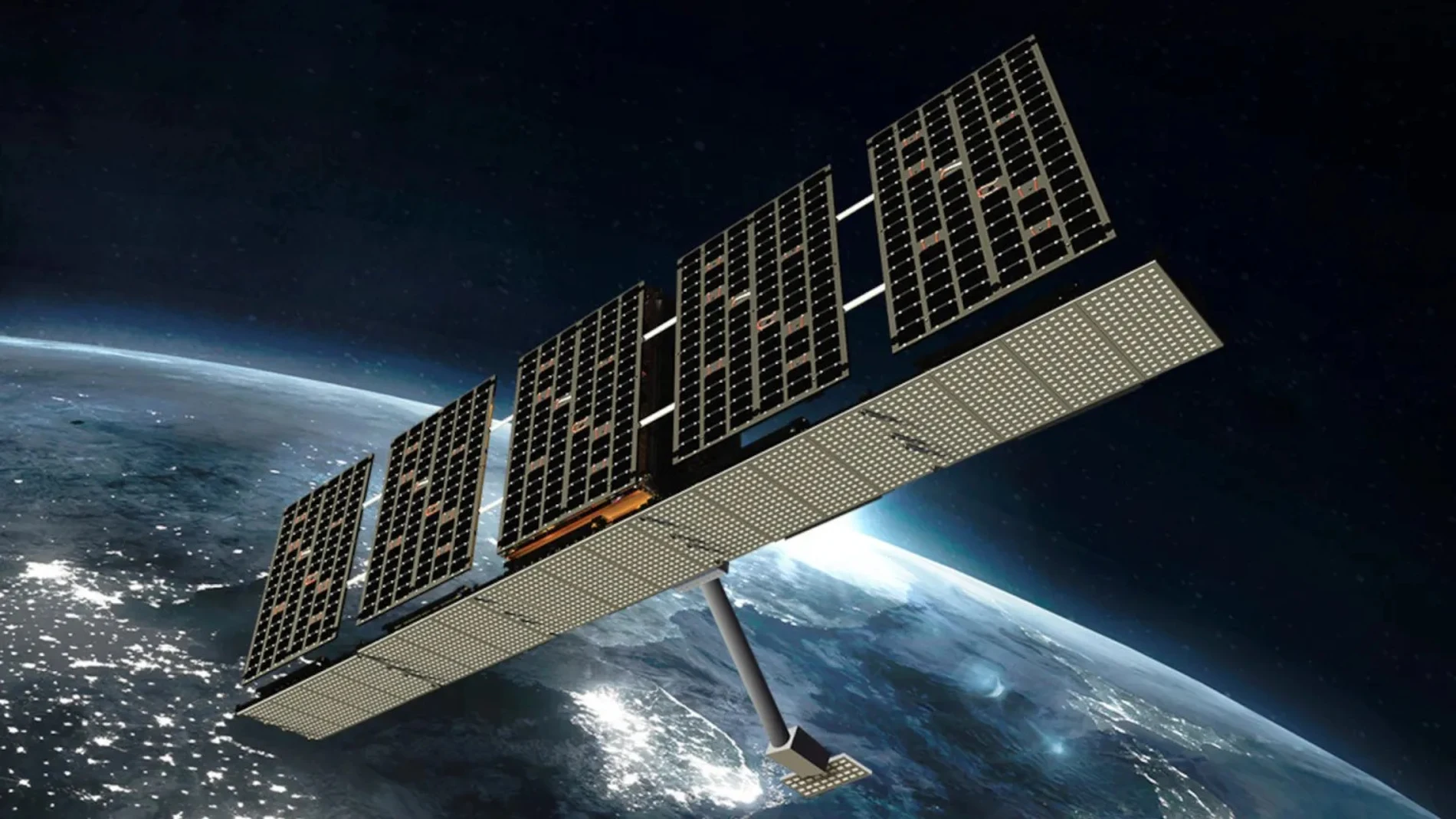
The Russian military satellite Cosmos 2612 followed for about three weeks, between the end of September and October, the American ICEYE-X36belonging to a company that provides images to Ukraine. During the operation he deliberately approached the target, performed maneuvers around it and spent several days to a proximity that became ‘extreme’according to the space surveillance company LeoLabsbefore retiring, .
According to public tracking data from satellitemap.space and orbitalradar.com collected by The War Zone, Kosmos 2612 was only 26 meters away from ICEYE-X36. The space surveillance company LeoLabs He explained to the media that he could not confirm or refute that figure, although he did say that the satellites had gotten closer less than 500 meters. They were ‘probably quite a bit closer’says Adam Marsh, vice president of technical solutions at the company, to Ars Technica.
The ICEYE-X36 belongs to ICEYE USthe American subsidiary of the Finnish company ICEYE. It is a commercial Earth observation satellite that uses radar to obtain High resolution images even at night and through cloudsconditions that limit conventional optical systems.
The company provides images to civilian and military clients, including the United States and Ukraine, which uses its space intelligence services since the Russian invasion of 2022. This status as a commercial satellite distinguishes this episode from Previous Russian tracking of US government spy satellitesbut we must remember that in 2022 the Russian Government has already stated that Civilian satellites supporting the Ukrainian Army are a ‘legitimate target’.
The Russian satellite Kosmos 2612 was launched in April along with five other military satellites aboard a rocket Soyuz. Their exact configuration and mission is not known, although they seem to belong to the so-called ‘inspector’ satellitescapable of approaching and maneuvering alongside other objects in space.
Several of its launch partners also modified their orbits and approached ICEYE-X36 over the following weeks. Initially they did not stay close to the target, but On September 30, Kosmos 2612 began new maneuvers to align its orbit and position itself at practically the same altitude..
On Friday, October 16, the Russian satellite maintained its position between two and three kilometers of the ICEYE-X36, before moving in front of and behind it. During the weekend it made its closest approach and on Sunday it began to retreataccording to the chronology collected by Ars Technica.
‘Kosmos 2612 went from being hundreds of kilometers away to being located in extreme proximity to ICEYE-X36. “It then maneuvered around ICEYE-X36, remained close for an extended period and then began to move away,” LeoLabs explained.
The proximity between the satellites made it difficult for the LeoLabs radars to could distinguish both ships separately. ‘As for this type of event, getting close, staying there for a few days and getting very, very close in low Earth orbit, It’s the first time we’ve seen it without consent.. We’ve seen them try it before with their own satellites, but not in this way,’ Marsh tells Ars Technica.
Monitoring between satellites from different countries has precedents, although with important differences compared to this episode. In 2020, the Russian Kosmos 2542 came within 150 to 300 kilometers of the US spy satellite USA 245a much greater distance
The general Stephen Whitinghead of the United States Space Command, already stated in April that It was ‘evident’ that Russia was putting anti-satellite weapons into service. In this case, no physical damage to the ICEYE-X36 has been reported and the Russian intention remains unknown.
‘So far, the best interpretation of the Russian activity is that it constitutes a clear message that they will deliberately carry out aggressive actions near platforms that they perceive as actual or potential threats to their interests’said retired Lieutenant General John Shaw, former deputy commander of the US Space Command, about this incident.