
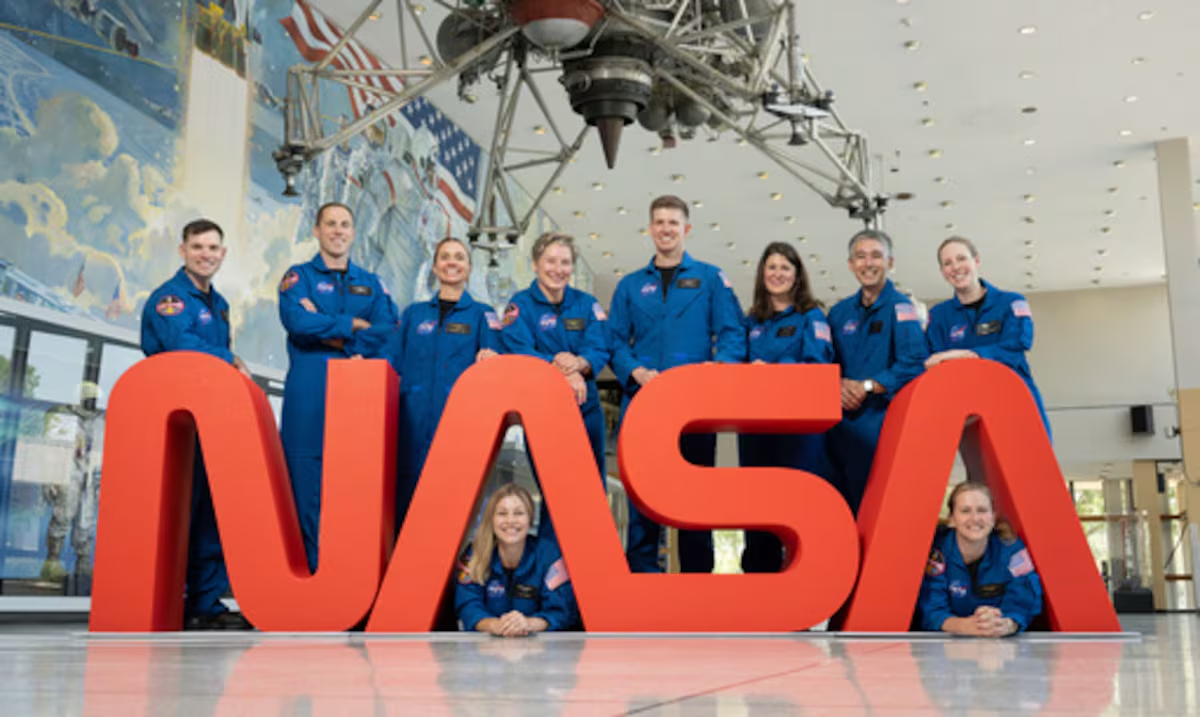
Do you want to fly to the moon and help build a permanent lunar base? NASA is accepting applications for a new class of astronauts who will contribute to the development of the program Artemis.
Officials announced the news Saturday during an air show held at the Kennedy Space Center to promote lunar exploration, as well as advances in aviation and technology.
NASA’s last call to select new astronauts took place two years ago. More than 8,000 candidates applied, of which 10 passed the final selection in September 2025.
With only 32 active astronauts, the space agency needs more recruits as it aims to expand humanity’s presence beyond low-Earth orbit as soon as possible. The lunar flyby carried out in April by the Artemis II crew marked the beginning of the lunar campaign.
“We have a lot more work than our astronauts can handle,” Artemis III commander Randy Bresnik told The Associated Press on Saturday.
1 / 22 | 📷 In images: this is how they captured the solar eclipse in different parts of the world. Between clouds and during a solar eclipse, the International Space Station crossed in front of the Sun in this image captured near Hodgdon, Maine. -Joel Kowsky
Aspiring astronauts have from now until December 3 to submit their applications. NASA plans to make the final selection at the end of 2027, and new candidates will begin their training at the beginning of 2028, the same year that NASA plans to return astronauts to the lunar surface after an absence of more than half a century.
“By then we will have people on the Moon, so don’t leave it for later,” Bresnik urged potential candidates.
Bresnik and his three crewmates will launch into orbit next summer to practice docking their capsule with two lunar landers, one built by Elon Musk’s SpaceX and the other by Jeff Bezos’ Blue Origin. Its mission will take place near Earth – without a lunar flyby – and will serve as a general rehearsal for the following year’s Artemis IV mission, in which two astronauts will attempt to land near the lunar south pole.
The lunar base will take shape as more rovers, robots, structures and electrical networks are launched.
“Patience is essential to becoming an astronaut,” said Frank Rubio of the Artemis III mission, whose 371 consecutive days in space constitute a US endurance record. Candidates must also be US citizens with college degrees and professional work experience.
1 / 29 | This was the return of the Orion capsule to Earth. Artemis II mission pilot Victor Glover descends from the recovery helicopter onto a Navy ship in the Pacific off the coast of California. -NASA
The two years of mandatory training can be grueling, and it may take several more years on top of that before you can finally launch into space.
“It’s important for you to realize that most of that work doesn’t have to do with going to the Moon, right?” Rubio told the AP. “That will be about 1% of your experience. What you are doing is contributing to the mission of going to the Moon.”
This will be NASA’s 25th class of astronauts since the original “Mercury Seven” of 1959.