
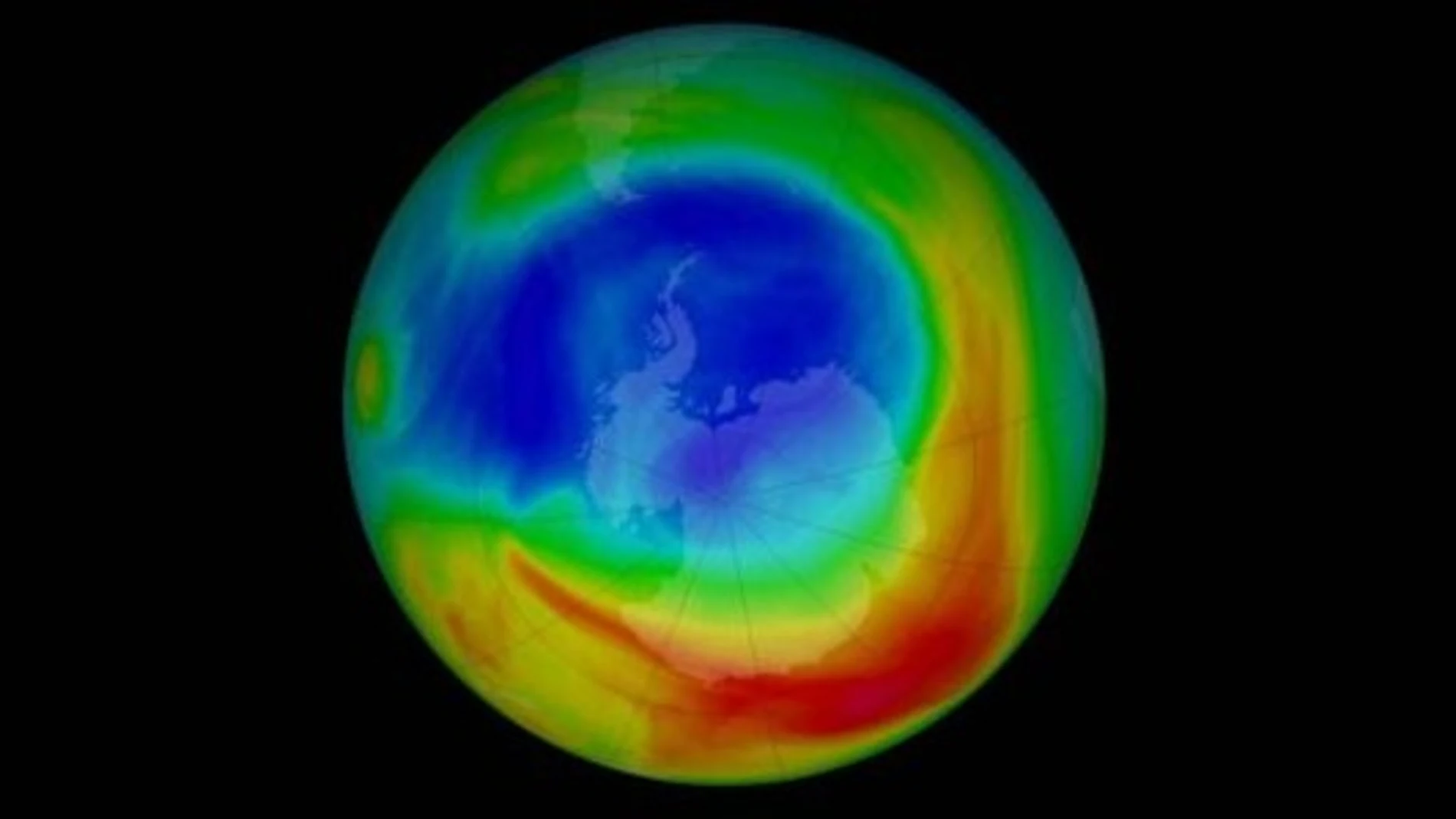
The POT has made public a report in which alert that the ozone layer hole has expanded to reach 25 million square kilometers, doubling the total area of the United States. This extraordinary meteorological phenomenon places the current dimensions of the deterioration in levels that have not been recorded for a decadetemporarily interrupting the recovery trend seen in recent years. The space agency’s scientific teams explain that the anomaly responds to the direct influence of an extremely powerful polar vortex that has significantly prolonged wear of ozone on the Antarctic continent.
The meteorological factors that have driven stratospheric expansion
He maximum peak daily extension was recorded last September 18at which time the affected surface touched the 27 million square kilometers. Paul Newmansenior scientist and director of the ozone research team at the Goddard Space Flight Center, emphasizes that “In recent years, the annual ozone hole has been forming later in the season, indicating that the ozone layer is recovering“, although she clarifies that the strength of the current phenomenon has allowed the usual limits to be exceeded. For her part, the researcher from the National Oceanic and Atmospheric Administration, Amy Butlerdetails that the weakness of weather systems during the months of August and September prevented the dissipation of the frontconsolidating a favorable zone for artificial compounds of chlorine and bromine will destroy the protective molecules of the stratosphere.
The long-term effectiveness of international controls established by the Montreal Protocol
Despite the magnitude reached by the current registry, experts from both scientific institutions insist that the data does not invalidate the progress achieved thanks to the regulations. international environmental. Stephen Montzka, senior researcher at NOAA’s Global Monitoring Laboratory, confirms that stratospheric chlorine levels have decreased by about third compared to maximum records from the 80s. In this sense, Newman himself argues that the current situation “is large, but could have been 1 to 2 million square miles larger if ozone-depleting substances were as prevalent in the atmosphere today as they were at their peak in 2000.“, thus endorsing the validity and usefulness of the Montreal Protocol in the long-term preservation of the ozone layer.