
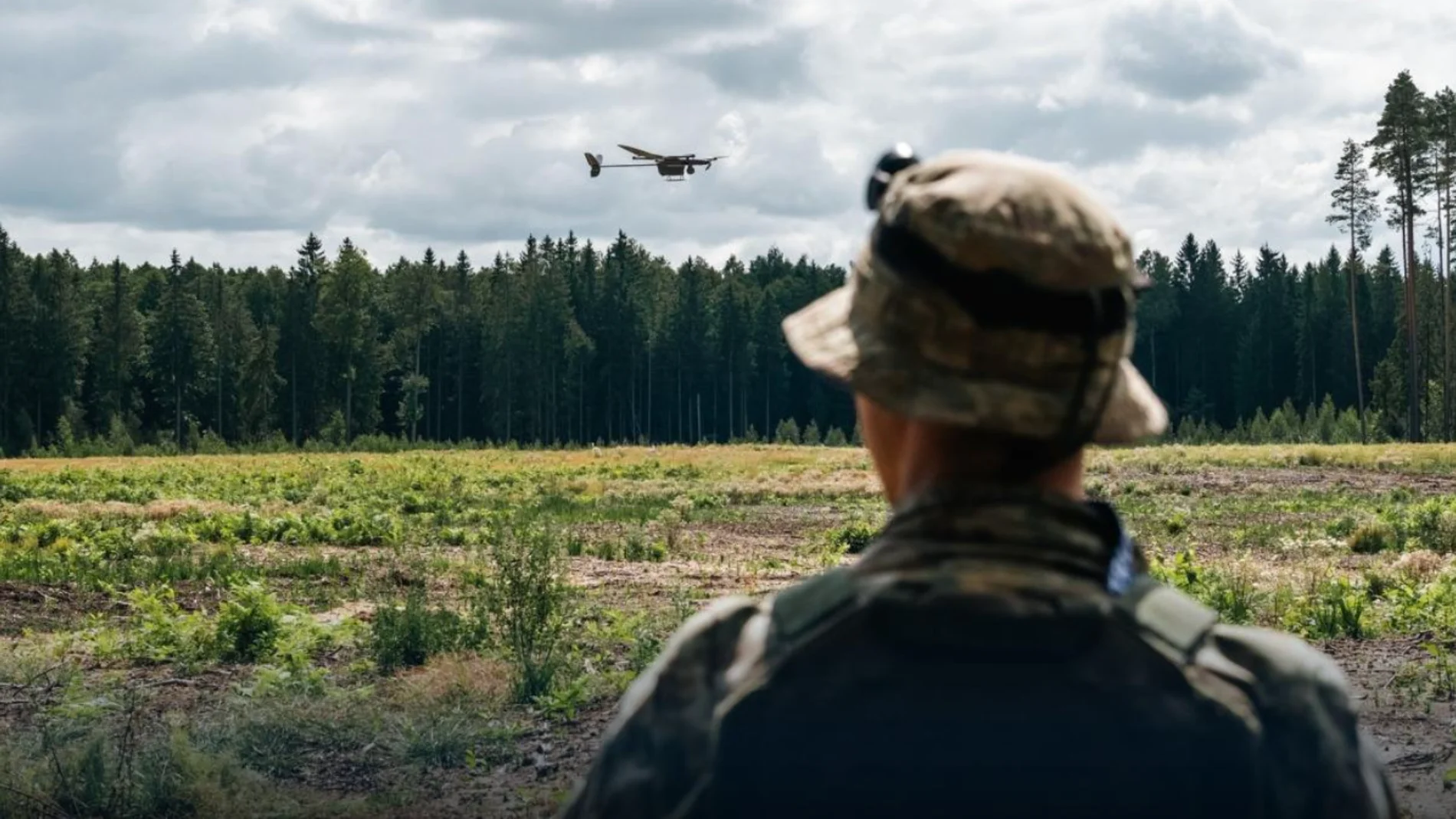
In drone warfare, technology can become obsolete before it even reaches the units that must use it. While unmanned devices evolve, change tactics and find new ways to evade defenses, the administrative procedures to acquire systems that neutralize them continue to advance at a different pace. The NATO wants to shorten that distance with an unusual initiative in the military field: a kind of online store where your allies can directly consult and purchase anti-drone systems previously selected by the Alliance.
The platform, called Counter-Unmanned Aircraft Systems Marketplace (C-UAS Marketplace), was launched this week by the NATO Communications and Information Agency (NCIA). Your goal is reduce contracting times and make it easier for countries to have defensive capabilities when they need themwithout having to start a public tender from scratch for each acquisition.
The problem is not minor. As Cristian Coman, principal scientist at the NCIA, explained during a briefing in Brussels, a conventional procedure can take between nine and twelve months only to reach the signing of a contract. The new formula advances the work: NATO first organizes the competition between manufacturers, evaluates the proposals and establishes framework agreements with the selected suppliers. Thus, when a country identifies a need, it can directly use the catalog without repeating the entire bidding process.
The first edition brings together 16 solutions five companies: the French Alta Ares, the Americans Axon Enterprise and Northrop Grumman, the British OSL and the German Quantum Systems. The selection came after receiving more than 80 proposals from interested companies and evaluating capabilities for approximately four months. According to the Alliance, the chosen systems have already been deployed in allied countries and Ukraine, or have been used in exercises and operational activities.
This is not a collection of identical weapons. The catalog brings together technologies designed to detect, identify, track and neutralize drones, with fixed, transportable and mobile solutions. These include radars, cameras and electromagnetic sensors, electronic jamming systems that can interrupt a device’s communications, interceptor drones and physical neutralization devices. Some solutions even incorporate machine guns or small missiles.
NATO has organized the selection around four scenarios. The first is the specific protection of military installations, command centers or strategic infrastructures. The second contemplates the defense of areas up to three kilometers in diameter, such as air bases or logistics centers. The third focuses on the surveillance of border sections of up to 20 kilometers. The latter is designed to protect moving military convoys, up to 300 meters long and traveling at speeds of up to 50 kilometers per hour.
The difference between these scenarios is important because there is no single solution capable of responding to all threats.. Protecting a base requires detecting devices from a distance and coordinating different sensors; Defending a convoy requires teams to be able to move with it and react while it is in motion. The choice will therefore depend on the threat and the environment that each country needs to protect.
The catalog also introduces flexibility in purchasing. Allies will be able to purchase the systems or resort to rental formulas, which would allow them to have certain capabilities for a specific period without permanently incorporating them into their arsenals. The prices communicated during the presentation range between 1.6 and 25 million euros per unit, depending on the system. Once the contract is signed, the expected delivery times are between 90 and 180 days. In addition, the NCIA has set aside €3.1 million to fund additional testing of the equipment by Alliance countries or commanders.
The initiative is part of DroneEdgethe program presented during the NATO summit held in Ankara in July 2026. Allies have committed to investing more than $40 billion in counter-drone capabilities over the next five years. The Alliance also aims to expand the availability of proven and compatible technologies among its members. For now, no country has formalized a purchase through the new mechanism, although several governments have shown interest. NATO’s commitment is not only to incorporate more equipment, but to change the way it is obtained.