
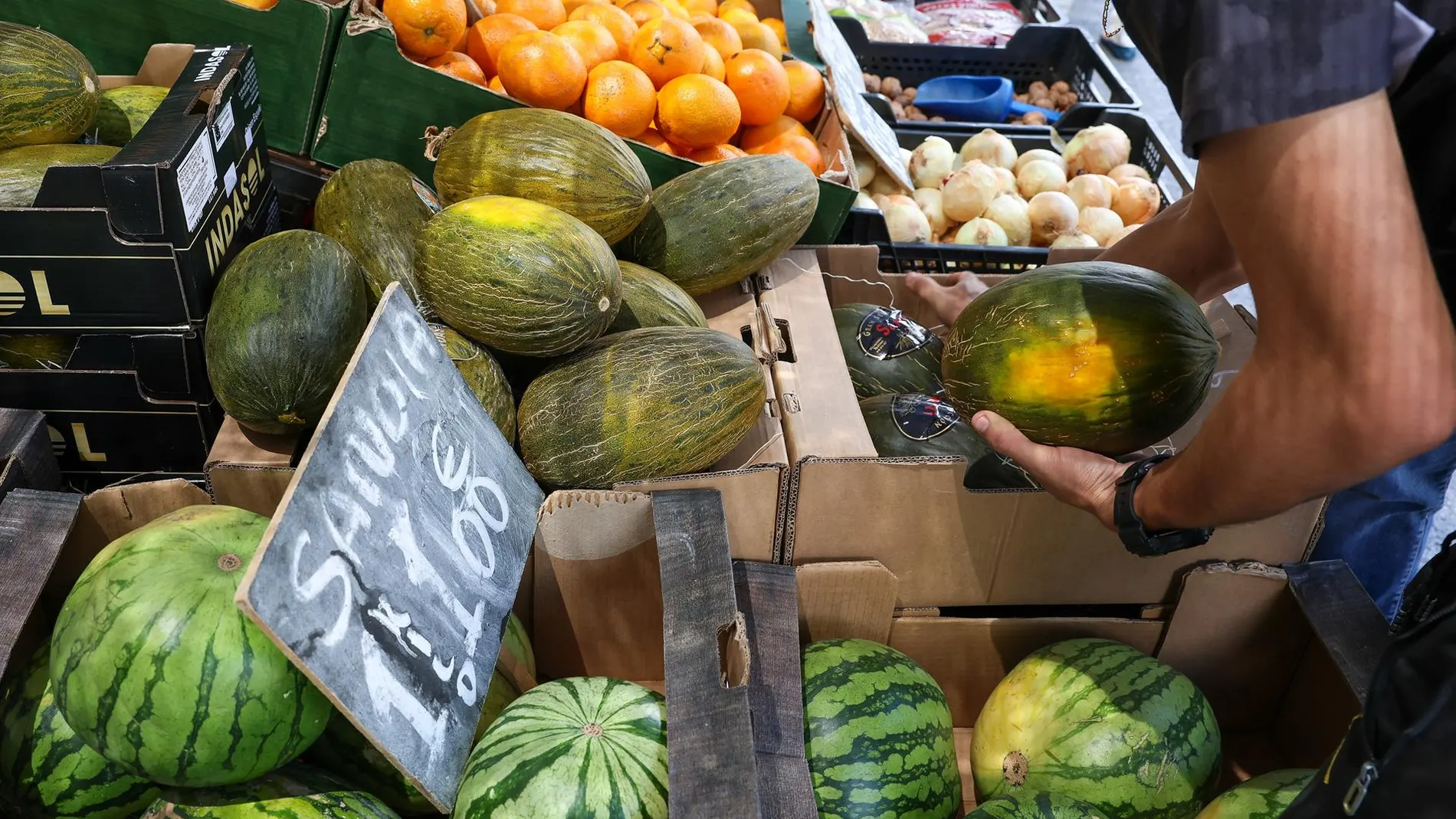
One of the great characteristics of Spanish markets is the presence of a wide variety of fruits and vegetables during all months of the year. However, in order to meet the high demand for this type of food, Companies are forced to import products from other nations. Among the most consumed imported products you can find watermelons from Morocco or grapes from Peru.
According to the latest data from the Spanish Federation of Associations of Producers and Exporters of Fruits, Vegetables, Flowers and Live Plants (FEPEX), Spain allocated 3,000 million euros during the first half of the year to imports of these foods. Something that allows the presence of fruits and vegetables out of season in supermarketsas well as a cheaper offer from those that do belong to the station.
A situation that directly affects Spanish farmers, who They can’t compete with the low prices for which such imports are purchased. That is why they always recommend buying fruits and vegetables that are in season and taking into account a series of factors to identify whether the products are of national origin or, on the contrary, if they are imported.
How to identify a fruit or vegetable of national origin?
One of the most common recommendations from nutritionists is the consumption of seasonal fruits and vegetables. This is because, in general, these foods They store the nutrients and vitamins necessary for each time of the year. However, the purchase of this type of products is not only due to their nutritional benefits, but also to the national economy and environmental protection.
Therefore, the most common thing is that consumers seek to buy local products instead of imports. The problem appears when they do not know how to identify a food of national origin. To avoid this, it is best to be clear about which fruits and vegetables are in season and pay close attention to their labeling. These foods usually have a sticker indicating where they were grown.
In the case of fresh products that lack labels or are sold in bulk, these usually lack stickers. However, the regulations establish the obligation for supermarkets to offer the following information on signage that accompanies them: the name of the product, its country of origin and the price per kilo. These signs must be placed visibly, to guarantee reading by the consumer.
What information do the barcode figures provide?
All packaged foods must have a label specifying the country of origin of the product, as well as the name and address of the company responsible for placing it on the market. However, there is a fairly widespread belief that the figure that appears at the bottom of the barcode can also reveal the true country from which it is being exported. Something that has already been denied by the OCU.
The presence of the number 84 in the first two digits of the barcode number It does not indicate that the product has been manufactured in Spainbut it was the Spanish subsidiary that provided said code. This is because the figure responds to a coding system to facilitate logistical management, so the subsidiaries are in charge of requesting it from one of the 118 member organizations of GS1, which is in charge of managing them.
Likewise, another hoax that has been circulating on social networks and that has had to be denied by means of verification are the statements about the numbers 611 or 61. These numbers They do not indicate that the product has Moroccan originas stated, but the company that sells it is a member of GS1 Morocco, which has issued the barcode.