
In the desert, Saharan or Arctic, the wind does not produce sound. It has to be hurricane-like, fierce, so that the particles it drags sneak into our ears. And yet, it is noise: it has no nuances, only monotony. However, in a forest, a small breeze can make music, rustling the leaves in infinite ways, depending on their size and inclination. Something similar happens with light: if it does not “collide” against something (the physical term would be reflection) we do not see the object. So, Photography is the art of capturing the fastest things in the universe. And that, in some way, that excites us.
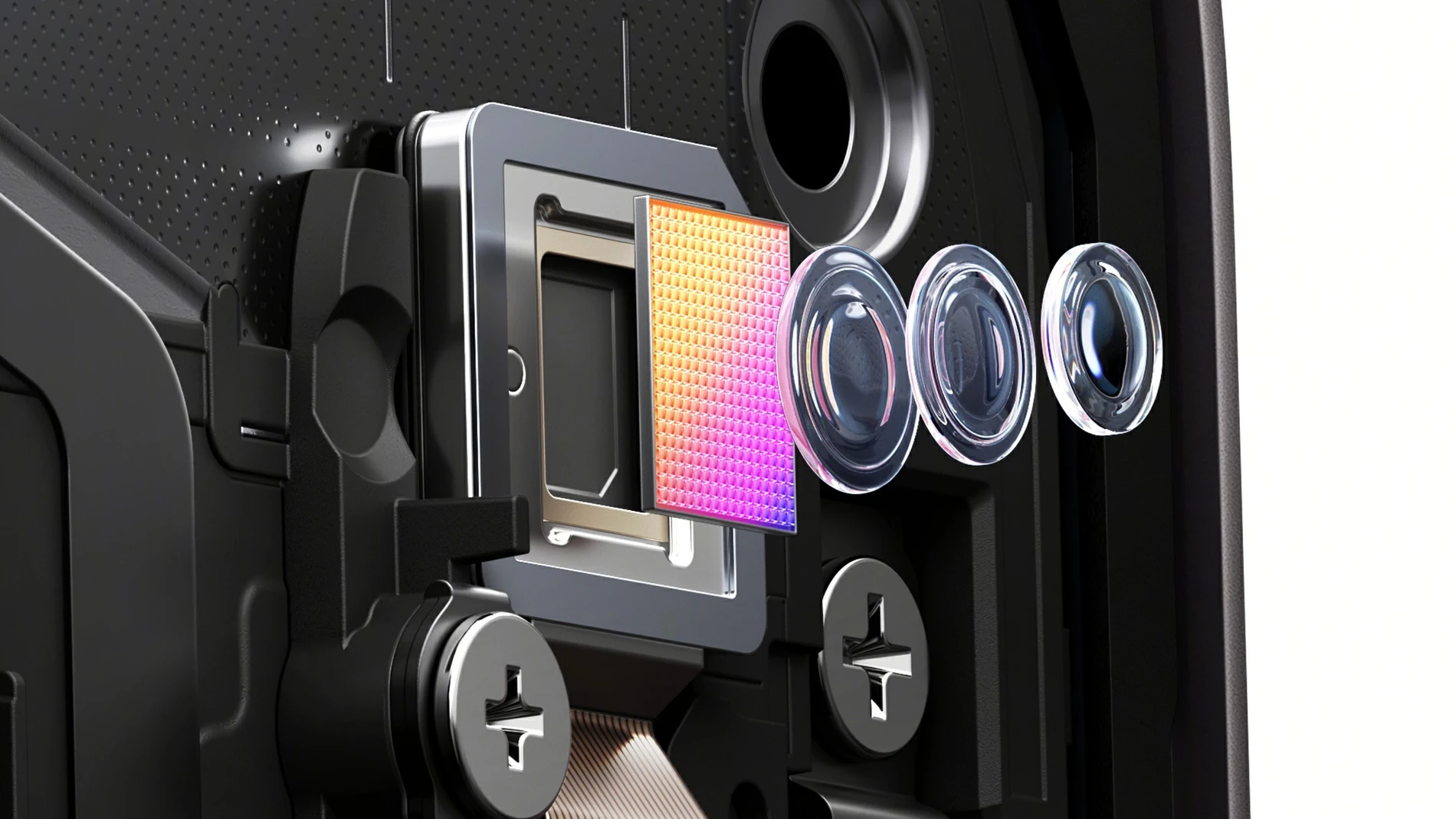
It is precisely in that area where OPPO wants to place its new Find X10 series, which will be presented globally on October 21. The proposal combines 200 megapixel sensors developed in collaboration with Hasselblad, the emblematic Swedish photography firm, with a new generation of computational processing called LUMO True Image Engine. The stated goal is not simply to obtain larger images, but to better preserve details, colors and relationships between highlights and shadows.
The difference between the two models allows us to understand the dimension of the bet. The Find X10 incorporates a two-camera system of 200 megapixels, while the Find That is to say, The top model nominally adds 600 megapixels between its three sensors, although that does not mean that it can generate a single 600 megapixel photo. Each camera records the scene from a different perspective and focal length.
Resolution matters, but it doesn’t explain everything. A sensor with more pixels can record more spatial information and make it easier to enlarge or crop an image. However, the result also depends on the size and quality of the sensor, optics, lighting and post-treatment. On a phone, where space for lenses and sensors is limited, The software has become an essential part of the photography system.
OPPO has concentrated that task on LUMO True Image Engine, an architecture that divides processing into three areas: detail, color and tone. The first, LUMO Hyper Pixel Engine, seeks to take advantage of the information captured by the sensors to preserve textures and reduce the artifacts that an overly aggressive digital approach can produce. According to the company, photos can offer a resolution of 26 megapixels by default at different focal lengths, while high resolution modes allow you to reach 50 or 200 megapixels on compatible cameras and when lighting conditions allow.
The second component, LUMO True Color Engine, addresses one of the least spectacular and most difficult challenges in photography: reproduce the colors of a scene without exaggerating them. To achieve this, the series incorporates a new generation color camera with 24-channel multispectral detection. This system provides additional information about the light and color received by the camera, with which processing can adjust the white balance and more consistently represent skin tones, vegetation or skies under different lighting.
The third piece, LUMO Natural Tone Engine, deals with light. A camera must decide how to represent a scene in which very bright areas and almost dark areas coexist. If you lighten the shadows too much, you can erase the sense of depth; If you darken a face too much to preserve the sky in the background, some of the expression may be lost. The new system seeks to better preserve the relationship between highlights, midtones and shadows, preventing each area of the image from being processed as if it were independent of the rest.
Collaboration with Hasselblad and its Master mode plays an important role in this philosophy, which serves as a reference for a more contained tonal treatment. The intention is that an image does not gain appeal at the cost of moving away from the original scene: that itThe color does not become gratuitous saturation and the detail does not end up transforming a natural texture into an artificial surface.
The bet also extends to video. OPPO announces that the three rear cameras of the Find X10 Pro Max will be able to record in 4K at 120 frames per second and in 8K at 30 frames per second. The Find X10 model will offer these capabilities in its two 200 megapixel cameras. The series also incorporates Open Gate Capture, a function that takes advantage of a larger sensor surface to facilitate cropping and adapting a recording to horizontal or vertical formats during editing.
All of this poses a change of priorities. For years, much of the competition between phones has been based on easy-to-compare figures: megapixels, zoom magnifications or number of cameras. But a photograph is not a technical sheet. It is also the way in which a machine interprets a sunset, the texture of skin or the contrast of a room lit by a window. The light, in a few words.