
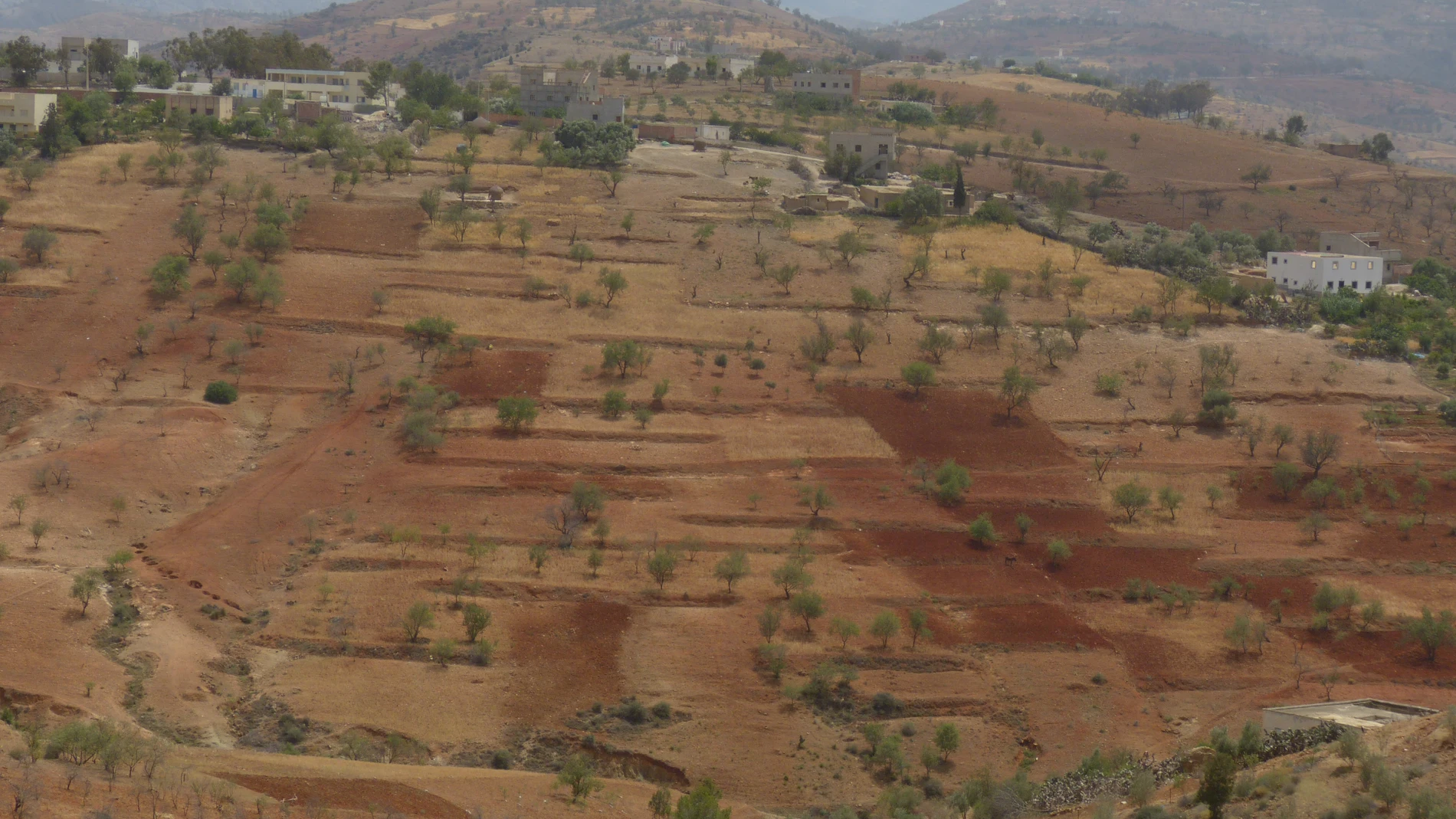
lhe history of cannabis in the Rif (Morocco) dates back centuries. Its medicinal use has been known since the Middle Ages, in particular of the local variety, the beldía. It has been used for cooking or even making sails for boats and its cultivation has gone through different phases: from residual and family to industrial and illegal. In any case, it has always been one of the economic sources for families in this impoverished, densely populated, rebellious and mountainous region of the Maghreb. Especially in three provinces: Al Hoceima, Chefchaouen and Taunat.
Now its cultivation is in the middle of a legalization process initiated by Rabat in 2021. That year Law 13-21 was approved, which established the legal framework to regulate the cultivation and use of cannabis for medical, pharmaceutical and industrial purposes. Recreational use remains illegal. Standards were established for the production, manufacturing, transportation and marketing of derived products; The National Agency for the Regulation of Activities Related to Cannabis (ANRAC) was created and, in 2022, the first ten licenses for legal cultivation were issued.
According to the latest data published by this organization, legal cultivation is gaining ground. In 2025, 3,141 hectares were registered as legally cultivated, 1,387 hectares more than the previous year. Of them, 2.622 correspond to the native variety belledia About 519, imported varieties. 4,147 new authorizations were granted, raising the number of permits to 5,765, and 110 products with CBD (non-psychoactive component of cannabis) were registered for cosmetic use and as a food supplement. “About 1,460 farmers have organized themselves and work in about 150 cooperatives that legally produce 1,957.6 tons,” details Pien Metaal, senior project coordinator of the “Drugs and Democracy” program of the international research institute “Transnational Institute” (TNI). Metaal highlights that, despite the progress, there are still 20,670 hectares that are cultivated illegally in the north of the country.
The year the legislation was passed, his organization commissioned a documentary from Spanish production company LolaMora. Blanca Diego and part of the team traveled to the area to interview families and producers and find out their opinion regarding the change. Among them was Abdellatif Adebibe, one of the local leaders – for 30 years he has also campaigned before the UN for the legalization of cannabis in the Central Rif – and founder of one of the farmers’ cooperatives operating in the area.
Farmers received the decision with caution and five years later the same challenges are still present. «The approval of the law was very well received by the vast majority of communities, because a cannabis producer did not have much protection from the State; He was exposed to extortion and worked for people who weren’t very nice either, let’s say. Little by little they are moving to legal cultivation and certification, but there is considerable difficulty. It is a fairly impoverished population, many of them do not know how to read or write and, in order to participate in the legal market, they need to have certain things in order, management of their lands, control of the use of certain chemicals… there is a whole list of demands to be able to meet the standards for this type of crops, and there are many who do not have the capacity to organize. The land is also very small, so the best way for them to work is to join a cooperative where they have help understanding the complex regulations and finding buyers. To this day, they continue to regret the lack of support; They need water tanks or organic fertilizers,” says Metaal.
For her, there are other aspects that also explain the farmers’ difficulties: one, the lucrative and well-established illegal hashish market (that preparation that comes from the plant and is intended for leisure use, still prohibited today), and another, the difficulty of accessing the international market with a certified legal product for pharmaceutical, food or cosmetic use. «The competition is brutal. There are many countries that produce medicinal cannabis. Holland, Germany, Spain, Canada, Israel… The market developed a lot after the UN reclassified cannabis in 2020.
On the other hand, remember that «in the illegal market with which added value is obtained It’s with hashish. Now they do not want to go back to being just producers of the plants and for all the added value of the products to remain in the hands of others. We are still on the path of transformation, where cooperatives are the ones that grow and manufacture the final product and have export permits. They are still few, but progress is being made. We are talking about farmers who have a perfect command of the codes of illegality, but not of legality. And they flee from everything that represents the State due to the repression and abandonment of which they have been victims for a long time.
Illegality and impacts
It is true that cannabis cultivation has been known here for centuries, but the boom began in the 70s, when Europeans and Americans began to demand hashish in large quantities for personal use. Furthermore, during the 1980s, the increase in demand was accompanied by a reduction in supply from other producers such as Afghanistan or Lebanon.
Before that boom, and According to TNI data, the hectares of cultivation in the Rif were around 10,000; In 2023, the UN counted 134,000 hectares and 3,800 tons of hashish produced. Nor should we forget that, in 1961, the same entity included three traditional crops, cannabis, opium and cocaine, on its list of narcotics. (in 2020 it relaxed its consideration) «Cannabis cultivation was 12 to 46 times more profitable than cereals», says the TNI. Many farmers switched from cultivating beldía to other varieties that came from the United States. and Europe, more productive but with greater need for water and phytosanitary products, which It has contaminated aquifers, eroded the soil and confronted the provinces over water. Illegal crops began to spread and with them came deforestation at increasingly higher altitudes, until they reached 1,500 meters, habitat of the country’s endemic Atlantic cedars.
Beldía to combat drought
Metaal details that the State wants to strengthen even more the cultivation of beldía, with a greater boost in 2027, since it is a variety more resistant to diseases and droughts and, therefore, needs less water. «As the competition is so great, a niche is being sought for the beldía, the native variety, which is the one that, in technical terms, has the best quality because it has been produced for centuries. Starting next year it will be the only crop allowed in Al Hoceima. The strategy or master plan for the future is to have control over the genetic resources of the seed. There are many more components that develop when a plant has been cultivated for many generations and now we are beginning to know and see the future uses that can be given to this seed. The ANRAC says that they are working on applications in oncology, rheumatism, and different neurology. “There are many medical fields with potential, but it is an area of research that has to be recovered, because before everything was prohibited.”
How to end illegal cultivation
►In 2003, according to official data, there were 134,000 hectares of illegal cultivation. In fact, in those years Morocco topped the list of hashish-producing countries. In 2021, the law established that imported seeds required authorization and had to meet certain phytosanitary standards and in 2024, Mohamed VI granted a pardon to 4,831 people prosecuted for activities related to the illegal cultivation of cannabis. The future, they say from TNI, involves continuing to legalize hectares and promoting the cultivation of the local and ancestral variety.
Metaal concludes by opening a debate: «Many farmers now have a license obtained in these years, but obviously it is a much more limited market than that of hashish, which is the main source of income for producers. Cannabis is the only crop that allows many farmers to feed their children and families are still large. There are only two countries in the world that have legalized all cannabis use, Uruguay and Canada. The others are limited to allowing cultivation for domestic or club use.