
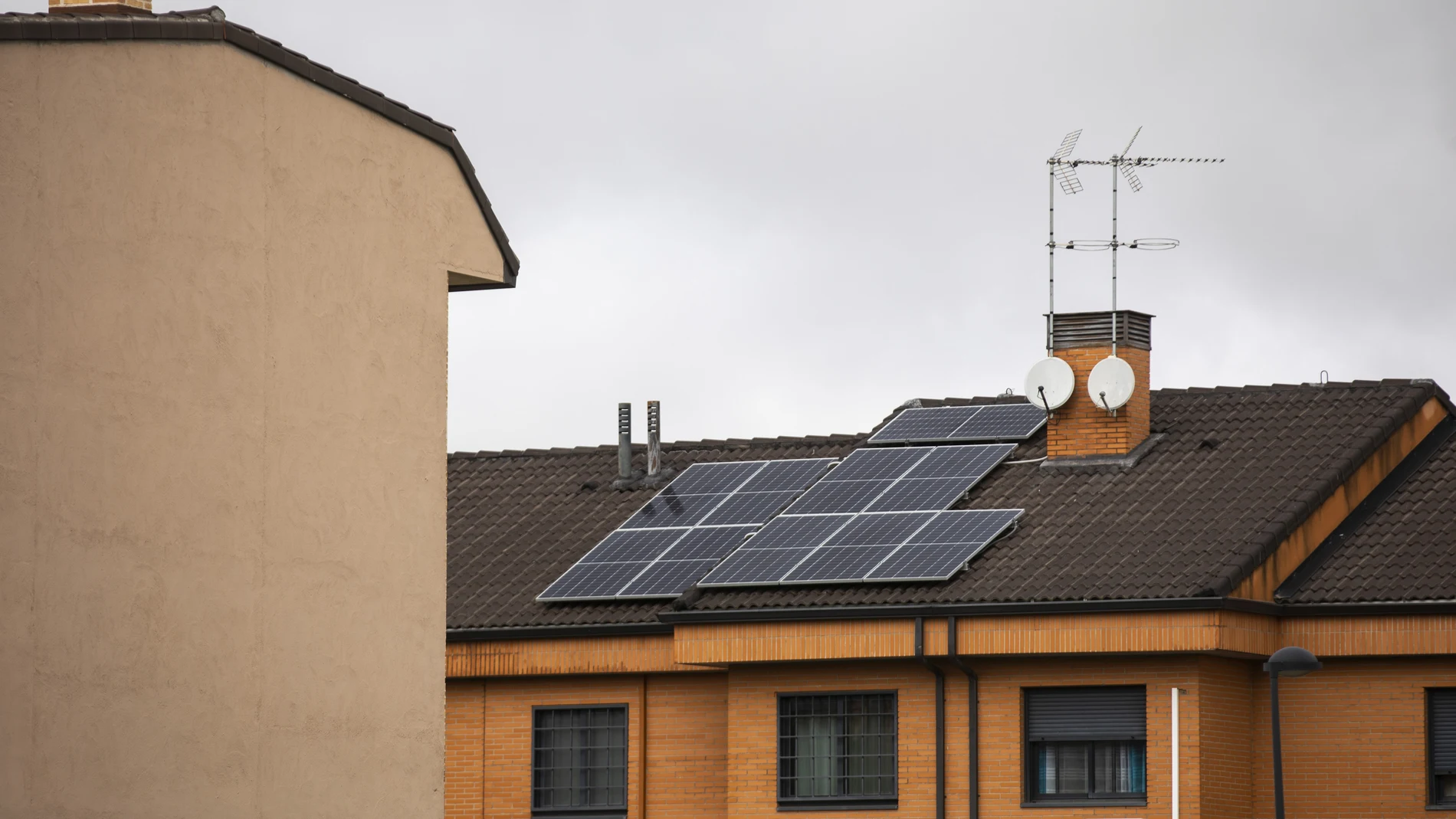
The electricity bill It offers the first information to calculate a solar panel installation, but looking only at how much you pay can lead to a wrong estimate. Carlos Llull, electrician and solar energy technician, recommends starting from the energy consumed by the home throughout the year. The size of the house alone also does not allow you to know how many panels you need.
“We must look at the kilowatt hours consumed, not the euros we have paid,” he explains on his YouTube channel. The amount of the bill includes concepts such as the contracted power and taxes, in addition to depending on the price of electricity. To start calculating the panels, the data used is the consumption expressed in kWh.
Their recommendation is to gather the bills from the last twelve months and add up the energy consumed, or check the annual consumption if it already appears on the receipt. “I wouldn’t just use the last bill because consumption can change a lot depending on the time of year,” he points out. Air conditioning can raise it in the summer, while electric heating can concentrate it in the winter.
Producing what you consume does not mean stopping buying electricity
Once consumption is known, there is another distinction that Llull considers necessary. Generating as much electricity as your home uses for a year does not guarantee that you can do without the grid.. Solar production and the use of devices do not always coincide.
“The panels produce mainly during the day, but the home also consumes at night and at times with little solar production,” he explains. Added to this gap are the differences between seasons, with possible surpluses in summer and a greater need to buy electricity in winter.
For this reason, the technician also pays attention to when it is consumed. A house that remains empty during sunny hours can send a good part of what it generates to the grid. If the purifier, air conditioning or car charger operate during that time, the direct use will be different.
How does it go from annual consumption to the number of plates?
To illustrate the calculation, Llull proposes a home that consumes 4,000 kWh per year and an estimated production of 1,500 kWh per year for each kilowatt peak installed. This last figure corresponds to his example of a roof in Mallorca that is reasonably well oriented and without significant shadows. It is not proposed as a valid value for any roof.
By dividing consumption by that production, you get about 2.67 kWp of photovoltaic power. With 455 W modules, the result is approximately equivalent to six panels, which would total 2.73 kWp.
It is a first reference. The technician himself insists that the final installation requires studying the orientation, inclination and shadows, in addition to the available space and the characteristics of the equipment. Two homes with the same consumption may require different solutions.
Planned changes at home also count
The bills reflect what is already consumed, but they may fall short if the family plans to incorporate aerothermal or buy an electric car. Llull advises including these real changes in the estimate to avoid the installation becoming insufficient shortly afterwards.
In one of his examples, he calculates some 3,000 kWh additional annual charges for an electric vehicle that travels 15,000 kilometers per year, including recharging losses. He clarifies that this consumption depends on the kilometers and the efficiency of the car, not only on the capacity of its battery.
The roof can impose another limit. If the calculation points to twelve panels and only eleven can fit, the installation can still provide savings, even if it does not produce the equivalent of all annual consumption. In that case, he explains, a part of the electricity will continue to come from the grid.
Nor does a high-capacity battery automatically compensate for the lack of panels. “The battery does not produce electricity and does not replace the panels,” he recalls. To choose it, he proposes studying the available surpluses and afternoon and night consumption. If there is hardly any solar energy left, a battery that is too large may not be fully charged, especially in winter.