
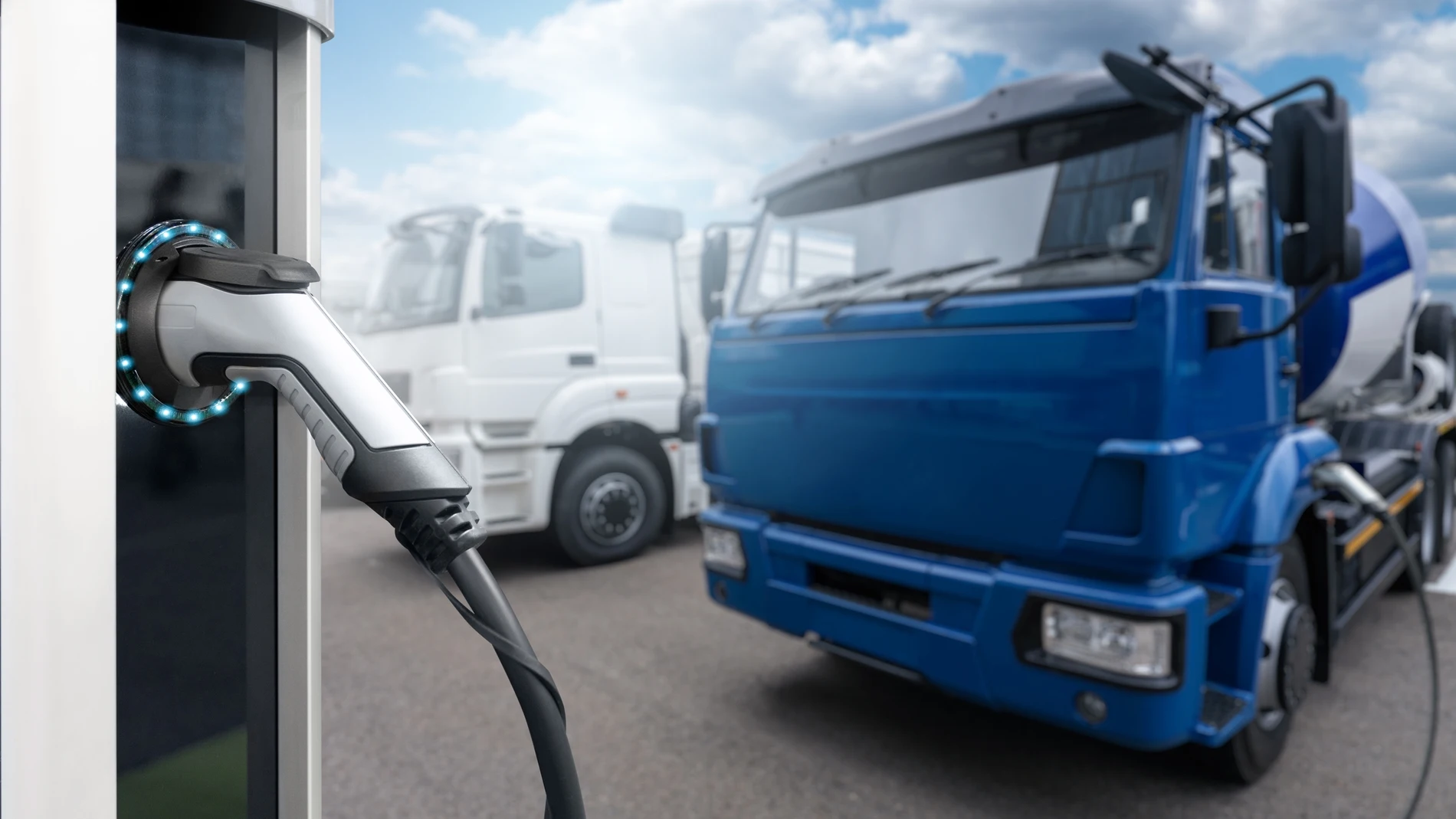
Near the Port of Valencia, the project for what will be the largest charging center for electric trucks in Spain is being built. Promoted by the firms Prologis and PragmaCharge on an area of 12,500 m2, the enclave will have a power of 4 MW and the capacity to supply 48 heavy vehicles simultaneously. Its first phase will enter service soon with 14 high-power points, reaching full capacity in 2027 with a smart charging platform. The initiative is one more symptom of how The large Mediterranean logistics nodes seek to accelerate the transition towards zero-emission freight transport.
However, electric trucks won’t start: The seven main European manufacturers came together a few days ago, at the IAA Transportation Show in Hannover, to ask the EU for more flexibility with the CO2 reduction objectives for 2030 given the difficulty of selling the vehicles already available.
Although the initial investment is still high due to the cost of the batteries, a study published in the journal Nature Communicationsprepared with data from more than four million European trucks, concludes that by 2030 The total cost of ownership of a battery electric truck will be 70% to 90% lower than that of a diesel truck. of heavy road transport activity. Greater energy efficiency and lower operating costs – with savings that can reach up to 0.50 euros per kilometer – offset the outlays as mileage increases.
However, profitability on paper collides with the reality of the roads. The same analysis warns that, when comparing financial profitability with real daily autonomy and the network of available public chargers, Only between 21% and 25% of European heavy transport will be technically and economically viable by 2030.
The great barrier is not in the vehicle technology, but in the infrastructure and bureaucracy. The ‘VI Report on Electric Mobility in Spain’, published this week by OBS Business School and directed by May López, reveals that There is a serious “black hole” in heavy charging: of the more than 56,000 public charging points in Spain, less than 1% are suitable for truckswith only 188 eligible points at mid-year. Added to this shortage is that 23.9% of the chargers installed in the country do not work.
Likewise, the work denounces that connecting a charger to the electrical grid requires procedures that last up to three years in Spain, compared to 5 to 12 months in neighboring countries. delays that have already generated losses of more than 263 million euros for operators.
This disconnection between supply and infrastructure slows down sales and The market share of the electric truck in Spain stands at only 1.6%-1.7%. In Europe the quota is 2.4%, which has led manufacturers to request a three-year postponement of climate goals to avoid multimillion-dollar penalties of up to 2.2 billion euros.