
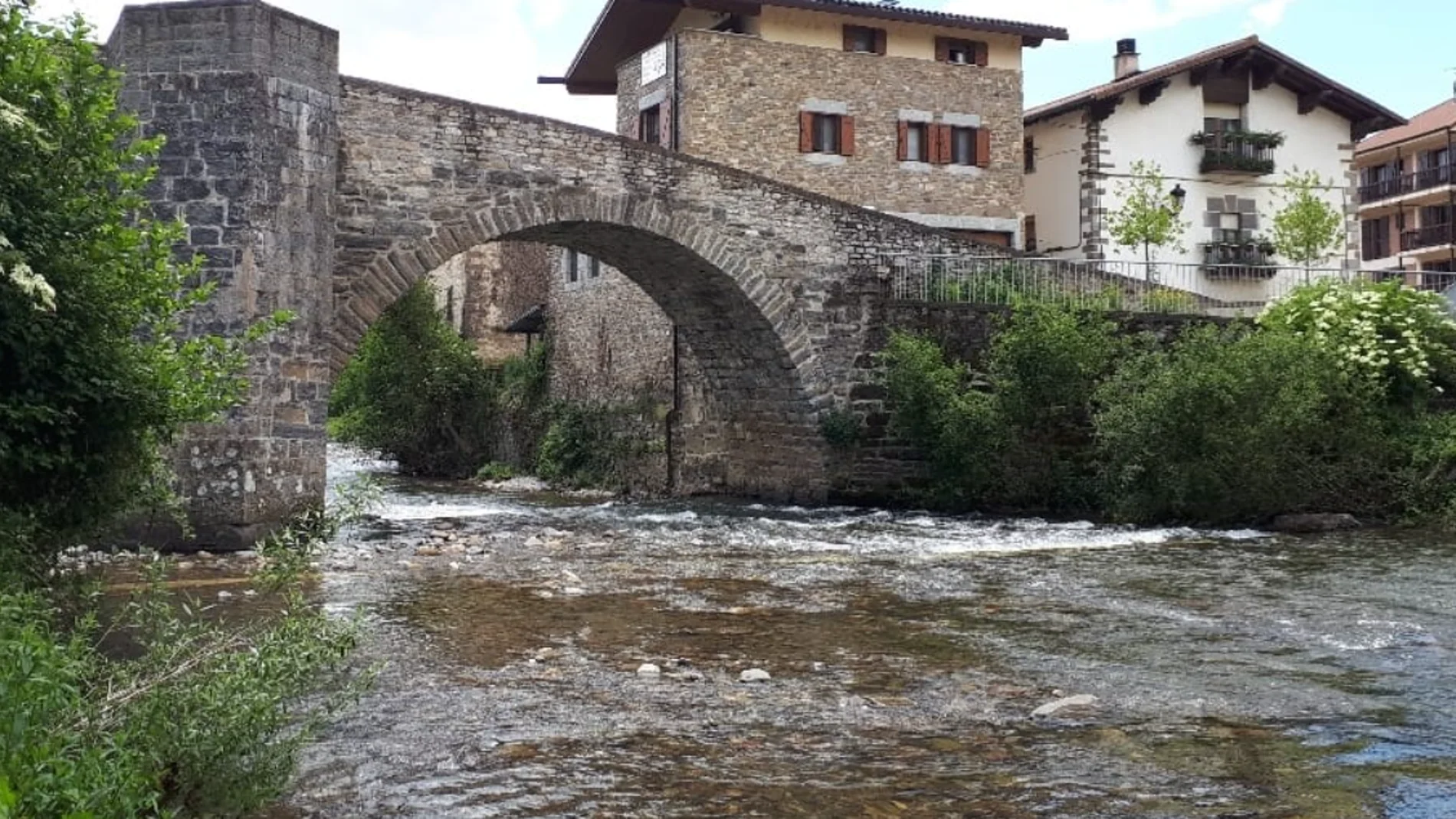
On the banks of the Arga River and in the heart of French Way of Saint James There is a medieval bridge that has made history and legend advance practically hand in hand. It is in Zubiri, a Navarrese town located between Roncesvalles and Pamplona whose name in Basque means “bridge town“.
The connection between this wonderful place and the bridge goes back centuries. In 1097, Pedro I, king of Aragon and Navarredonated the town of Zubiría along with its bridge to the headquarters of Pamplona. More than nine centuries later, the construction continues to be one of the most recognizable points of the town and preserves a tradition that is much more difficult to explain from history.
It is known as Bridge of Rage. According to a belief passed down for generations, sick animals could be cured after passing through this place. The tradition ended up being linked to Saint Quiteriaconsidered protective against rabies.
The Zubiri bridge and a tradition of more than nine centuries
The bridge that today crosses the Arga is a medieval stone construction whose origin is located between the 11th and 12th centuries. Its characteristic silhouette and its position on one of the main Jacobean routes have made it a common stop for pilgrims heading towards Pamplona.
Its importance, however, was not limited to passenger traffic. The bridge also served to facilitate the passage of livestock, essential for the economy of the area, and a popular tradition grew around its structure that would end up giving rise to the name by which it is still known.
The belief held that an animal affected by rabies could be healed by passing over the bridge. One of the versions of the ritual went further and indicated that the animal had to walk three times around the central pillar.
Santa Quiteria and the origin of the legend
The traditional explanation is related to Saint Quiteria. The story goes that during the construction of the bridge difficulties arose in raising the central pillar and the workers began to excavate the rock on which it had to rest.
During those works, the remains of a young woman appeared and were identified as those of the saint. From there the belief began to spread that the place had properties related to the cure of rabies, a disease against which Saint Quiteria had traditionally been invoked.
There is also another version of the story. After discovering the remains, an attempt was made to move them to Pamplona. However, the animal in charge of transporting the body stopped and refused to continue on the path, a fact that was interpreted as a signal for them to remain in that place.
The exact location of the supposed grave not currently known and the different versions of the legend have changed over the years.
The animals had to cross the bridge to be cured
The fame of the place grew precisely around its supposed healing properties. Some versions stated that it was enough to make the animal pass under the arches of the bridgewhile others placed the ritual around the central pillar.
The belief was especially linked to rage. For centuries, long before current medical tools existed to prevent disease, these types of traditions were part of the way many communities tried to protect both their animals and people.
The story has survived to this day and there is still talk of people who come to the place with their pets to reproduce the ancient ritual. Beyond any supposed curative effect, which belongs to the field of popular tradition and has no scientific supportcustom explains why this construction ended up being known as the Bridge of Rage.
A stop on the French Camino de Santiago
Today, the bridge continues to be part of the everyday landscape of Zubiri and the journey of thousands of pilgrims. Its location makes it one of the recognizable steps of the French Camino de Santiago after crossing the Pyrenees and advancing from Roncesvalles towards Pamplona.
It also continues to be a particularly striking point for those who travel the Camino accompanied by their pets. The Arga River, the medieval bridge and the legend that has survived for generations have turned this corner of Navarre into something more than just a passing place.
Almost 929 years later From that historical reference of 1097, Zubiri thus preserves a construction that unites two very different stories. One is documented and talks about kings, pilgrims and the development of a town around its bridge. The other belongs to oral tradition and keeps alive the story of animals that were taken to their arches in the hope of getting rid of rabies.