
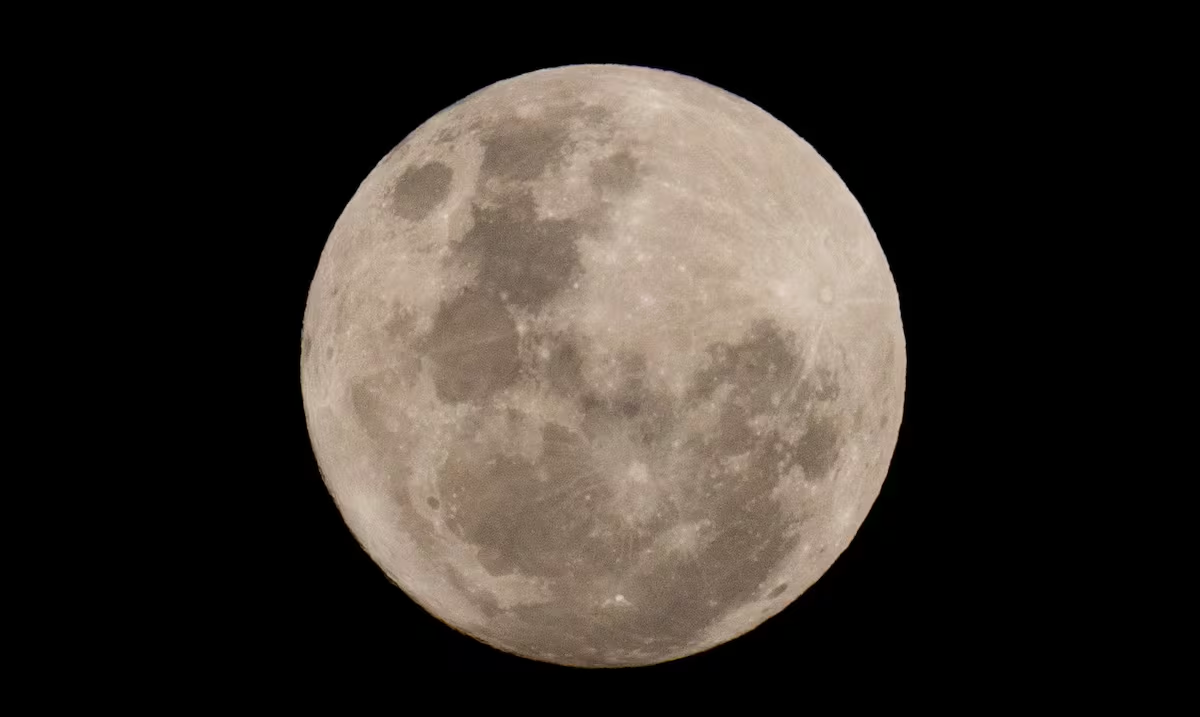
Miami- The remains of a rocket SpaceX will impact the lunar surface this Wednesday, according to estimates by independent astronomers, after the vehicle was sent into space in January 2025 for a mission that tested the landers of two private companies.
Impact will occur around 2:35 p.m. Eastern Time, when the upper stage of a Falcon 9 rocket of SpaceX, weighing approximately five tons, accidentally crashes at 5,400 miles per hour (mph) into the Moon.
The collision will occur near Einstein Crater, according to experts, who predict that it will form a cavity between 20 and 30 meters in diameter and launch lunar material up to 498 miles away.
The POT reported this week that it is aware of the trajectory of the rocket and clarified that it is debris from a lunar mission by the American Firefly Aerospace, based in Texas, and the Japanese Ispace that took off from Earth on January 15, 2025.
Julianna Scheiman, director of NASA and Dragon Science Programs at SpaceX, explained that, For missions in low Earth orbit, the most common thing is that the upper stage of the rocket burns up on re-entry into the Earth’s atmosphere.
But in the case of more distant missions “we need to carry out a different maneuver to ensure that the second stage itself is safe, according to the relevant rules and regulations,” he said.
“What has happened is that, essentially, a combination of solar activity and gravitational forces have put it on a trajectory toward the Moon,” he added.
Although the Moon frequently receives meteorite impacts on its surface, collisions with artificial objects are much less common.
So it will be an opportunity for NASA and astronomers to deepen their understanding of the lunar surface, including how to protect astronauts or infrastructure on its soil in the future.
NASA hopes to return humans to the Moon in 2028, a first step in colonizing the Earth’s satellite, which it hopes will serve to make the leap to other planets such as Mars.