
In today’s war conflicts, destroying an enemy aircraft is no longer necessarily the priority. First you have to find it and to do this you need radars. That’s why air defense systems have become some of the most valuable targets on the battlefield. A radar can detect aircraft hundreds of kilometers away, coordinate anti-aircraft batteries and guide missiles to their targets. Without them, even the most advanced defensive systems are left partially blind.
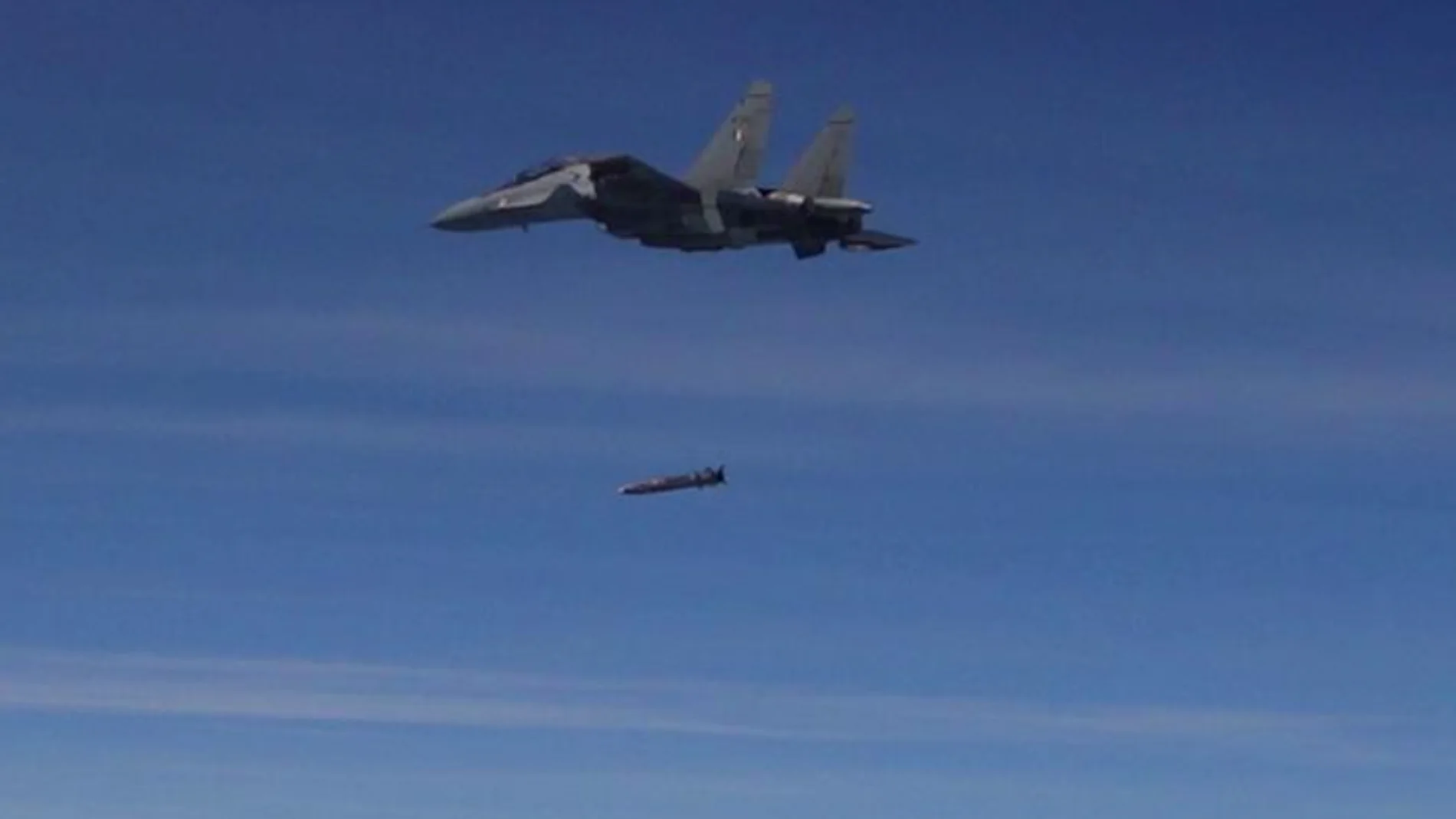
With that idea in mind, India has conducted a new test of its RudraM-II missile, a weapon developed by the Defense Research and Development Organization (DRDO) and the Indian Air Force. During the test, The missile was launched from a Su-30MKI fighter and hit its target precisely, validating all critical flight systems.
But what makes this missile so special? Unlike most missiles, which search for heat, images or specific coordinates, the RudraM-II is designed to locate electromagnetic emissions. In other words, look for speed cameras. Radars work by emitting radio waves and analyzing the echo that bounces off planes, ships or missiles. These emissions act as a kind of invisible beacon that reveals their position. The RudraM-II takes advantage of precisely that signal.
Its sensors detect enemy radar emissions, calculate its position and head towards it at high speed. That is why they are known as anti-radiation missiles: they pursue electromagnetic radiation emitted by surveillance and control systems. Military strategists often compare a radar to the eyes of an army. An air defense system can have excellent missilesbut if it cannot detect targets it is much less effective.
That is why there is a specific category of operations known as SEAD (Suppression of Enemy Air Defenses), or suppression of enemy air defenses. The idea is simple: destroy the radars and command centers first so that our own planes can operate with less risk.The United States used this strategy during conflicts such as the Gulf War. More recently, both Israel and other countries have employed similar weapons to neutralize air defense systems before launching broader attacks.
Why is there talk of a hypersonic missile? Speed in this case is one of its main attributes. Available information indicates that RudraM-II can achieve speeds exceeding Mach 5, that is, more than five times the speed of sound. Some estimates place its terminal speed at around Mach 5.5.
To put it in perspective, a commercial airliner typically flies at about 900 kilometers per hour. A missile traveling at Mach 5 exceeds 6,000 kilometers per hour. At these speeds, the time available to detect, identify and intercept the weapon is drastically reduced.
Although its primary mission is to destroy radars, the RudraM-II incorporates additional capabilities. According to the technical information available, Some variants can also be used against other ground targets, including bunkers, hangars, airstrips and protected military infrastructure.
This makes it a more versatile platform than traditional anti-radiation missiles, whose role was almost exclusively limited to the destruction of electronic surveillance systems. The test occurs at a time when Numerous powers are investing large resources in hypersonic technologies.
China, the United States and Russia are developing different types of weapons capable of exceeding Mach 5, while India is advancing both operational missiles and advanced propulsion technologies, including scramjet engines intended for future generations of hypersonic weapons. For India, The RudraM-II also represents a symbol of technological self-sufficiency. The system has been developed locally and is part of a broader strategy to reduce dependence on foreign weaponry.