
Before becoming a ubiquitous brand in the smart cleaning market, Dreame was, in some ways, an efficient shadow. For years it operated as technological provider within the Xiaomi ecosystem, developing engines and solutions that others marketed under different brands. It was one of those invisible companies that support innovation without signing it. Until he decided to do it.
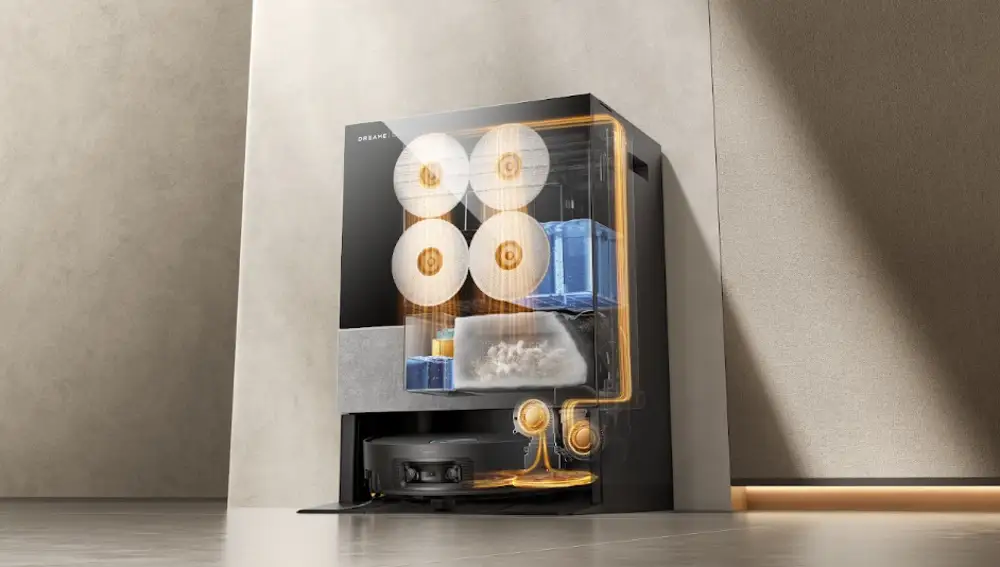
The jump was not immediate, but it was coherent. Dreame began to build its own catalog, first with upright vacuum cleaners, then with robots, and little by little it refined a very clear identity: power, automation and, above all, an obsession with eliminating friction in domestic cleaning. Today it competes on the front line of home automation, in a market where it is no longer enough to vacuum well: you have to understand the house.
In this context, its new X60 series models arrive, which represent a considerable evolution: they integrate navigation systems capable of mapping the home with higher resolution and anticipating obstacles with almost predictive logic. The combination of sensors (including technologies such as three-dimensional mapping) allows the robot to not only avoid objectsbut adapt your route in real time. Added to this is one of the clearest trends in the sector: hybrid cleaning.
The extendable mop, one of the most striking elements of the series, responds to a historical limitation. Robot vacuum cleaners have always had problems cleaning edges, corners or areas attached to baseboards. Physically extending the scrubbing system to those margins is not just a mechanical improvement, it is a way to get closer to human cleaning without the need for human intervention. But all of this—the power, the navigation, the precision—still happens within a relatively familiar framework: a single-level house. And that’s where Dreame has decided to break the board.
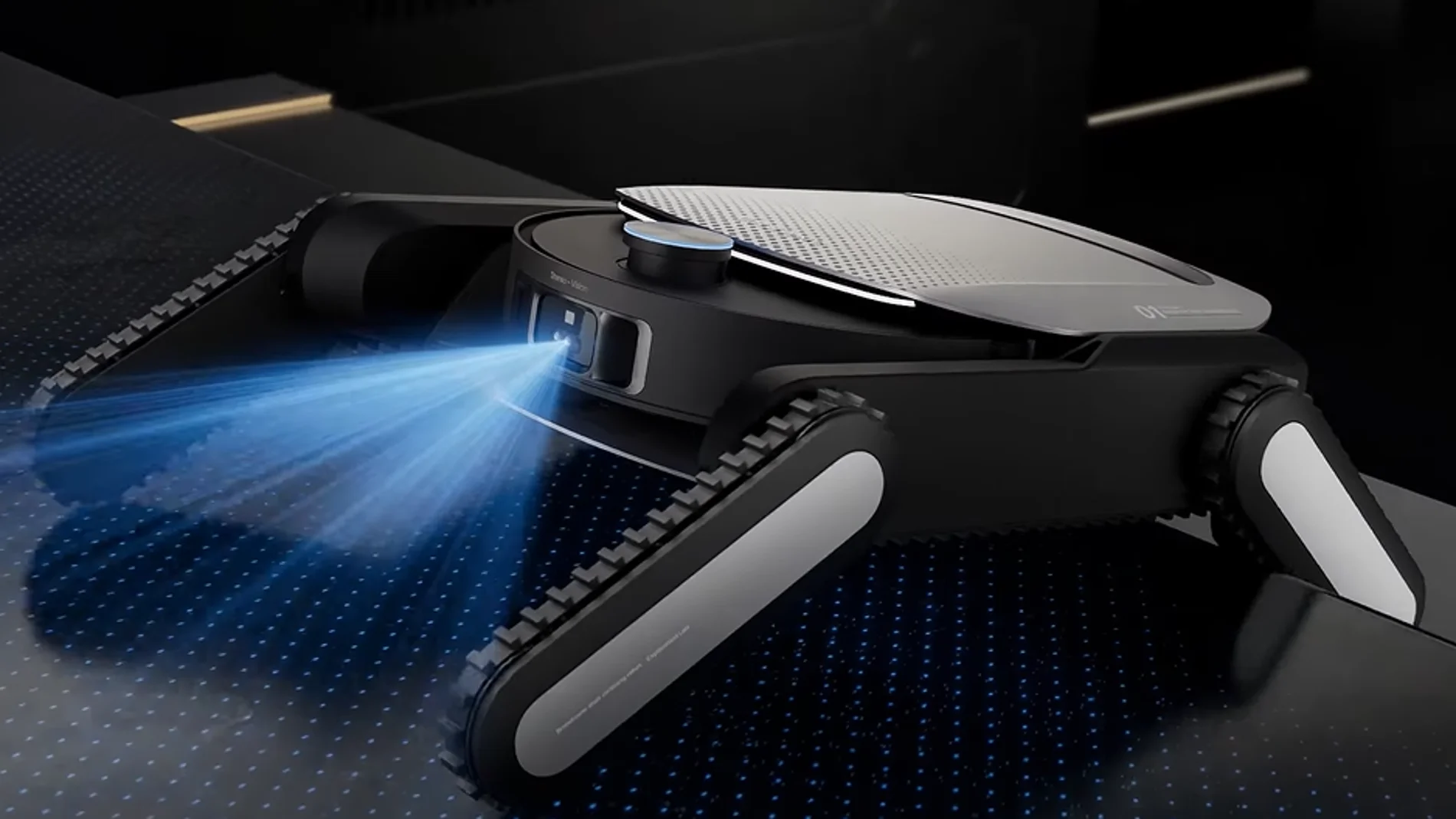
The Cyber X is not, strictly speaking, a more advanced robot vacuum cleaner. It’s another category. Because their proposal is not to clean a floor better, but to eliminate one of the last physical barriers to home automation: stairs. It was something that we knew was coming, what we didn’t know was who would be the first to get it.
For years, multi-story homes have been an insurmountable limit for this type of device. Each floor required a different robot or, at best, manual intervention to transport it. The Cyber X introduces a radically different idea: that the robot moves around the house as a living being would. Not by climbing small steps of about 6 centimeters, but by going up the stairs directly.
Its adaptive stair climbing system is designed to deal with multiple geometries: straight flights, L-shaped stairs, spiral stairs or even open steps. It can climb slopes of up to 42 degrees and overcome obstacles of up to 35 centimeters. The first step, which is usually the most problematic, can reach 30 centimeters. But more interesting than the figures is the how.
The Cyber X uses a system of four tracks that act as legs, allowing it to stabilize, propel itself and absorb impacts. It is not limited to climbing: it analyzes the structure, calculates supports and distributes the weight. Its industrial rubber tracks, along with a triple braking system, seek something essential in this type of movement: control. Because climbing stairs is not just a matter of power, but of not falling.
The speed, 20 centimeters per second, may seem modest, but in this context it is a deliberate decision. Climbing a step in 27 seconds is not slow: it is prudent. It is the time required for an autonomous device to evaluate, execute and correct without putting the environment at risk.
Added to this is a 3D ToF vision system (it is a technology that accurately measures distances using infrared light)capable of vertically scanning the entire staircase structure in a single pass. It is not just about detecting steps, but about understanding them: height, depth, inclination, possible obstacles. It is, in a way, a form of spatial perception closer to biological than to traditional robotics.
The 5,200 mAh battery completes the set, designed for large, multi-level homes, where autonomy is no longer measured in square meters and begins to be measured in floors. The interesting thing about Cyber X is not only what it does, but what it suggests. For years, home robotics has advanced by optimizing tasks within static environments. Now begin to adapt to the environment itself: It is no longer about designing houses for robots, but robots for real houses. Maybe that’s Dreame’s real leap. Not so much having gone from supplier to brand, but from machine to system.