
May 22 is World Biodiversity Day, established by the United Nations in 2000.
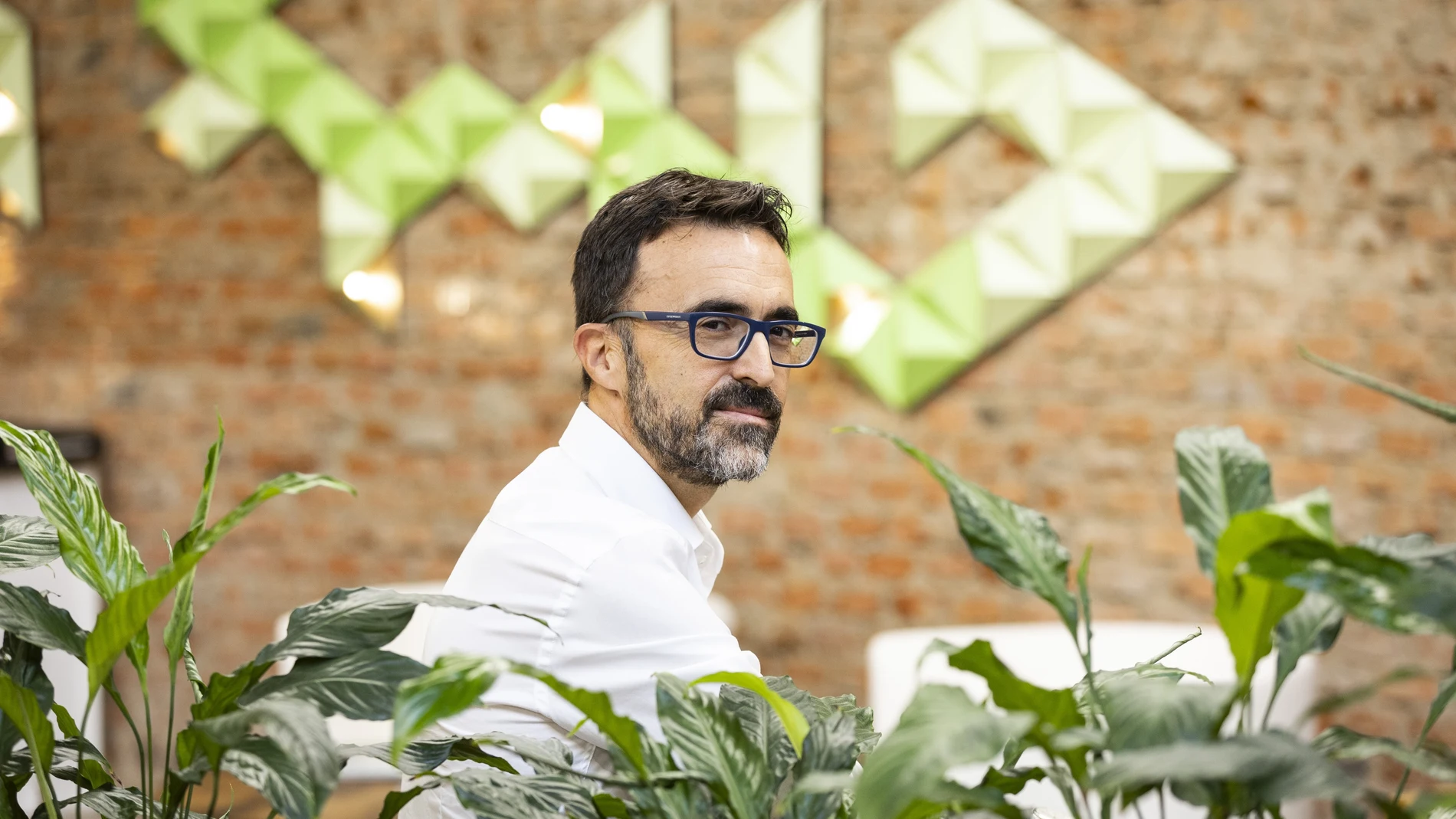
On Biodiversity Day, there is nothing more appropriate than talking about it with the director of the Biodiversity Foundation. Its director, Félix Romero, with a professional career of more than 20 years in which he has been responsible for the Forestry Program at WWF, regional director for Europe and president of FSC-Spain and general director of Natural Environment and Biodiversity in the government of Castilla -La Mancha, receives La Razón.
Would you like to start by refreshing the concept of biodiversity?
The short definition would be the variability of living organisms of all kinds, that is, flora, fauna, microorganisms, and the ecosystems in which they live.
Why is it important?
Biodiversity should not be seen exclusively as flowers, plants or animals, nor by the value of that flower or that plant; but because they are part of a very complex system. One alone may seem like a small thing, but it can also be a very important element of that entire system. I give the example of the airplane: if by loosening a screw on a wing it falls and is lost, perhaps nothing will happen to that one; If there are two or three, maybe nothing will happen either; But if you lose five, your entire wing will fall off. And if the entire wing falls off, the plane will fall off too at some point. Something very similar happens with biodiversity. It is a gear in which all the parts have a function and are necessary.
How are we doing with biodiversity in Spain?
Spain is a country of nature. We are probably the country with the greatest biodiversity in the entire European Union. In that sense, our society will be as prosperous as our territory continues to be, because that nature is the foundation that supports everything else. If ecosystems do not function, there is no possible life or sustainable economy.
The problem posed by the progressive loss of biodiversity is not as well known by society as climate change, for example.
There is increasing awareness, but we have not yet sufficiently achieved that society and the economy consider that biodiversity is a fundamental asset for our well-being and also, therefore, strategic in our economic development. The big change is to go from seeing it as something that must be strictly protected, to seeing it as something that must be protected, yes, but, above all, managed and integrated into the economic model. Science and technology show us that biodiversity is not a brake, it is a condition for sustainable development. As a society, we have a problem if we confront economy and nature, it is better to integrate nature into the economy.
What is the role of the Biodiversity Foundation in all this?
The job is to facilitate. Make sure that the different interest groups understand each other and can go in a coherent direction in accordance with objective, rational and sensible principles in a governance model, the European one, in which we are many actors, who can contribute a lot and in which the ideal thing is to include as many of them as possible.
For those who don’t know, what is the Biodiversity Foundation?
We are a public sector foundation, of the Ministry for the Ecological Transition and Demographic Challenge and attached to the General Directorate of Biodiversity, Forests and Desertification, in charge of making the public policies in which Spain is committed in terms of the environment a reality, specifically biodiversity, forests and desertification, and also in areas such as climate change, circular economy, bioeconomy, green employment, business and biodiversity, cities, etc.
In practice, is that…?
Above all, mobilize financing from the Government of Spain and the European Union for projects promoted and developed by very different entities: public administrations, conservation organizations, universities, unions, universities, research and technological centers, companies or sector associations. With two particularities: they are pioneering, emblematic and transformative projects, based on science, that can change certain models. And, the other is that this public money is executed through free and competitive calls, with very demanding requirements, objective evaluation criteria and technical committees that ensure that there is an alignment between what this project wants to do and what Spain as a country has to do.
In data, what does it translate into?
Since the Foundation was created in 1998, some 2,000 projects from all types of entities, city councils, business associations, NGOs, universities, technology and research centers have been financed, with around 1,000 million euros. Now, we are also working with farmer organizations and the industrial sector. We have the capacity to co-finance many projects and many entities are benefiting and, very importantly, we ensure that the projects and their budget are structured in a balanced manner throughout the state.
Economically, how do they benefit the territories?
Carrying out all these projects, which are very transversal, and carrying out the necessary actions to meet their objectives requires professionals and services. Which is equivalent to widely dispersed employment and economic activity.
Among all these projects, there are Life.
That’s how it is. Recently, we have finished Life Intemares and Life Cerceta, of which we have been coordinators, and others are in full progress. And, right now, we are starting Life Wetlands, which has been approved by the Commission. It will last 10 years and with which 26,100 hectares of wetlands will be restored and in which 14 autonomous communities, four public companies and four state-level NGOs will participate, with a budget of 180 million euros and in which there will be connections with more entities in the territories. It is the largest Life since this financing framework dedicated exclusively to environmental protection and climate action was created in 1992.
It seems that the Life Program is in a moment of debate in the European institutions.
The Life Programme, which is the only one in the world dedicated exclusively to financing projects to protect the environment and climate action, has been a star for decades, with a very positive impact throughout the territory of the Union and is essential for the conservation of biodiversity throughout Europe. It allows all countries to get hooked on that common goal that is the backbone of all of Europe, which is our environment.
Spain, precisely, has been a great beneficiary of the Life Program.
TRUE. Almost 2,000 projects since 1992 have been coordinated by Spanish entities, with 1,140 million of investment from the Commission in our country. Spain is a leading country in executing Life projects, it has been the largest contractor for several years and now we are also in the top positions. It must be taken into account that Life projects work in very broad areas and we have benefited more because we have a great natural heritage and very, very good projects have been presented. And the Life ones are also in a competitive competition regime, eh. That is to say, every year hundreds of projects from all the countries of the Union are presented and only the best obtain financing. That several Spanish projects are chosen every year gives an idea of their quality and, also, of the natural heritage we have and that in Spain there are many people who have specialized in better managing its biodiversity and making better use of it. In short, a priori, Spain would be harmed if this figure disappeared.