
Imagine that you have a maze with a million possible paths. A conventional computer goes through them one by one until it finds the exit. A quantum computer runs through them all at once. This difference is the basis of a technology that has been promising to revolutionize the world for decades and that until now has been locked in laboratories.
A Chinese company called CAS Cold Atom Technology, based in Wuhan, has unveiled the Hanyuan-2: the world’s first dual-core quantum computer based on neutral atoms. And the most relevant thing is not only what it does, but how it does it.. The large quantum computers from IBM or Google are engineering processes, but they have a huge Achilles heel: they need to operate at temperatures of almost 273 degrees below zero, that is, colder than outer space. This requires cooling systems the size of a room, enormous electricity consumption and specialized laboratories that cost tens of millions of euros. In practice, that means that only a few research centers in the world can have them.
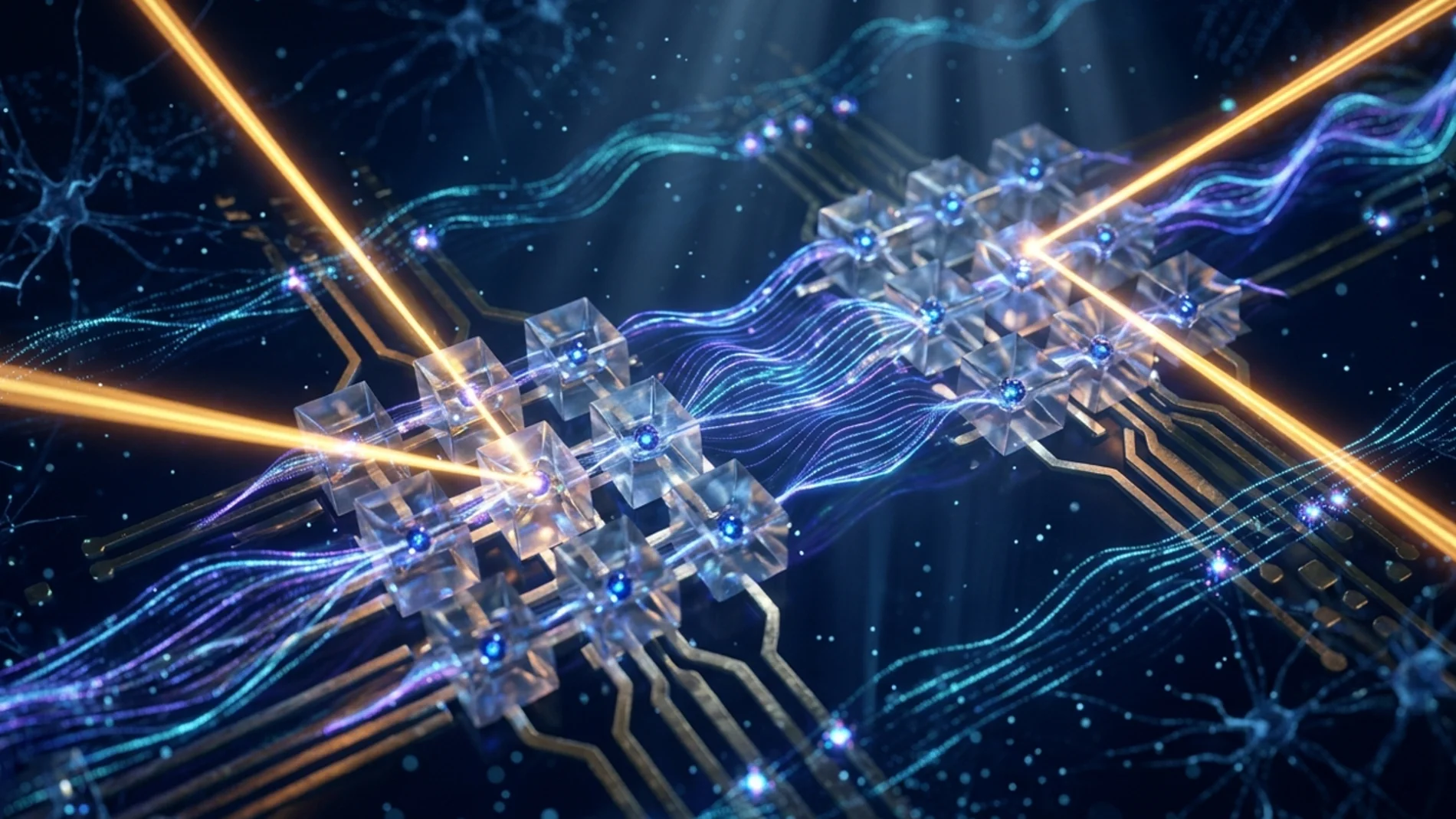
The Hanyuan-2 breaks with that logic. Instead of using artificial circuits that need a cold end to work, you work with something much simpler and more elegant: real atoms. Rubidium atoms trapped and controlled with laser light beams, floating in a vacuum, used directly as processors. They do not need to be frozen because toAtoms are already, by nature, perfect for computing.eithern cutontica.
The result is a system that It consumes less than 7 kilowatts and fits in a standard closet. To understand what that number means: it is what the air conditioning of a medium-sized office uses, or seven washing machines running at the same time. A completely normal figure for any data center.
While it is true that quantum computers in large laboratories also consume similar figures (between 10 and 25 kilowatts), Hanyuan-2 does not revolutionize the energy consumption of quantum computing. What is revolutionary is the reason why it consumes so little: Western systems need enormous cryogenic infrastructures to cool their processors to almost absolute zero, and these systems are expensive, bulky and fragile. The Hanyuan-2 dispenses with all that. Consume the same, but without the industrial apparatus that surrounds you. It is the difference between an electric car and a gasoline car that consumes the same energy: one gets it from a battery under the seat, the other needs an engine, a tank, an exhaust pipe and a refinery behind. The new Chinese quantum computer continues to travel by car, only it no longer needs the gasoline or the refinery.
Where The contrast that is brutal is compared to classic supercomputers: The Frontier, the most powerful in the world, consumes 21,100 kilowatts (three thousand times more) with an annual electrical cost of about 23 million dollars. Hanyuan-2 has 200 qubits (the basic unit of quantum information) divided into two independent cores of 100 each. The dual-core architecture is not a minor detail: it allows while one processor solves a complex problem, the other detects and corrects its errors in real time.
It is exactly the same leap that mobile phones experienced when they went from a single processor to multi-core architectures and that multiplied its performance exponentially. And now comes the logical question: what changes me? In the case of quantum computing, the answers are concrete.
In medicine, a quantum computer can simulate how molecules interact at the atomic levelsomething that takes months or is outright impossible for current supercomputers. That means radically accelerating the design of new drugs for diseases like Alzheimer’s or cancer.
In energy and transportation, it can optimize power grids, logistics routes or distribution systems at a scale that conventional computers cannot address. And in cybersecurity, it has a double face: The same power that could break current encryption systems can be used to build completely tamper-proof communications.
What makes Hanyuan-2 historic is not only its power (200 qubits is a respectable figure but not the highest in the world). What distinguishes it is that, For the first time, an advanced quantum computer can be installed in a conventional data centerwithout millions in infrastructure and without a full-time team of physicists to maintain it.
It is the moment when a technology that had been on the horizon for decades takes the step from being an extraordinary scientific experiment to becoming a tool that the real world can use. Like when the internet stopped being a military project and came to homes. The Hanyuan-2 is, in this sense, the iPhone of quantum computers: Smartphones already existed before this, but Apple’s device made it popular.